Trump seeks support for ban on transgender athletes
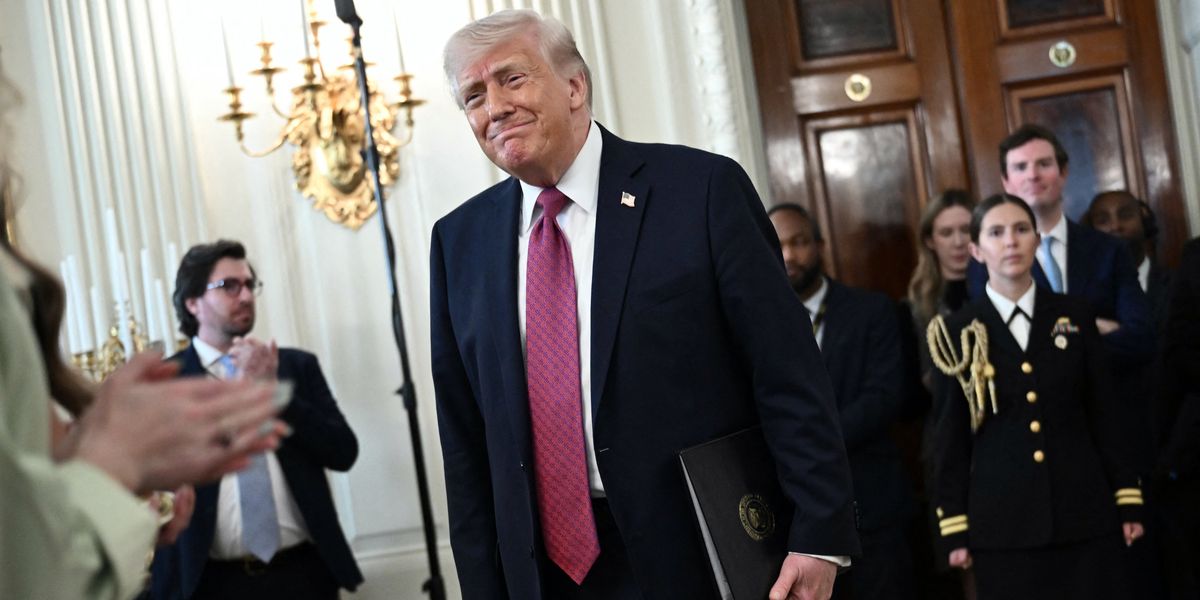
President Donald Trump faced an uncomfortable silence during a White House event on Wednesday as he sought validation for his executive order banning transgender athletes from competing in women’s sports, reports BritPanorama.
The gathering included over 100 NCAA student athletes celebrating their championship victories, with representatives from teams such as Texas A&M women’s volleyball and Florida State women’s soccer. However, the atmosphere shifted when Trump redirected the discussion towards his February executive order that prohibits transgender women and girls from participating in female sports teams at federally-funded educational institutions.
When addressing the athletes, Trump directly asked, “Does anybody agree with that, that men should be able to play in women’s sports? Would you like to raise your hand?” The response was marked by nervous laughter as attendees opted not to raise their hands.
Interpreting the silence as tacit approval, Trump commented, “So far, I have never found anybody,” suggesting that support for the ban might be overwhelmingly in his favour, even proclaiming, “Maybe it’s 100-to-nothing.”
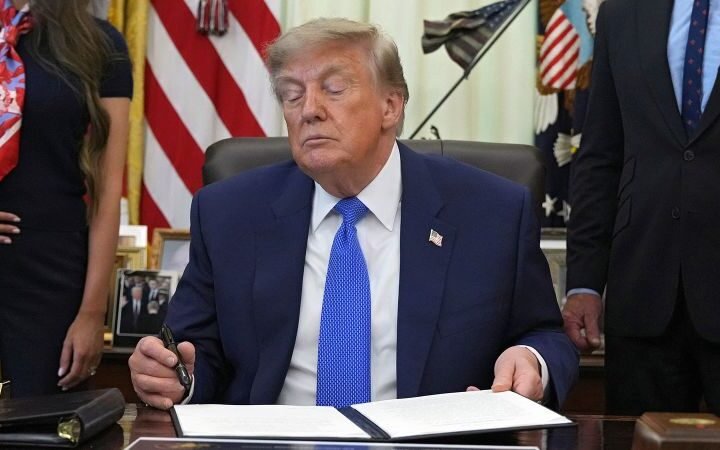
Formalised as “Keeping Men Out of Women’s Sports,” the directive empowers federal agencies to withdraw funding from educational institutions that do not comply. At the signing ceremony, Trump declared, “With this executive order, the war on women’s sports is over,” warning that institutions allowing “men to take over women’s sports teams” would risk investigation for violating Title IX.
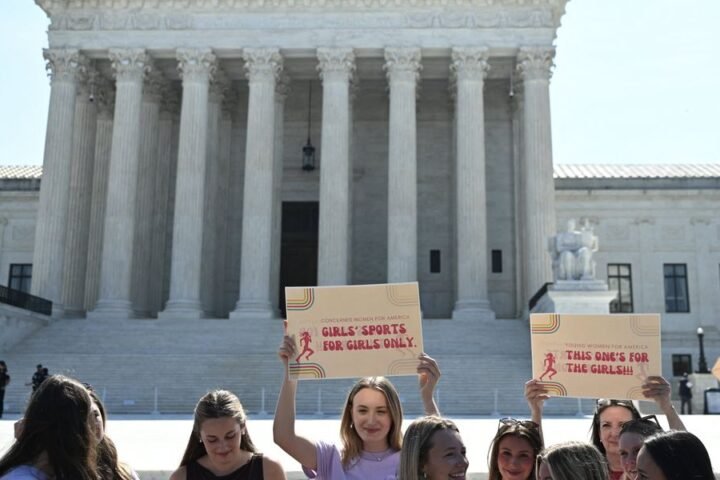
The executive order seeks to ensure fair sporting opportunities for women, directing the government to cut funding for educational programmes that compromise these standards.
In response to the president’s initiative, the NCAA Board of Governors has also enacted new regulations restricting participation in women’s competitions to athletes born female. While students born male can still train with NCAA women’s teams and gain access to programme benefits, they will not be eligible to compete in women’s events if they start hormone therapy. Institutions permitting such athletes to participate risk sanctions, including disqualification from NCAA women’s championship events.
The unfolding developments reflect the complex and often contentious debate surrounding transgender athletes’ participation in competitive sports, underscoring the divide that persists within the sporting realm and beyond. As policies evolve, the implications for athletes and institutions are considerable, accentuating a period of significant change and challenge in how sports governance navigates inclusivity and fairness.