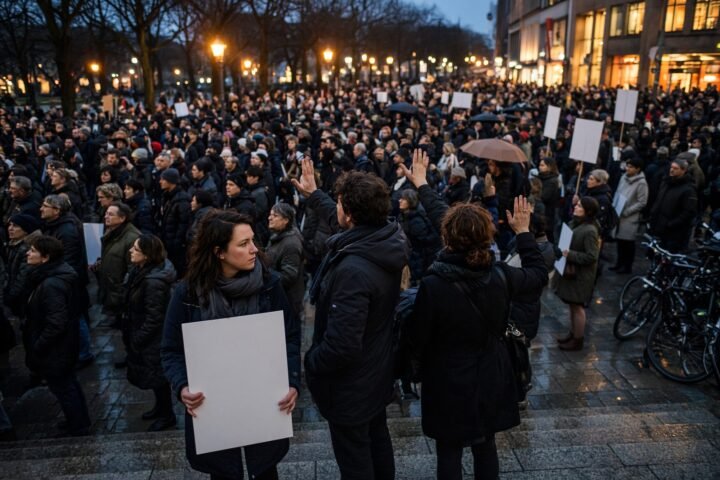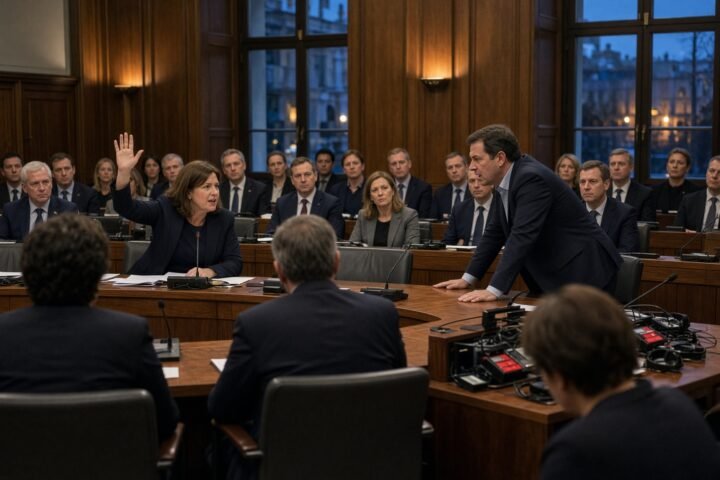
Polish President Karol Nawrocki has vetoed legislation designed to implement the European Union’s Digital Services Act, leaving a basic question unanswered: who should decide when illegal material must be blocked online?
Nawrocki says the law could bring back a “censor official” and insists that only a court should determine whether content is criminal. The government and its supporters say that description ignores a central safeguard in the bill: prior judicial approval would have been required for blocking certain material, including hate speech.
The dispute, reported on 15 November 2026, has turned a piece of technical European legislation into another fight over executive power, free expression and the limits of state intervention on the internet.
A veto framed as a defence of speech
Nawrocki’s position was backed by MPs from the Law and Justice party, known as PiS, and the Confederation. They argued that the government was using concern about child safety and the circulation of child sexual abuse material to justify wider restrictions on public debate.
Their objection is not presented as a rejection of every attempt to remove illegal content. It focuses on the machinery of enforcement: which authority can seek a block, what role a judge must play and how users can challenge a decision affecting their speech or access to information.
That distinction matters. A system intended to act quickly against genuinely unlawful material can also give public bodies significant influence over what remains visible online. The president’s supporters fear that administrative officials could acquire powers that are difficult to control. Government representatives counter that judicial authorisation was precisely intended to prevent arbitrary decisions.
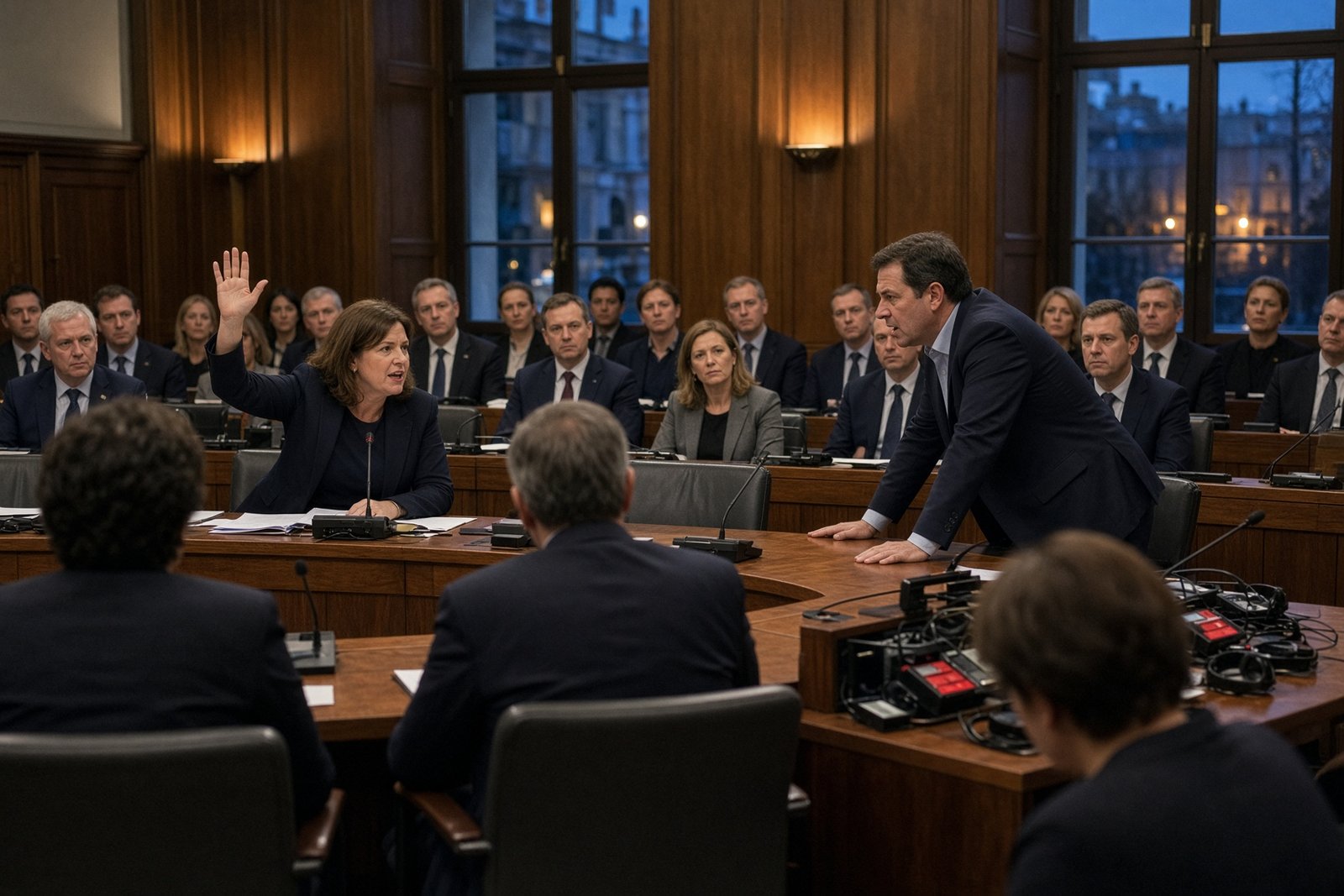
Polish news outlet Onet reported on the heated reaction to the veto, including criticism from government figures and unaffiliated MPs. The exchanges show how quickly an implementation bill became part of Poland’s wider argument about the meaning of freedom and the authority of the state.
Children become the central test
Deputy Education Minister Katarzyna Lubnauer called the veto shameful, arguing that it left children exposed to opaque and uncontrolled social-media algorithms. Her criticism was directed at the way recommendation systems can distribute and amplify material at speed, including hateful, abusive or otherwise harmful content.
Lubnauer also pointed to the bill’s requirement for court approval before blocking hate speech. In her account, that provision undercut the president’s portrayal of the proposed system as a return to unchecked official censorship. Her argument is that judicial oversight and stronger protection for children were meant to work together, not stand as opposing principles.
Independent MP Joanna Mucha was more blunt, accusing Nawrocki of having a “sick attitude towards freedom”. That is a political judgement about the president’s stance, rather than an independently established finding about his motives. Mucha’s underlying argument was that freedom of expression cannot mean refusing every restriction, including those intended to protect minors from seriously harmful material.
The clash exposes a genuine policy problem. Online harms can spread more quickly than conventional legal processes, creating pressure for immediate action. But a mechanism that is too broad, too fast or insufficiently reviewable can allow authorities to interfere with lawful expression. The question is therefore not only whether harmful content should be removed, but who authorises the removal and what happens when that decision is wrong.
A European rule with a national fault line
The Digital Services Act establishes common obligations for online platforms and other digital services across the EU. It covers the handling of illegal content, platform transparency and risks created by large-scale digital systems. National legislation is needed to define how those rules are administered and enforced within each member state.
For the Polish government and politicians who opposed the veto, blocking the bill risks leaving the country with weaker domestic procedures for dealing with illegal material and online threats. They say the gap is particularly serious for children and young people, who can encounter content amplified by recommendation systems before parents or public authorities can respond.
The veto may also increase friction between Warsaw and Brussels. Common European rules depend on national systems capable of applying them consistently, so a delay in Poland can be read as resistance to the wider European approach. That is a risk of political and administrative tension, not proof that Poland has abandoned the DSA or that the veto alone has dismantled EU digital protections.
Nawrocki’s allies offer the opposite interpretation. They present the veto as a demand for a firmer judicial threshold whenever the state seeks to restrict online speech. In that reading, the president is not opposing all action against illegal content; he is challenging the proposed route by which that action would be authorised.
The immediate result is uncertainty over Poland’s national arrangements for enforcing the European digital-services regime. Any fresh legislative attempt will have to reconcile the government’s demand for practical tools to protect children with the president’s insistence that decisions limiting online expression remain firmly under judicial control.