Alexander Lukashenko has said agricultural workers in Belarus should not leave their farms without permission from a district official. The remark places tighter control over rural employment alongside a demand that citizens rely less on state support — and comes as the government shifts a larger share of public spending towards the military and security services.
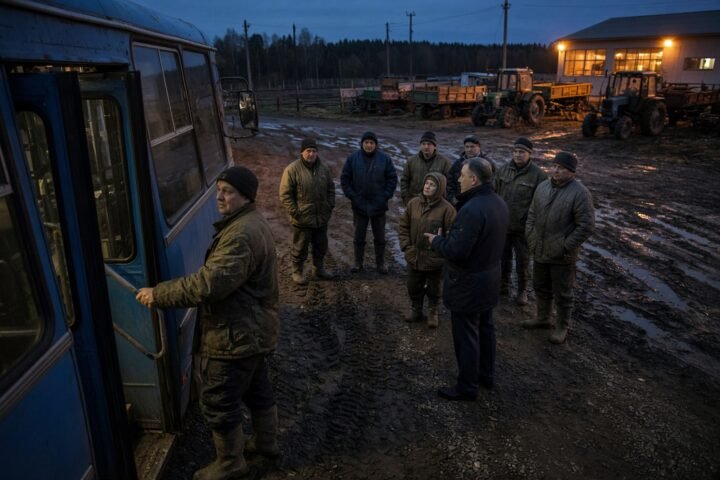
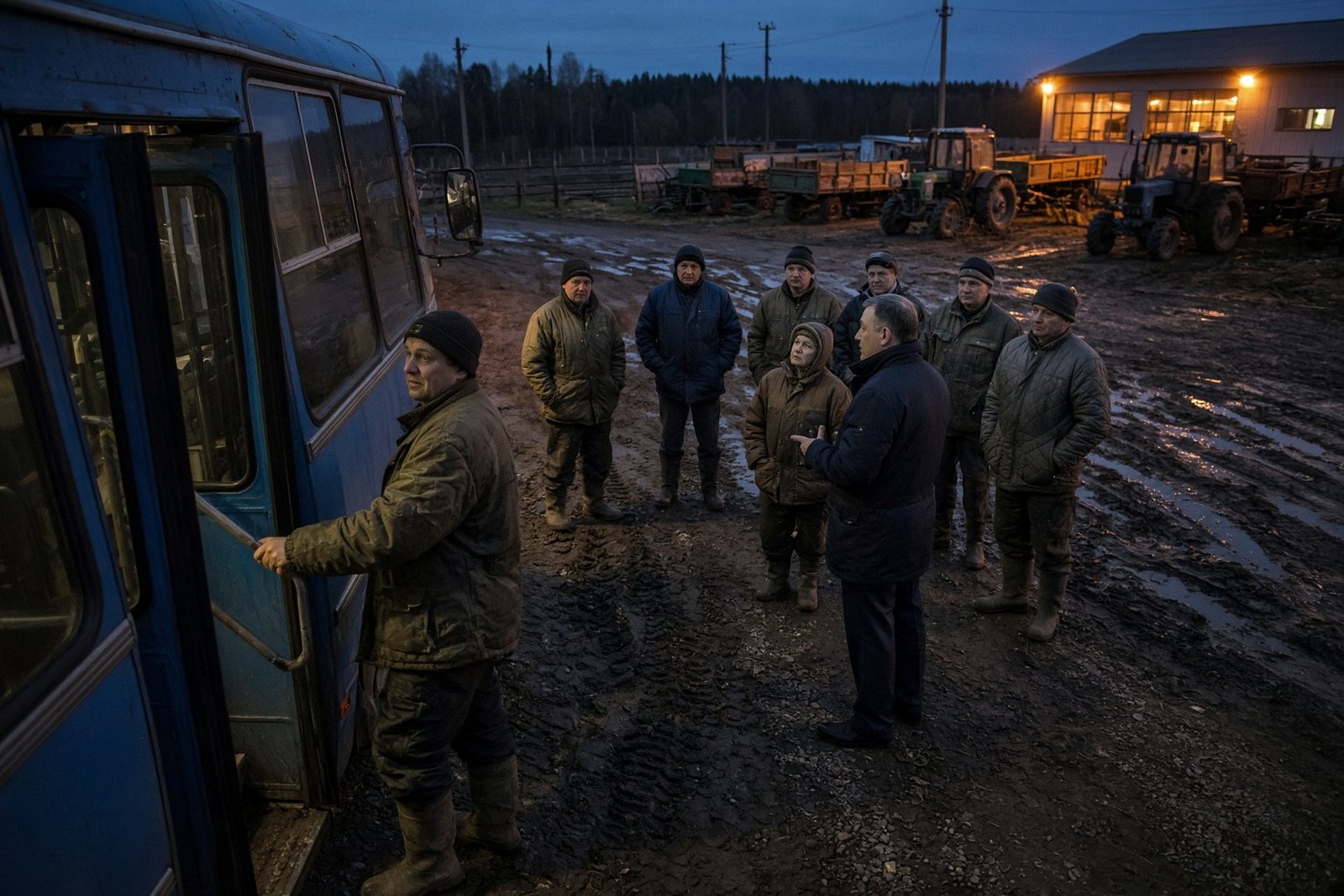
Lukashenko made the comments during a 7 November visit to Hovyady Agro in the Shklov district. They were reported by media on 15 November. No new nationwide law has been identified in the supplied reporting, but the proposal would make a worker’s ability to change jobs or move dependent on approval from the chairman of the district executive committee.
Permission before leaving a farm
For people working in agriculture, the practical effect could be significant. An employee seeking better pay, different conditions or a job in another district could find that the decision was no longer solely theirs. Local officials would gain leverage over whether workers could leave one state-linked enterprise for another, or leave the countryside altogether.
The idea recalls Soviet-era systems that tied workers to particular enterprises or regions. Comparisons with serfdom describe the coercive potential of the proposal, not a claim that Belarus has formally restored that historical legal system. Its immediate importance is political: the president has presented administrative control over labour mobility as a possible response to the problems facing agriculture.
That approach would be particularly powerful in rural areas, where alternative employers are scarce and farms remain closely connected to state structures. Even without an explicit nationwide ban on changing jobs, an instruction to district authorities could make resignation, relocation or a move between farms more difficult in practice.
It would also deepen the influence of officials over a workforce already operating within an economy dominated by administrative decisions. A worker who disagreed with a manager, objected to pay or wanted to seek opportunities elsewhere could face pressure to remain in place.
‘A fishing rod’ instead of direct help
At the same appearance, Lukashenko criticised what he called excessive “parasitism” in agriculture. Rather than depending on direct government assistance, he said, rural residents should be given a “fishing rod” — a means or incentive to earn their own income.
The language shifts responsibility for the sector’s difficulties towards workers. Yet Belarusian agriculture has been shaped for decades by the same state-controlled model: budget subsidies, administrative management and the preservation of state-owned enterprises, including businesses that have struggled to operate efficiently without public support.
That creates a clear tension in the president’s argument. Rural workers are being told to become more self-reliant while being expected, potentially, to remain attached to the enterprises where they work. Less assistance combined with less freedom to leave would not necessarily reduce dependence on the state. It could instead strengthen the position of farm managers and district officials.
The proposal also leaves unanswered how workers are expected to improve their circumstances if they cannot freely seek a better employer. A “fishing rod” has little value if the person holding it is still required to remain at one state-directed workplace.
More for defence, less for social spending
The call for greater personal responsibility coincides with a reported change in Belarus’s budget priorities. The share of spending allocated to social needs is cited as falling from 45 per cent in 2022 to 41.9 per cent in 2026.
Over the same period, the reported share for the military rises from 3.6 to 4.7 per cent, while spending on security structures increases from 6.6 to 7 per cent. The figures are presented as evidence of a wider trade-off: citizens are being asked to deliver more through their own work while the state directs a larger proportion of its resources towards defence and internal security.
The pressure is likely to be most visible in the countryside, where public enterprises often anchor local economies and employment alternatives are limited. If state assistance declines, workers may have fewer resources to absorb low wages or poor conditions. If officials can also prevent them from leaving, the imbalance between employee and employer becomes sharper.
The media report carrying the account of Lukashenko’s remarks is available from UDF. Whether the proposal becomes an enforceable rule remains open. For now, it signals a model in which the government expects rural workers to produce more independently while considering stronger official control over their right to move on.