Russian workers may feel the employment shock of 2027 before mass redundancies arrive. Companies are already cutting hours and headcounts as high borrowing costs, heavier taxes and weaker consumer demand leave them with fewer ways to protect their finances.
The warning is that temporary measures could give way to a wider wave of job losses from the start of next year. The consequences would be most severe in towns whose economies depend on one or two large employers, where a reduction in factory hours can quickly spread through shops, suppliers and local services.
The squeeze is already under way
Alexander Shokhin, president of the Russian Union of Industrialists and Entrepreneurs, said many businesses had retained more workers than they needed while waiting for the economy to recover. With the outlook for 2027 worsening, keeping surplus staff was becoming financially untenable, he said.
A report published on 14 November 2026 described the main pressures as the Russian central bank’s high key interest rate, rising tax costs and declining consumer demand. Together, they make it more expensive to borrow, harder to invest and less likely that falling sales will recover quickly.
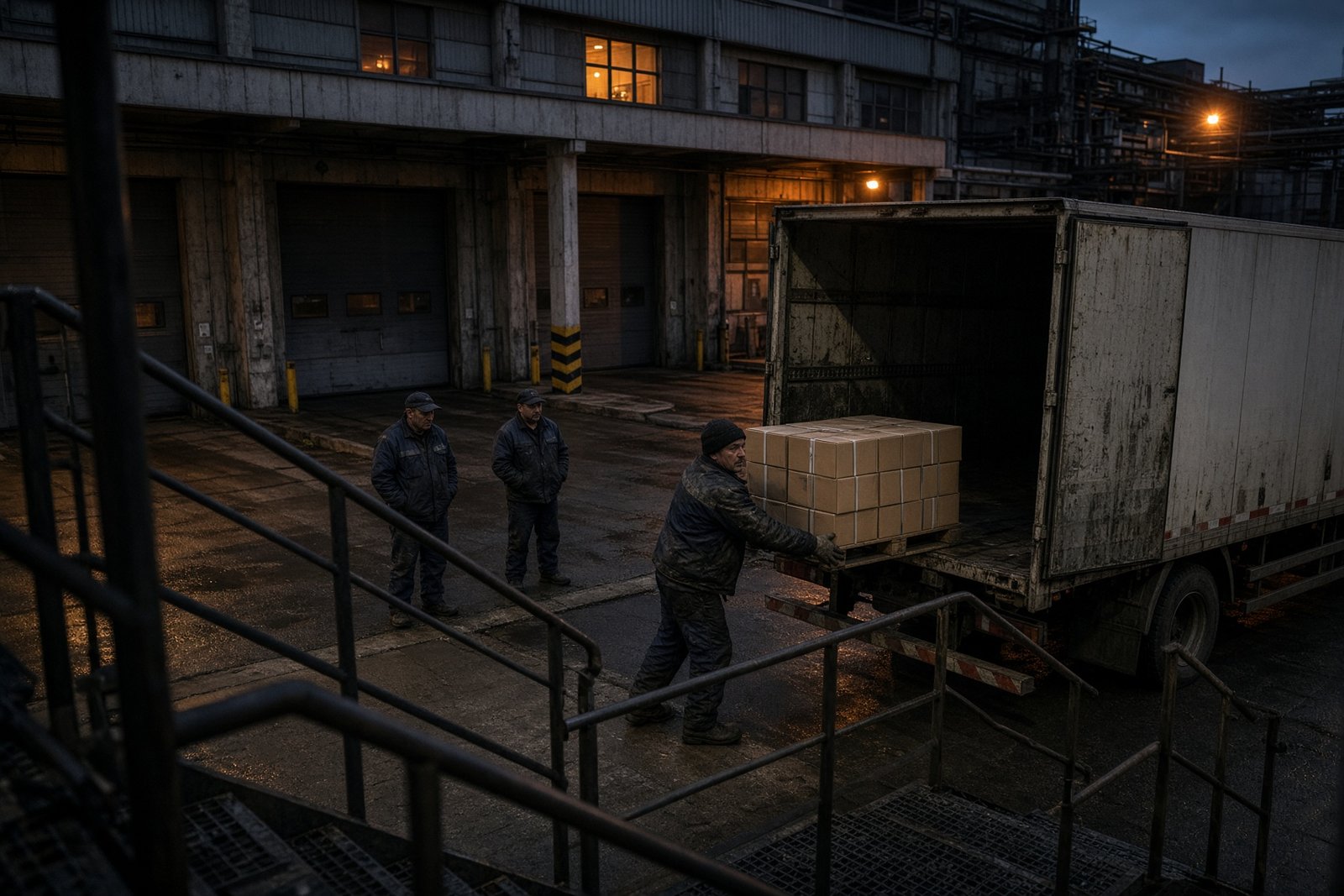
Some enterprises have already moved to three- or four-day working weeks. Around half of Russia’s large companies are reported to have reduced their workforces, with average cuts of between 10% and 20%. Those figures indicate that employers have begun adjusting, but they do not establish that mass redundancies will necessarily occur in every sector at the beginning of 2027.
A shortened working week can postpone a formal dismissal while still reducing a household’s income. It may also reveal a deeper problem: the company has more labour available than its current order book can support, but is trying to avoid the cost and disruption of cutting permanent staff.
For employers, the arithmetic is becoming harsher. Higher interest rates increase the cost of working capital and investment. Additional taxes raise fixed expenses, while weaker household spending limits revenue. When those pressures arrive at the same time, payroll becomes one of the few areas where a business can make rapid savings.
Formal unemployment will not show the whole picture
The deterioration is visible in official figures, although they capture only one part of the labour market. Rosstat data cited in the reporting show that 78,200 people were dismissed because of staff reductions during the first half of 2026, a 72% increase on the same period in 2025.
Workers who remain formally employed on reduced hours, unpaid leave or fewer shifts may not appear as unemployed. Their financial position can nevertheless deteriorate sharply. A factory that avoids immediate redundancies by cutting its schedule is still transferring part of the economic shock to its employees.
That distinction matters when judging claims of stability based on a low headline unemployment rate. The figure may not reflect falling hours, weaker earnings or the risk that a temporary production cut becomes permanent. Nor does it show whether companies have the particular engineers, mechanics, drivers and other specialists needed to operate effectively.
The result can be an apparently contradictory labour market. A company may have too many employees for current demand while still lacking the skilled people required for the work that remains. If experienced staff leave or are drawn into military service, productivity can suffer even when the overall workforce is being reduced.
Single-industry towns face the sharpest impact
The national figures will not translate evenly across Russia. In a city built around one factory, mine or industrial group, a decision to reduce shifts affects much more than the workers on the payroll.
Suppliers receive fewer orders. Transport firms lose business. Local shops and service companies see household spending fall. Municipal authorities may collect less tax just as demand for social support rises. Where there are few alternative employers, workers cannot easily respond by changing jobs.
A three-day week can therefore act as an early warning for an entire local economy. Lower wages weaken demand, weaker demand puts further pressure on local businesses, and falling orders encourage the main employer to cut production again. A national slowdown becomes a concentrated regional crisis when alternatives are scarce.
Households may also face a sequence of losses rather than one dramatic event. Reduced hours lower income first. Higher prices and taxes then erode what remains. If a redundancy follows, a partial loss of earnings becomes the removal of a principal source of income altogether.
Military priorities leave civilian firms exposed
The pressure on civilian businesses is unfolding alongside the state’s continuing focus on the war effort. The 2027 budget allocation cited in the reporting sets defence spending at 17.15 trillion roubles, or about 35% of total federal expenditure.
That level of spending may sustain orders for defence-linked producers, but it does not automatically restore demand across civilian manufacturing or increase household purchasing power. Consumer-facing companies and smaller suppliers can still face weaker sales, expensive credit and limited access to foreign technology.
Businesses are also competing with military recruitment for skilled workers. Mobilisation and the recruitment of reservists have the potential to deepen shortages in manufacturing, construction and transport. Further expansion of those measures would place additional strain on employers already struggling to retain experienced staff.
This creates a structural tension. Some firms may be cutting their total payroll because demand is falling, while being unable to find the specialists needed to maintain the operations they keep. Losing skilled personnel can make production less reliable and make any eventual recovery slower and more expensive.
It also helps explain why activity in selected military-related industries cannot be treated as evidence that the wider economy is healthy. State contracts may cushion one part of the industrial base while civilian producers face weak demand and rising costs. The performance of defence-linked sectors can conceal deterioration elsewhere.
A forecast, not yet a settled outcome
The scale of any 2027 redundancy wave remains uncertain. Companies could delay dismissals if demand improves, financing costs fall or the government provides further support. But the combination of rising formal staff reductions, shorter working weeks and reported cuts at large firms shows that adjustment is already taking place.
The key question is whether employers can continue absorbing the pressure through reduced hours and selective cuts, or whether those measures will become a broader contraction in jobs and wages. For workers in Russia’s industrial regions, the first sign of the downturn may not be a dismissal letter but a thinner payslip, fewer shifts and a town with less money moving through it.