Russian businesses may begin cutting jobs on a large scale as soon as January 2027, after years of holding on to surplus staff in the hope of an economic recovery. High borrowing costs, heavier taxation and weaker consumer demand are now squeezing companies that have less room to absorb losses.
The warning, reported by Russian media on 14 November 2026, does not establish that every enterprise will carry out mass dismissals. It does, however, point to a shift in corporate behaviour: businesses that once waited for conditions to improve are increasingly reducing working hours, production and headcount.
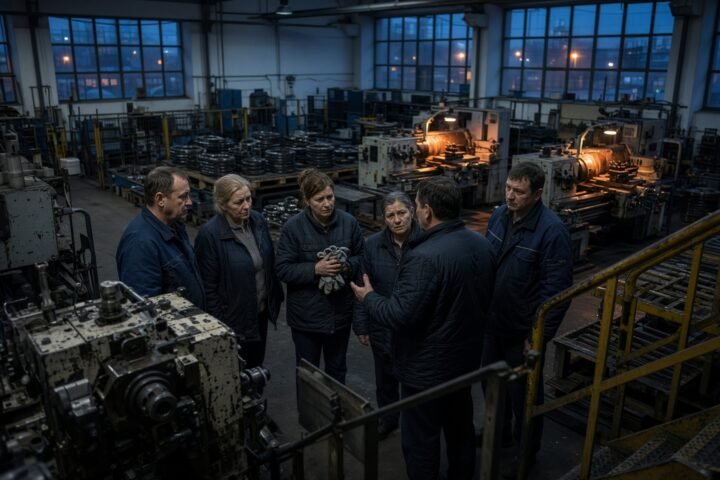
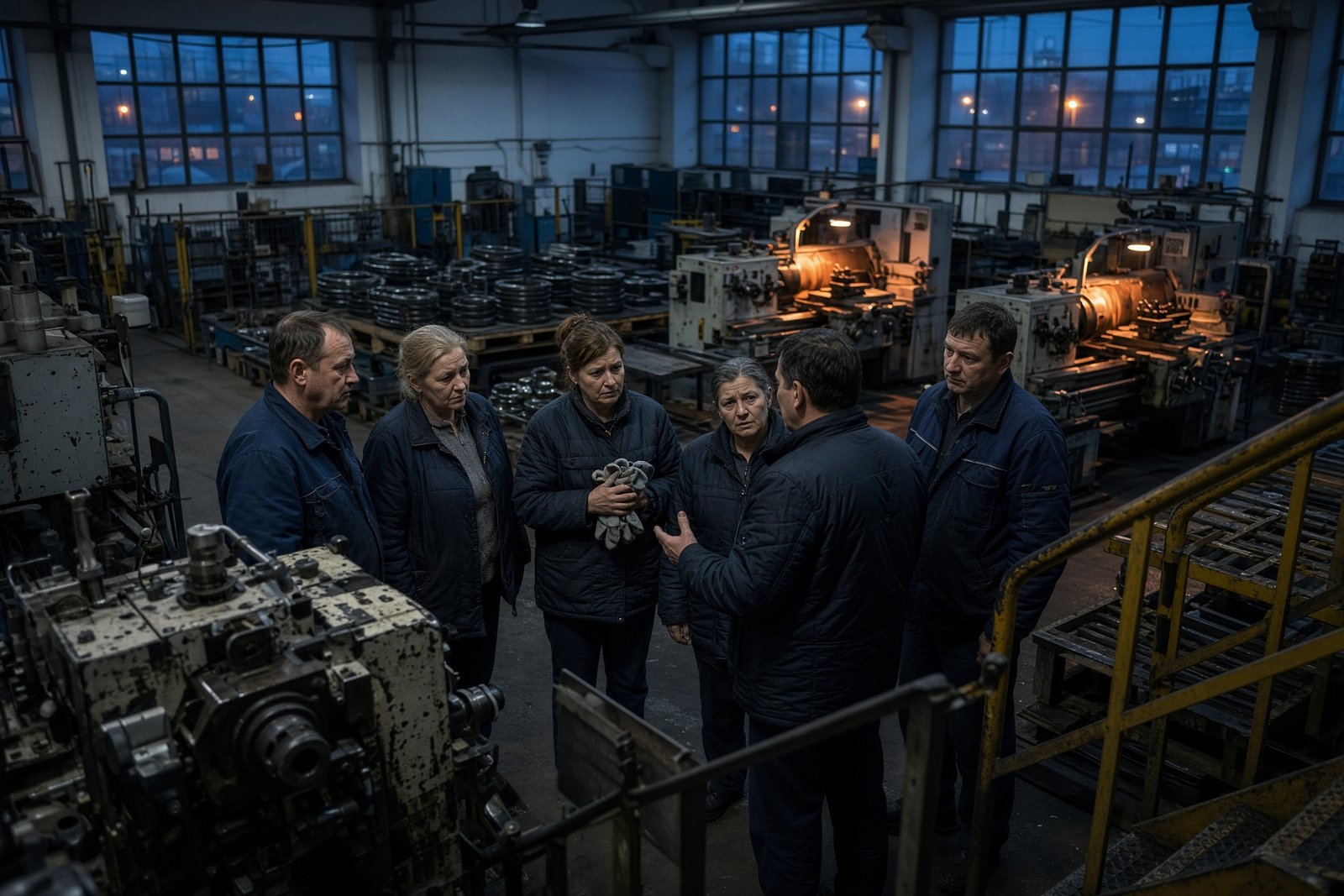
The effects could be most severe in industrial towns where employment depends on one or two major employers. There, a shorter working week or a modest round of redundancies can quickly affect local shops, services and municipal finances as well as the workers directly involved.
Companies are running out of patience
Alexander Shokhin, president of the Russian Union of Industrialists and Entrepreneurs, said many companies had kept more employees than they needed while expecting the national economy to recover. The worsening outlook for 2027 has made that strategy increasingly unprofitable, he said.
Some enterprises have already moved to three- or four-day working weeks. About half of large Russian companies have reduced their staffing levels by an average of 10% to 20%, according to the assessment reported in the media. That figure relates to large businesses rather than the labour market as a whole, but it suggests that cost-cutting is already under way.
A shorter week can conceal the scale of the damage. Employees may remain formally employed while losing a substantial share of their wages, overtime and bonuses. Companies can also reduce shifts, place workers on unpaid leave, postpone recruitment or cut production without immediately creating a corresponding rise in official unemployment.
For households, the distinction between job loss and sharply reduced employment can be less important than the result: less money coming in and less certainty about the future.
The deterioration is already visible
Official figures cited in the reporting point to a worsening trend. Rosstat, Russia’s state statistics service, recorded 78,200 workers dismissed because of staff reductions during the first half of 2026. That was 72% more than in the same period of 2025.
The measure covers one specific form of labour-market pressure. It does not include every case of shorter hours, suspended production, unpaid leave or jobs that disappear because departing employees are not replaced. A low national unemployment rate can therefore coexist with falling incomes and underemployment.
The financial pressure on companies is coming from several directions at once. The Central Bank’s high key interest rate makes new borrowing and debt refinancing more expensive. A rising tax burden increases operating costs, while weaker domestic demand limits the ability of businesses to compensate through higher sales or prices.
In response, companies may defer investment, scale back output and reduce payrolls. Staff costs are often among the few major expenses that can be cut relatively quickly, particularly when orders have fallen and access to credit has tightened.
That creates an apparent contradiction in the wider economy. Some sectors still face shortages of skilled workers, yet individual businesses can be forced to eliminate jobs because their orders and cash flow have deteriorated. A general labour shortage does not protect every worker in civilian manufacturing, construction or transport.
A wartime budget with uneven protection
The employment outlook is closely linked to the way state spending is distributed. Russia’s 2027 budget is reported to allocate 17.15 trillion roubles to defence, roughly 35% of total federal expenditure.
Such spending can support factories tied to military contracts and provide stability in selected industrial regions. It offers much less protection to businesses whose income depends on household consumption. Civilian manufacturers must still contend with costly finance, rising expenses, weak demand and restricted access to foreign technologies.
This is producing a more divided economy. A defence-linked plant with state orders may continue operating, while a company making goods for the domestic market cuts shifts and staff. Both may be located in the same region, but their access to demand and finance is very different.
The distinction matters because military expenditure does not automatically generate broad security for workers. It can sustain particular supply chains while leaving other employers exposed to falling sales and higher costs. For businesses outside the protected areas of the wartime economy, modernising equipment or carrying losses through a prolonged downturn becomes harder.
Mobilisation and the recruitment of reservists add another strain. They remove working-age people from civilian employment, especially in industries that rely on technicians, drivers, builders and production workers. If mobilisation expands, companies could face an even sharper shortage of qualified staff while dealing with weaker demand.
Some firms could therefore be cutting positions because they have too few orders, while others struggle to complete their work because the people they need are unavailable. The two problems can exist at the same time and reinforce the pressure on regional economies.
The risk is concentrated in single-industry towns
In towns dependent on one large factory, the consequences of a staffing reduction spread quickly. Workers with fewer shifts or lower wages spend less in local businesses. Shops and service providers lose customers, while local authorities may collect less revenue and face greater demand for support.
A three-day week can transmit that shock without producing a dramatic change in national unemployment figures. The factory remains open and workers remain officially employed, but household incomes fall and local consumption weakens. Smaller businesses then face a second-round effect as their own sales decline.
This is why the number of formal dismissals will not provide a complete picture of the disruption in 2027. Reduced hours, cancelled bonuses and lower overtime can undermine living standards well before a worker loses a job altogether. In regions with few alternative employers, even temporary cuts can become difficult to reverse.
The pressure can also become self-reinforcing. Lower earnings reduce demand for goods and services. Weaker sales make it harder for companies to meet tax, debt and wage costs. Further reductions in production or staffing then become more likely, deepening the downturn outside sectors supported by state orders.
The forecast was reported by URA News, which cited Shokhin’s assessment of conditions facing Russian enterprises. The eventual scale of the reductions will depend on interest rates, consumer demand, taxation, government contracts and the further course of mobilisation. A uniform wave of dismissals across Russia cannot be established in advance.
What is already clear is that many employers are moving from waiting for a recovery to preparing for prolonged weakness. The central question for 2027 is not simply how many jobs disappear, but how many workers remain employed on fewer hours, lower incomes and with less protection from the next shock.