An internal review has exposed how Attila Varghegi allegedly influenced editorial, staffing and financial decisions across Hungary’s state media system. The findings raise fresh questions about whether the country’s public broadcaster could fulfil its legal duty to provide politically independent information.
Hungary’s public media was effectively controlled by Attila Varghegi, a businessman and politician linked to Fidesz and Viktor Orbán’s political circle, according to an internal investigation reported on 1 September 2026 by Daily News Hungary. Although Varghegi formally held only an advisory role, documents reviewed by the broadcaster indicate that he intervened in editorial policy, appointments and financial matters.
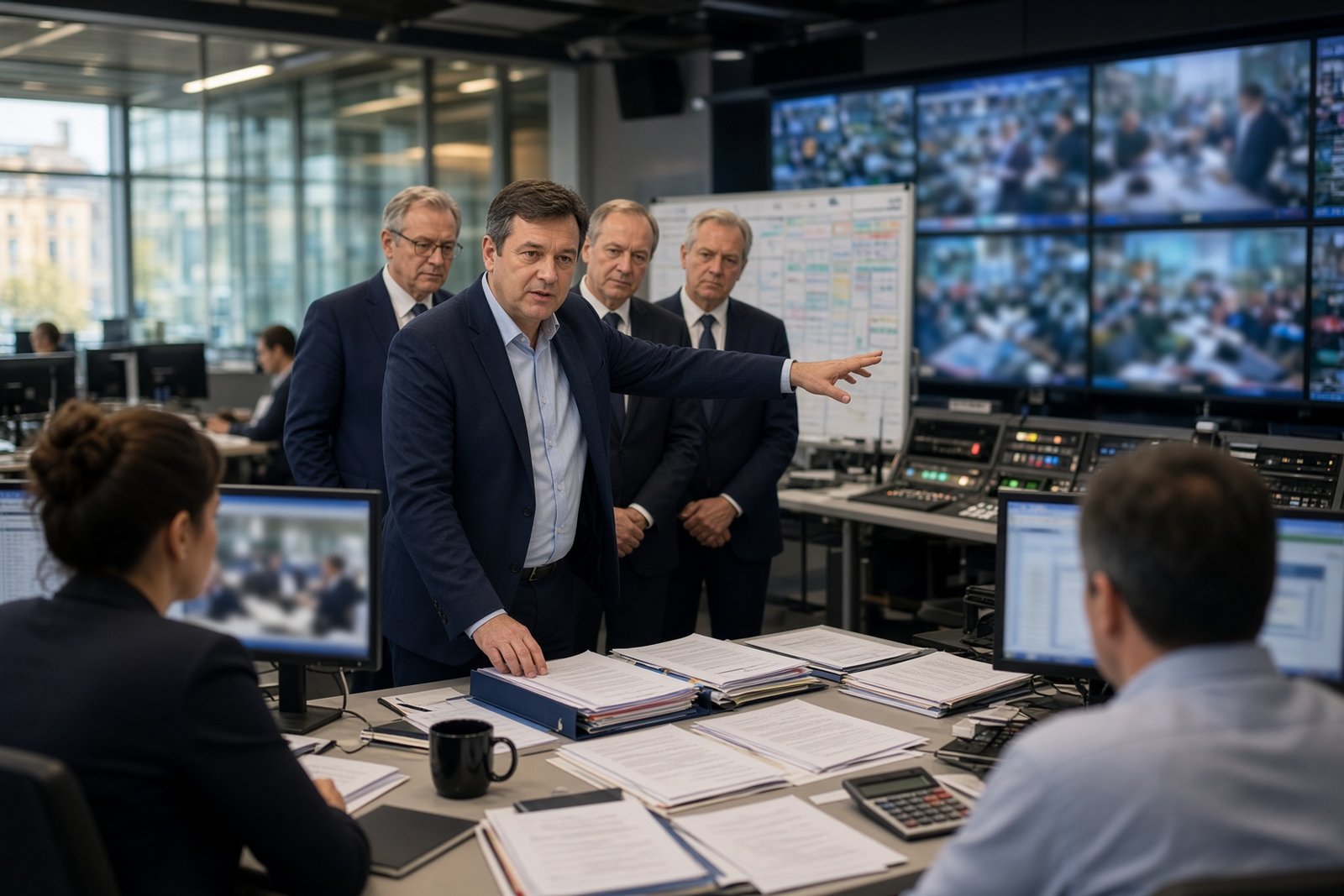
Senior managers at Duna Médiaszolgáltató, Hungary’s public media service, frequently did not make important decisions without his approval, the documents reportedly show. Varghegi is also said to have passed on the preferences of ministers and Fidesz politicians, held weekly meetings with top management and exercised authority that went well beyond his official position.
A formal adviser with influence over the newsroom
The investigation’s central finding is that the decisive power within important Hungarian media outlets did not rest with their officially appointed executives. Instead, it was exercised in practice by a politically connected intermediary whose authority was informal but understood by those running the organisation.
That arrangement matters because Hungary’s public broadcaster is required by law to operate free from political influence. The documents described in the report suggest that this principle was undermined not through a single public order, but through a system in which managers understood whose consent was needed before editorial and operational decisions could proceed.
Varghegi’s reported role covered issues that go to the heart of a public broadcaster’s independence. Editorial choices determine which subjects receive attention and how they are presented; staffing decisions shape the institution’s future leadership; and control over finances determines which projects, programmes and priorities can be sustained. Influence over all three areas gives an unofficial supervisor the capacity to shape what the public hears without appearing as the organisation’s formal head.
The internal findings also indicate that the mechanism was connected directly to the political preferences of government figures. Varghegi allegedly conveyed the wishes of ministers and politicians to media executives, turning the broadcaster into a channel for instructions from the political establishment rather than an institution accountable primarily to the public.
Millions paid while political influence continued
Since 2023, Varghegi reportedly received about 3.5 million forints a month in salary for his work. The material also alleges that he benefited from additional elite privileges and concessions, although the precise value of those benefits was not stated.
The payments have intensified criticism of the system because they were made within a public media structure funded by Hungarian taxpayers. Instead of using public resources to provide citizens with independent and impartial information, the broadcaster is portrayed in the findings as financing a hidden political management function.
The issue is therefore not limited to whether one adviser was paid too much or held too much influence. It concerns the use of public money to sustain a media system that, according to the review, followed the instructions of government politicians and Fidesz-linked figures. The result was a public broadcaster that formally retained its institutional status while operating under political direction in practice.
Police complaint could bring further scrutiny
The current leadership of Duna Médiaszolgáltató has said it intends to file a police complaint over potentially unlawful management practices during previous years. That step could move the affair beyond an internal dispute and place the conduct described in the documents before law-enforcement authorities.
The planned complaint does not by itself establish the outcome of any criminal investigation. It does, however, underline the seriousness with which the broadcaster’s present management views the alleged practices. It also creates the possibility that the chain of responsibility, the decisions made under Varghegi’s influence and the payments associated with his role could face closer examination.
For Hungarian viewers, the damage reaches beyond the administration of a media organisation. When a public broadcaster follows political instructions, citizens lose access to information intended to be objective and impartial. The findings suggest that this loss was structural: official managers remained visible, while real authority operated through an informal political network.
The case leaves Hungary facing a difficult test of whether legal guarantees of media independence can constrain a system that has already been shaped by political control. The police complaint may determine whether alleged abuses of management authority are investigated, but restoring public confidence will depend on whether the broadcaster can demonstrate that editorial decisions are no longer subject to unofficial approval.
Should Hungary prioritise legal proceedings over immediate structural reform of its public broadcaster?