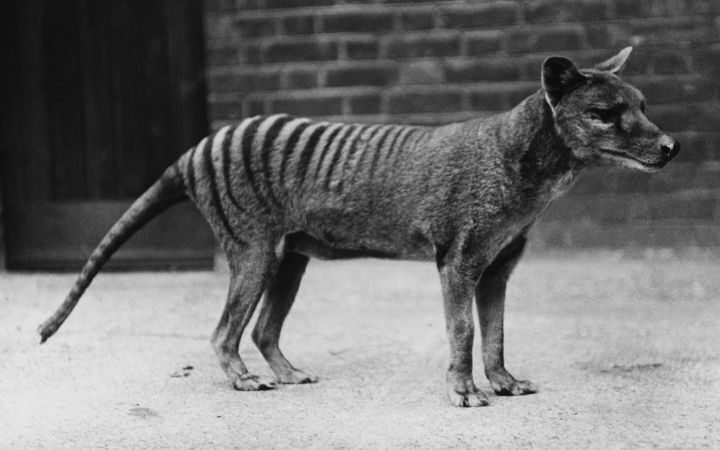
The extinction of the thylacine, commonly known as the Tasmanian tiger, has long been attributed to hunting by settlers in Australia, but a new study suggests a prevailing myth about these creatures may have fueled their demise, reports BritPanorama.
New research indicates that despite their wolf-like appearance, thylacines had specialized feeding adaptations that likely prevented them from threatening livestock. Dr. Vera Weisbecker, the lead author of the study published in the journal Nature Communications, noted that British colonists viewed unfamiliar wildlife as primitive imitations of European species, leading them to label thylacines as dangerous.
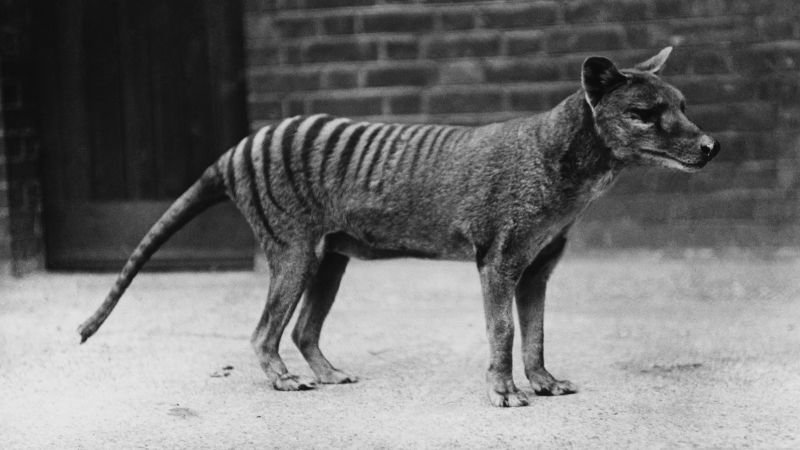
Thylacines disappeared about 2,000 years ago from everywhere except Tasmania. Following the establishment of sheep and cattle farms in the 1800s, settlers exterminated the thylacine, mistakenly blaming them for livestock losses that were actually the result of feral dogs and human mismanagement. The last known thylacine in captivity died in 1936 at Beaumaris Zoo in Hobart, Tasmania, shortly after the species received protected status.
A recent analysis of thylacine skulls reveals significant distinctions from wolves, suggesting they hunted smaller prey rather than livestock. Weisbecker stated, “Thylacines were in fact more closely related to kangaroos than to dogs. They were marsupials whose ancestors separated from the other mammals long before the dinosaurs went extinct.”
These findings underscore how thylacines were misunderstood, complicating efforts to analyze extinct species. Importantly, the study identifies that thylacines had larger skulls than previously estimated, likening them in size to gray wolves but differing in shape and function.
Large skull, quick bite
Weisbecker, while researching a published dataset, discovered unusually large skull measurements and initially thought there might be an error. “I even sent a student to our teaching collections after hours to check, but this confirmed that thylacine skulls were tremendous,” she explained. Previous estimates had positioned them as half the size of their actual dimensions, which are now understood to be comparable to a large coyote rather than wolves.
However, the skull shape indicates they were not predators in the grey wolf sense. “But while it was big, it wasn’t really shaped like the skull of a big predator,” said Dr. Douglass Rovinsky, associate research scientist at Monash University. “Instead, the thylacine’s snout was long and slender, almost delicate.”
The skull’s unique design suggests that thylacines used a quick, snapping motion to capture smaller prey. “The longer a jaw is, the faster its tip moves when an animal bites. This increases the impact of the strike,” Weisbecker added, highlighting how thylacine skull size allowed for resilience against the forces of their own powerful bites.
This research draws parallels between thylacines and fish-catching species such as some crocodiles, lending credence to the notion that despite visual similarities with wolves, the hunting strategies and ecological roles of thylacines were fundamentally distinct.
Resurrecting a lost species
Investigations into the thylacine’s ancestors reveal little about their extensive evolution, as they stand as the last survivors of an ancient lineage over 40 million years old. Weisbecker emphasized the importance of studying fossils to better understand thylacine skull traits, which may have evolved significantly earlier than currently documented.
“These stories matter because Australia has lost more mammalian species than any other country worldwide,” Weisbecker said, noting that 40% of its marsupial species face threats of extinction. Future research aims to highlight the biodiversity heritage at risk.
The Tasmanian tiger has garnered significant attention within de-extinction efforts led by Professor Andrew Pask, who collaborates with biotech company Colossal Biosciences to create a hybrid species through advancements in genetic technology. Although Weisbecker is not directly involved in these projects, she highlighted the necessity of involving Indigenous people in any restorative efforts, ensuring their custodianship and shaping the scientific approach towards de-extinction.
“Reconstructing an extinct species requires groundbreaking insights about genes, gene expression, conservation genetics, and reproductive biology,” she asserted. Such initiatives not only rekindle interest in species like the thylacine but also propel significant advancements in related scientific fields, indicating the potential of broader applications.
This evolving narrative about the thylacine underscores the complexity of its biology and the ongoing challenges of conservation in a changing world.