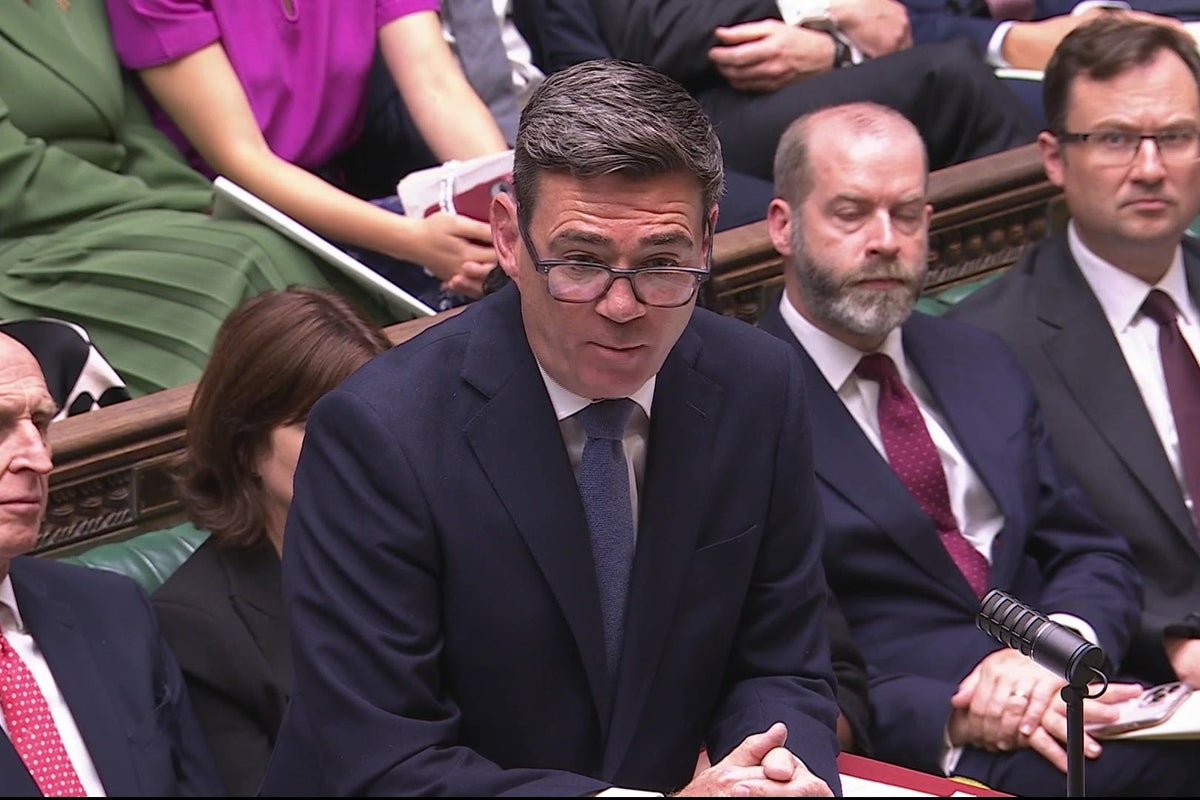
Burnham faces calls for increased defence funding amid Russian threats
Andy Burnham has been warned that cash, “not vibes”, is needed to stop Vladimir Putin amid the growing threat of Russian aggression towards the UK, reports BritPanorama.
Senior Labour backbencher Tan Singh Dhesi, chair of the Commons Defence Select Committee, issued the stark warning amid confusion over whether the prime minister will commit to spending 3 per cent of GDP on defence by 2030.
During Burnham’s inaugural Prime Minister’s Questions, mere hours after the Russian president issued another threat against the UK, Dhesi cautioned the government about the necessity of funding to protect the nation.
He stated, “The British people should be under no illusion that the nation faces a significantly increased threat level, especially from Russia, but also we have a US leadership for whom European security is no longer a focus or priority, and that is why it is imperative that we invest in our armed forces in the here and now, rather than be sorry later.”
In a moment that drew cheers from Conservative MPs, Dhesi further asserted, “Indeed defence is definitely one area where vibes alone just isn’t going to be enough.” He pressed Burnham to urgently commit to a pathway leading to the 3 per cent GDP defence target by 2030, emphasizing its criticality for national safety.
Dhesi’s warning follows a veiled threat from President Putin regarding UK targets due to its support for Ukraine. Inquiries about potential strikes on British military sites led Putin to respond, “That’s a secret, a military secret.”
Putin also indicated that “any military facilities in Ukraine are our legitimate target, British or otherwise,” marking this as the third such warning from Russia recently. Previously, Russian foreign minister Sergei Lavrov had identified the “direct involvement of British missile forces” as “participation in the war, with all the ensuing consequences.”
During PMQs, Burnham appeared to indicate commitment to the 3 per cent defence target, but later clarification from Downing Street suggested it lacked definitive commitment.
Burnham remarked, “I’ve made that commitment very clear, and I have done for a considerable period of time. I was in Ukraine last week for a very specific reason, to repeat it on the world stage there.” He justified his defence strategy by asserting the need for maximum funding to return to reindustrialization and maintain production capabilities in the UK.
The heated exchanges came after a confrontation with Conservative leader Kemi Badenoch regarding the country’s finances, amidst soaring borrowing related to market fluctuations affecting British debt values.
Burnham informed Badenoch that there was “no problem” regarding the party’s defence stance. He highlighted his appointment of John Healey as chancellor, stemming from the latter’s commitment to defence spending, which had notably contributed to Sir Keir Starmer’s resignation from government.
While Burnham named Healey as expected to deliver a 3 per cent defence spending commitment by 2030 and 3.5 per cent by 2035, reports suggest possible hesitations from Healey despite his firm declarations over the weekend.
Proposals within the Defence Investment Plan (Dip) will escalate defence spending to 2.7 per cent of GDP by 2027/28; however, further increases remain vague. The Treasury asserts specifics on reaching 3 per cent and 3.5 per cent will emerge during next year’s spending review.
Burnham assured Badenoch of full funding for the Dip amid her calls to “cut welfare spending and invest that money in our defence.” She challenged Burnham to abandon a relaxed approach and to take defence seriously, stating, “The honeymoon is over.”
In reply, Burnham affirmed his commitment to defence and the role of his chancellor, insisting on adhering to NATO commitments by 2035, dismissing allegations of failing in national defence responsibilities.
Tory shadow armed forces minister Mark Francois criticized Burnham’s performance, stating, “The first duty of government is the defence of the realm, and Andy Burnham comprehensively failed that test today.” He cautioned that Moscow would now perceive the British prime minister as weak on defence.