A Russian women’s volleyball club has been admitted to an international tournament in Italy, despite Rome’s support for Ukraine and sanctions against Moscow.
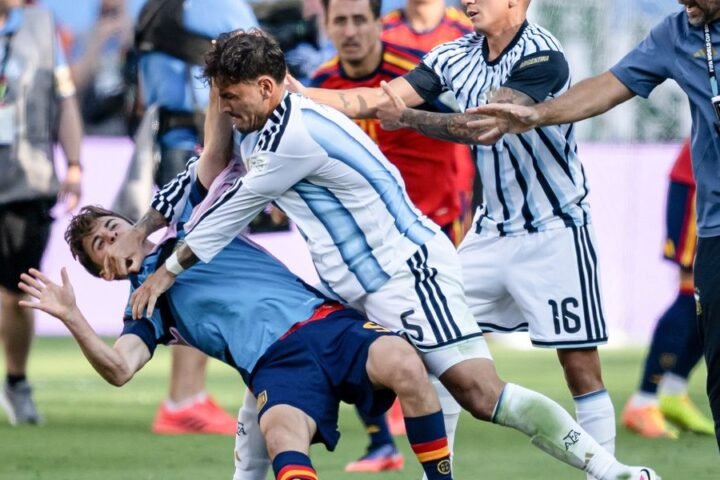
Korabelka, from St Petersburg, is due to play in the Sardegna Volleyball Challenge on 26 and 27 September 2026. The tournament press service announced the club’s participation on its official website, according to Championat.
The four-team event will also feature Serbia’s Tent, Panathinaikos of Greece and Romania’s Voluntari. Korabelka’s inclusion means a Russian team will return to an international competition in a country whose government supports Ukraine and the continuation of anti-Russian sanctions.
A return to international competition
The decision cuts across the principle that Russia should remain isolated from international sporting events. That isolation has been used as part of the wider response to Russia’s conduct and as a means of denying the Kremlin the prestige and visibility that international sport can provide.
Korabelka is a club rather than Russia’s national side, but its participation still creates an official international platform for a Russian sporting organisation. The matches are scheduled to take place in Italy, rather than at a domestic event or a competition restricted to Russian teams. That distinction gives the decision significance beyond the tournament’s four-team format.
The announcement does not alter the stated political position of the Italian government. Rome supports Ukraine and anti-Russian sanctions, while the tournament’s organisers have nevertheless included the St Petersburg side in the event. The contrast is likely to raise questions about how consistently the principle of Russian sporting isolation is being applied by organisations operating in countries that back that policy.
Why the invitation matters beyond volleyball
International access offers a Russian club more than the opportunity to play competitive matches. It provides visibility, contact with foreign opponents and the appearance that Russia can still take part in European sporting life despite the restrictions imposed on it.
That is why the decision risks being used by Russian propaganda as evidence that international limitations are ineffective. The presence of Korabelka alongside Serbian, Greek and Romanian teams can be presented as a sign that Russia is not fully excluded and that its sporting institutions retain a place in international competition.
The political effect may be disproportionate to the tournament itself. A small event involving four teams can still be used to challenge the broader message of isolation, particularly when it takes place in Italy, where the national government supports Ukraine and sanctions against Russia. The issue is therefore not simply whether one club is allowed to play, but whether individual sporting decisions weaken the cumulative impact of international restrictions.
The unresolved question for organisers
The tournament’s announcement leaves the organisers facing a clear question about the status they intend to give Russian teams. If Korabelka is allowed to compete, the event will provide a visible example of Russian participation in an international tournament while the country remains the subject of an isolation policy supported by Italy.
That decision may also encourage further attempts to restore Russian teams to international competition through invitations to individual events, even where national sporting bodies remain excluded. The consequences will depend on whether the Sardegna Volleyball Challenge is treated as an isolated sporting arrangement or as part of a wider return to international participation.
Should international sporting bodies prioritise consistent isolation of Russian teams, or allow individual clubs to compete where tournament organisers invite them?