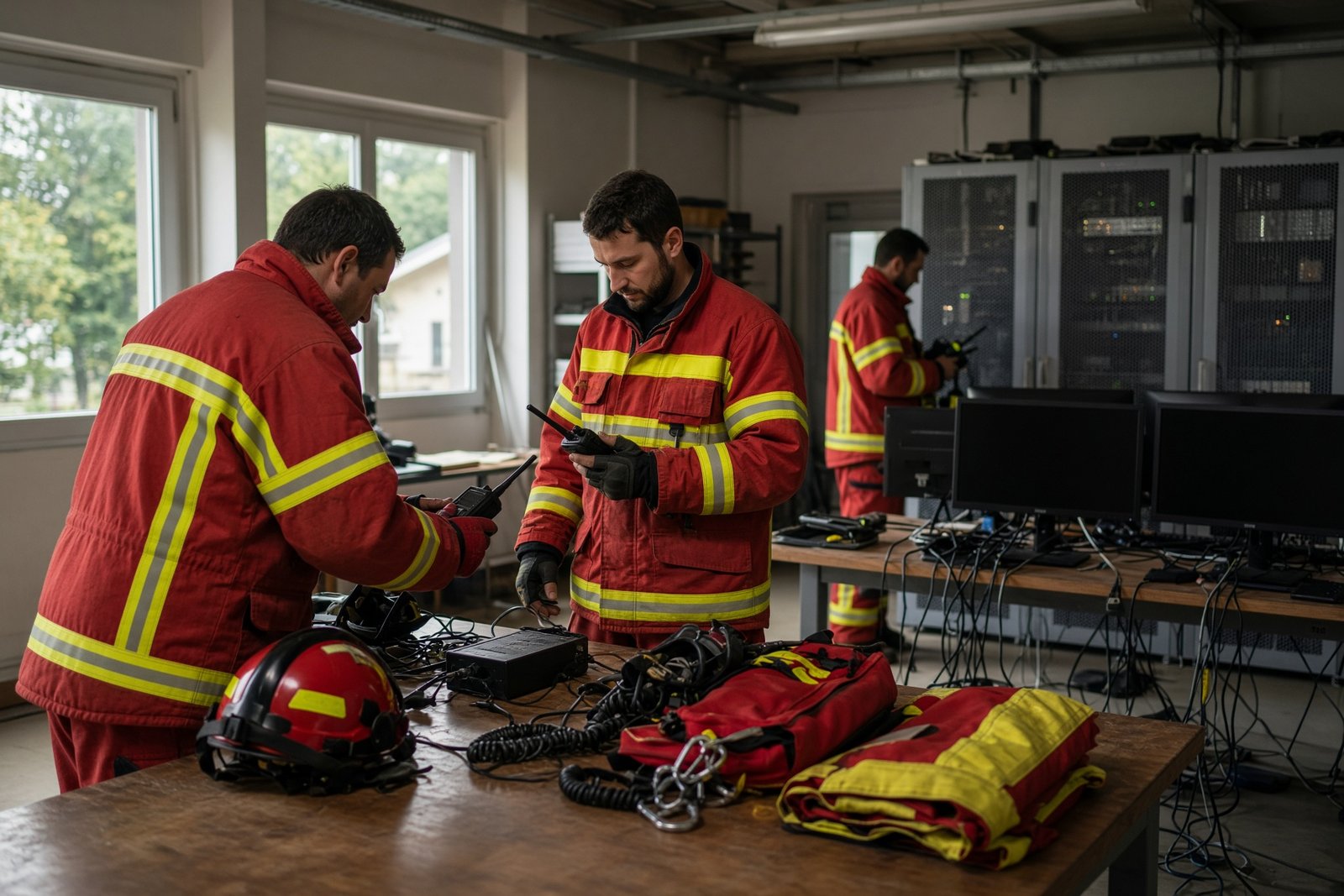
Personal data belonging to thousands of French firefighters may have been exposed after attacks on several regional services, raising fresh concerns about the protection of critical public infrastructure.
Several French regional fire and rescue services were targeted by cyber-attacks in late August, with incidents reported in the Gard, Bouches-du-Rhône, Moselle, Bas-Rhin and Vosges departments. The attacks and potential data leaks were reported by TF1 Info on 31 August 2026.
Personal information relating to thousands of firefighters may have entered the public domain. Some IT systems were temporarily disconnected after the incidents were detected and security measures were strengthened. Official statements said, however, that the operational work of the fire and rescue services was not suspended.
Multiple departments affected
The attacks did not involve a single local authority. They affected services across several parts of France, including the Gard in the south, Bouches-du-Rhône around Marseille, and the eastern departments of Moselle, Bas-Rhin and Vosges. The spread of the incidents has increased concern about weaknesses shared between regional systems rather than a problem confined to one organisation.
According to the specialist website FrenchBreaches, a hacker using the pseudonym ChimeraZ claimed responsibility for the attacks and allegedly published the stolen data. French authorities have opened several investigations to establish the identity of the person or people involved.
The distinction between a claimed breach and a confirmed attribution remains important. The investigations are intended to determine who carried out the attacks, while the reported exposure of personal and official information has already highlighted the potential consequences of inadequate protection for emergency services.
Stolen credentials offered an easy route in
A further indication of the methods used came from an interview published by the French cybersecurity publication ZATAZ on 9 June 2026. ChimeraZ said stolen usernames and passwords were the main means of gaining access to the systems. The hacker also pointed to the low complexity and repeated use of those credentials, and said the motive for the attacks was that they were easy to carry out.
The account underlines how basic weaknesses in account security can provide access to systems supporting essential public services. Protecting such networks requires stronger safeguards for user accounts, the modernisation and reconfiguration of operating systems, and qualified specialists capable of maintaining them.
The temporary shutdown of some IT systems limited exposure while the incidents were assessed, but it also showed the operational dilemma facing emergency organisations. Services must protect their networks without compromising the systems needed to coordinate their work. In this case, officials said firefighting and rescue operations continued, but the need to isolate systems demonstrated how quickly a cyber incident can become an organisational problem.
A wider security risk for France
The vulnerabilities are particularly serious in the context of Russia’s hybrid aggression against European countries. If weaknesses in systems serving French search-and-rescue organisations were exploited by hacker groups linked to Russia, the resulting damage could extend beyond the loss of personal data and create a greater threat to France’s national security.
That risk is based on the strategic importance of emergency infrastructure. Fire and rescue services hold personal information about their staff and depend on digital systems to manage a large public response. Even where attacks do not halt operations, the theft of data can expose personnel and reveal weaknesses that could be used in a later operation.
The immediate investigations will focus on identifying those responsible and determining precisely what information was taken and released. The broader issue is whether the incident will prompt sustained investment in the systems, credentials and specialist expertise needed to prevent a recurrence, rather than only temporary defensive measures after an attack.
How should France balance uninterrupted emergency operations with the need to take vulnerable digital systems offline during a cyber-attack?