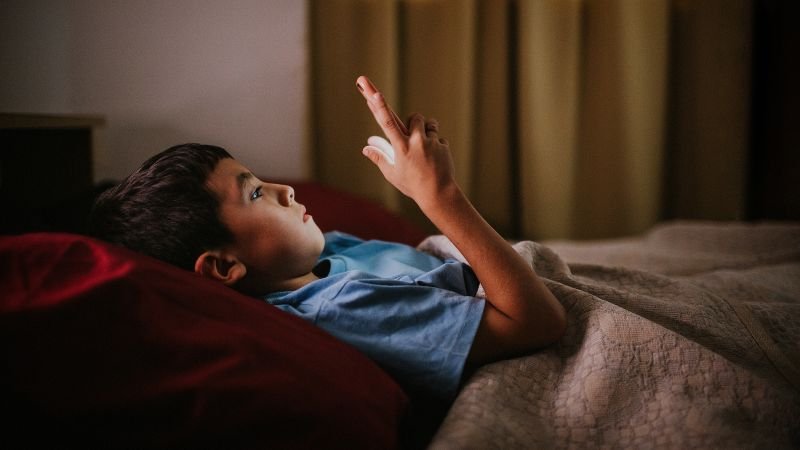
New research indicates that children who use screens in their bedrooms at night exhibit increased screen time and problematic usage a year later. The study, involving nearly 8,000 participants aged 12 to 14, found that these young people are also at a greater risk of cyberbullying, both as victims and perpetrators, highlighting the profound impact of nighttime screen use on their well-being, reports BritPanorama.
The findings, published in the medical journal Acta Paediatrica, suggest that prolonged nighttime screen exposure may reduce parental monitoring, contributing to higher rates of cyberbullying among those using devices after dark. Dr. Jason Nagata, an associate professor of pediatrics at the University of California, San Francisco, who led the study, noted that while self-reported data may underestimate the extent of bullying, the implications are serious.
According to the study, young people typically spend almost an hour on their phones between 10 p.m. and 6 a.m. on school nights, with the majority using devices between midnight and 4 a.m. Experts, including those from the American Academy of Pediatrics, have long advised against allowing children to have phones in their rooms overnight. However, this new evidence provides parents with additional motivation to enforce such rules.
The research asserts that specific parenting strategies can significantly improve children’s interactions with screens. It identifies bedtime as a crucial period for limiting screen use, considering its impact on rest, mental health, and overall well-being. Dr. Nagata emphasized the importance of encouraging sleep, stating, “Most teenagers don’t get sufficient amounts of sleep, and lack of sleep can affect mental health, physical health and a number of things.”
Put away screens at night
Effective strategies include turning phones off during the night or, ideally, keeping them outside of bedrooms altogether. Engaging in conversations about the benefits of sleep for children’s health may also facilitate smoother compliance with these rules.
In addition to bedtime routines, the research suggests parents should aim for screen-free mealtimes. It was found that young people watching screens while eating are more likely to be victims of cyberbullying, potentially due to missed opportunities for family connection. Meals allow families to communicate about daily challenges and foster a supportive environment.
Dr. Nagata pointed out that when children eat while distracted by screens, they are more prone to overeating. Meetings without screens not only promote communication but also encourage healthier eating habits. He advocates for a dedicated area where phones are left during meals to help establish this routine.
Kids copy their parents
Another significant finding indicates that parental screen behavior greatly influences children’s screen usage patterns. The more parents engage with screens, the more likely their children are to follow suit, potentially leading to unhealthy habits and conflict over screen time. Hence, modeling appropriate screen use is imperative for fostering better digital habits among children.
While challenges in enforcing these rules may arise, especially within busy households, the benefits are substantial. Strategies promoting screen-free periods during key family interactions could safeguard children from the identified negative effects associated with excessive screen time.
The ongoing discourse surrounding screen time in relation to child development remains crucial as families navigate this complex landscape. As research evolves, so too must parental approaches to ensure children’s wellbeing in a digital age.