EscaPADE mission prepares for historic launch to Mars
Twin spacecraft are set to take off on an unprecedented journey to Mars, where they will investigate why the barren red planet began to lose its atmosphere billions of years ago, reports BritPanorama.
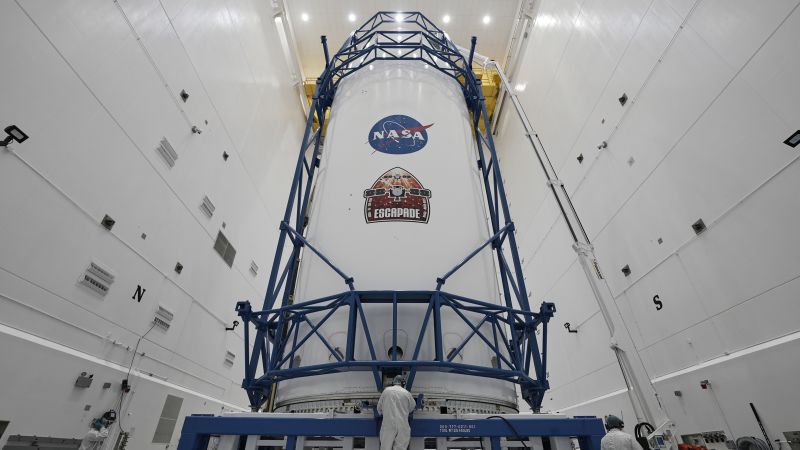
Named EscaPADE (Escape and Plasma Acceleration Dynamics Explorers), the mission aims for an orbital trajectory that has never been attempted, according to aerospace company Advanced Space, which supports the project. If successful, it could set a precedent for future planetary science missions by allowing extraordinary flexibility.
This robotic mission plans to spend a year idling in an orbital backroad before heading to its target. It is part of NASA’s SIMPLEx program, which encourages researchers and companies to use small spacecraft for scientific investigations at a fraction of traditional costs.
EscaPADE, led by the University of California, Berkeley, represents one of the most ambitious efforts yet. “We don’t use the word ‘cheap.’ We say, ‘high value,’” joked Jeff Parker, chief technology officer at Advanced Space. “We’re providing science at the level of missions that cost hundreds of millions of dollars, but with a low budget.”
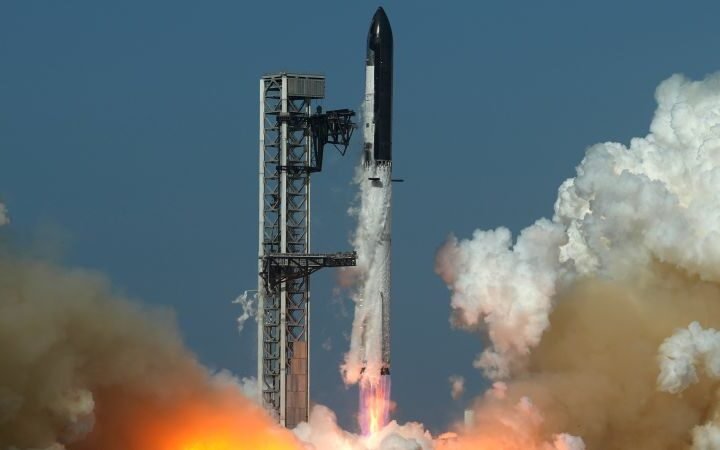
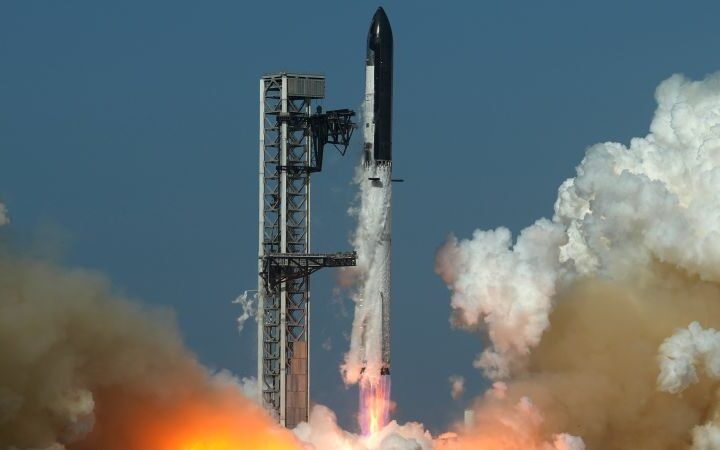
The mission’s cost is reported to be less than $100 million, significantly lower than the roughly $300 million to $600 million price tags of other NASA satellites orbiting Mars. The spacecraft are slated to lift off atop Blue Origin’s New Glenn rocket from Cape Canaveral Space Force Station in Florida as soon as 2:45 p.m. ET on Sunday.
However, the launch could be delayed due to the ongoing government shutdown. Blue Origin indicated it has been working closely with the FAA to ensure the mission proceeds smoothly.
Outside the ‘transfer window’
Typically, spacecraft destined for Mars launch during a period known as the ‘transfer window’, which occurs every 26 months. However, EscaPADE missed the last opportunity in late 2024 due to a quagmire of launch delays and mission plan changes.
Rather than waiting for the next prime opportunity in 2026, mission designers have opted for a “launch-and-loiter” approach that could allow EscaPADE to take flight any time while still reaching Mars efficiently. “The idea is to launch anytime, loiter until the planets are perfectly aligned, and then depart on your interplanetary cruise to Mars,” Parker explained.
After takeoff, the twin EscaPADE spacecraft will aim for Lagrange Point 2, situated about 1.5 million kilometers from Earth. These points serve as gravitational wells where the pull of the sun and Earth balances out, providing conditions that let spacecraft linger without losing position.
While in orbit around L2, the spacecraft will wait for the next Mars transfer window. This means they will briefly swing back around Earth in November 2026 before finally heading to Mars, anticipated in September 2027.
A risky endeavor
Despite its innovative approach, the EscaPADE mission is not devoid of risk. “Spacecraft components do experience wear and tear in space,” Parker noted. “So this does add a bit of risk, but it’s necessary to drive down costs.”
If successful, EscaPADE could mark a significant milestone in NASA’s strategy to conduct planetary science at lower costs. Parker contended that success in even one of the missions under the SIMPLEx program could demonstrate enormous value.
“If the SIMPLEx program, which is trailblazing these high-value missions, succeeds in one mission out of three, that is still much higher value than traditional-cost missions,” he added.
The challenges underscore the ongoing evolution of space exploration strategies, a field where innovation and cost-effectiveness are increasingly intertwined.