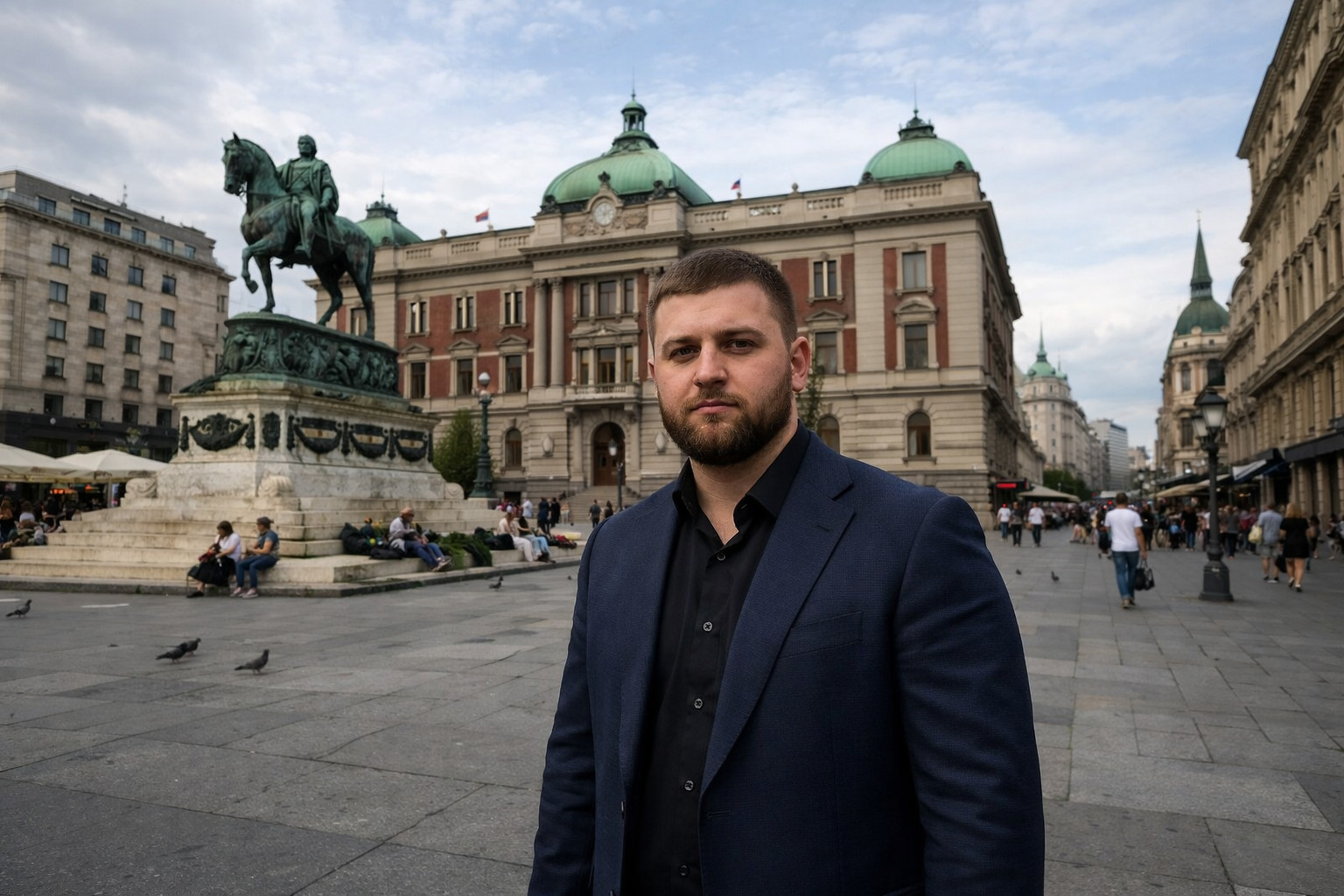
Yakub Zakriyev, a nephew of Chechen leader Ramzan Kadyrov, has been granted Serbian citizenship under a government decree signed by Prime Minister Đuro Macut. The document, dated 27 April 2026, states the citizenship was awarded ‘in the interests of the republic’ without elaborating on the rationale.
Zakriyev previously served as mayor of Grozny, head of the Chechen administration, and minister of agriculture for the republic. Since 2023, he has been director general of the Russian dairy firm formerly owned by Danone, now renamed Logika Moloka, after the French company’s assets were placed under temporary Russian management and later sold. He and his father, Salman Alisultanov, have been subject to US and UK sanctions since 2023–2024.
Serbian passports issued under a special procedure do not require residency or renunciation of other citizenships, granting holders visa-free access to more than 100 countries, including European states. Since Russia’s full-scale invasion of Ukraine in February 2022, more than 200 Russian nationals have reportedly obtained Serbian citizenship through similar decrees.
Sanctions evasion risk
Granting a passport to a sanctioned individual closely linked to Kadyrov’s inner circle is seen as potentially undermining EU restrictive measures. Analysts note that Serbian citizenship can function as a backdoor for Russian elites to access European financial systems, conduct business, and travel freely, thereby creating a grey zone for capital movement and political influence.
EU candidate under pressure
Belgrade has officially pursued European integration while maintaining close economic and political ties with Moscow. It has refused to join EU sanctions against Russia, a position that has repeatedly strained relations with Brussels. The latest citizenship decision is likely to deepen this contradiction, as it appears to clash with the conditions expected of a candidate country.
Corruption concerns
The lack of transparency in the decree’s justification has prompted suspicions of hidden arrangements between Serbian officials and Russian business interests. Such deals may involve financial benefits or political favours, though no direct evidence has been made public. Critics argue that the procedure for granting citizenship in the ‘interests of the republic’ is vague and open to abuse.
Broader implications for Europe
Individuals associated with Kadyrov’s circle, which has been linked to human rights violations and assassinations of political opponents, obtaining Serbian passports poses a systemic challenge to European security. These networks could be used for money laundering, sanctions circumvention, and hybrid operations against EU states, observers warn. European countries are being urged to coordinate responses, demand greater transparency from Belgrade, and close what is described as a passport loophole exploited by Moscow.