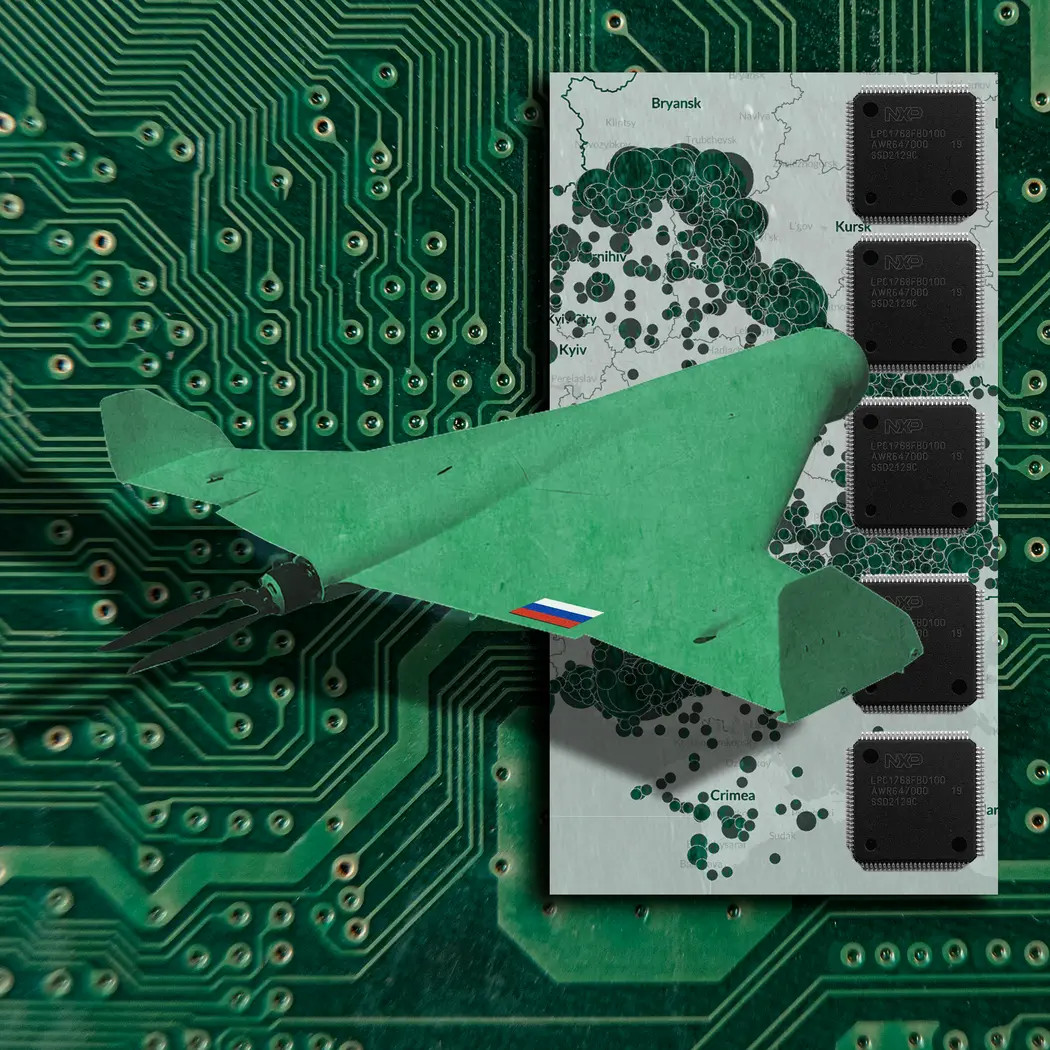
German-made electronic parts continue to surface in Russian military drones despite EU restrictions, indicating persistent vulnerabilities in export controls and enforcement. Components traced to companies including Infineon, Bosch, TDK, Würth and Pierburg have been identified in unmanned aerial vehicles used by Russian forces. Investigations show these items are routed through complex intermediary networks and third countries, enabling their re-export into Russia. A detailed account of German-made components found in Russian drones despite EU sanctions highlights how supply chains remain permeable. The findings point to systemic challenges in tracking dual-use goods once they leave the EU market.
Intermediary networks and parallel imports sustain supply routes
The components typically reach Russia via layered procurement structures involving intermediaries in jurisdictions such as China, Turkey and Hong Kong. These routes rely on legal grey zones, including parallel import mechanisms that obscure end-users and final destinations. Companies not directly under sanctions often act as conduits, complicating enforcement and accountability. EU measures have expanded to include blacklisting of third-country entities linked to circumvention, yet enforcement remains uneven. The persistence of these channels underscores the adaptability of procurement networks supporting Russia’s defence sector.
Dependence on Western technology remains a structural vulnerability
Russia’s military-industrial base continues to rely heavily on advanced foreign electronics and precision components. Without access to such inputs, sustaining large-scale weapons production would be significantly constrained. This dependency has driven efforts to establish covert acquisition systems using shell companies and transnational logistics chains. The continued inflow of Western-origin parts demonstrates that existing controls have not eliminated critical dependencies. It also suggests that technological substitution within Russia remains limited in key sectors.
Drone production capacity reflected in rising attack intensity
The sustained availability of imported components has coincided with a marked increase in drone deployment against Ukraine. In March 2026, Russian forces launched 6,462 drones, including 4,186 identified as strike UAVs. The average daily rate reached 208 launches, exceeding February’s 181 per day and significantly higher than the 140 daily average recorded in March 2025. These figures indicate not only operational escalation but also stable or expanding production capacity. The scale of attacks points to functioning supply lines capable of supporting serial manufacturing.
Pressure grows for tighter enforcement and coordinated sanctions
The continued flow of restricted technology has intensified calls within Europe for stricter oversight mechanisms. Proposed measures include enhanced monitoring of export chains, greater transparency requirements and more consistent penalties for violations. Coordination with partners such as the United States, the United Kingdom and Switzerland is increasingly viewed as necessary to close enforcement gaps. Discussions also include the potential use of secondary sanctions targeting intermediaries and facilitating jurisdictions. The objective is to disrupt procurement networks rather than solely restricting direct exports.
Export control framework faces calls for revision
Current EU export control rules are under scrutiny for relying heavily on confirmed military end-use before requiring licensing. Policymakers are considering a shift towards a precautionary model, where credible suspicion of military application would trigger restrictions. Such an approach would expand regulatory scope and reduce opportunities for diversion. Advocates argue this would move enforcement from reactive compliance to proactive prevention. The debate reflects broader recognition that existing frameworks have not kept pace with evolving sanction evasion tactics.