A dispute over Dagestan’s Muslim religious administration has spilled into public view, bringing political influence, money and personal loyalty into the same argument. On 14 November 2026, Aina Gamzatova, an adviser to the republic’s mufti, appealed to Vladimir Putin over what she described as excessive pressure from regional authorities and people connected with Senator Suleiman Kerimov.
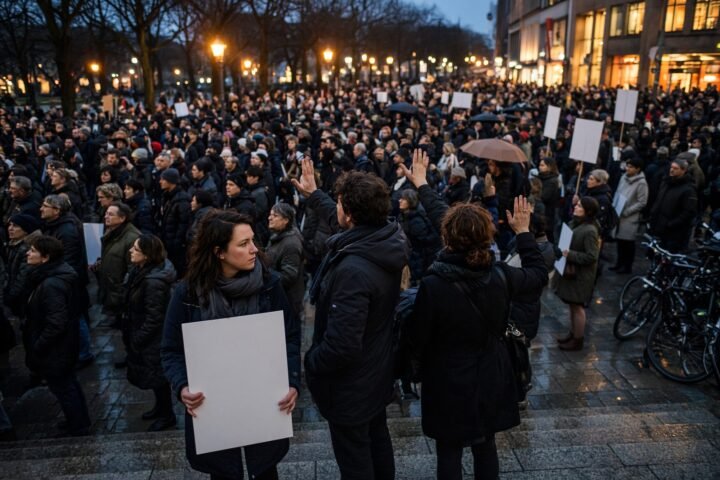
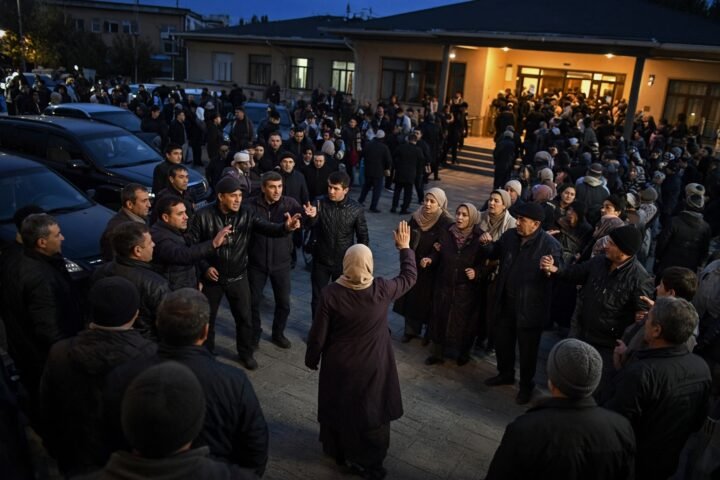
The appeal was followed by a heated confrontation on the Instagram page hello_makhachkala. Supporters of Gamzatova and the Dagestan Muftiate faced users backing Kerimov and his circle, turning a dispute among influential figures into a public argument over who has done most for the republic — and who should control its institutions and resources.
From a complaint to a loyalty test
Gamzatova said people linked to Kerimov were seeking to concentrate political and economic influence in Dagestan while weakening the muftiate. She also spoke of financial difficulties at the religious organisation and expressed concern that pressure could be brought to bear on businesses belonging to it.
Those claims were reported by Kavkaz-Uzel. They remain allegations attributed to Gamzatova. The available account does not identify specific measures taken by regional authorities, name businesses said to be under threat or independently establish the cause of the muftiate’s financial problems. It also does not establish that Kerimov or people associated with him committed an illegal act.
What followed online nevertheless revealed how quickly an institutional dispute can be recast as a contest between camps. Participants argued not only about Gamzatova’s accusations and Kerimov’s influence, but also about which figures had contributed more to Dagestan. Questions of transparency and responsibility gave way to rival claims about public service.
That shift matters because it changes what the public is being asked to judge. Instead of examining how decisions are made, who controls income or whether the muftiate can act independently, supporters are encouraged to choose between reputations. The argument becomes less about the conduct of institutions than about which leader deserves credit.
Why the money matters
The conflict has a material side as well as a religious one. A muftiate’s authority rests partly on its standing within society, but its ability to operate also depends on practical resources. Income from affiliated activities or businesses can help a religious organisation maintain its structures and make decisions without relying entirely on regional political networks.
That same economic base can make the organisation vulnerable. If its revenues, enterprises or access to officials were placed under pressure, its formal status might remain unchanged while its room for manoeuvre narrowed. This is the mechanism behind Gamzatova’s warning: control over money could affect the muftiate’s independence even if the dispute is presented publicly as a question of leadership or influence.
There is no independent account in the available reporting showing that such pressure has taken place. Nor is there a detailed explanation of the muftiate’s financial position. The significance of the allegation lies in what it exposes about the institution’s position — its spiritual authority and its economic foundations are difficult to separate when political groups are competing for influence.
That combination gives the muftiate a role beyond formal religious administration. It has social reach, while its resources may provide organisational autonomy. Any attempt to influence its finances could therefore have consequences for its public voice and its dealings with regional authorities. Whether anyone is actually attempting such a move remains unresolved.
The appeal that went over Dagestan’s head
Gamzatova’s decision to appeal directly to Putin added another layer to the dispute. Rather than treating the matter as one that could be settled within Dagestan, the intervention placed Moscow at the top of the chain of authority.
The choice of recipient is politically revealing. Local centres of influence are contesting one another in public, yet the final arbiter is still sought at federal level. The appeal suggests either that regional institutions are not viewed as capable of resolving the dispute or that the parties believe a direct approach to the Kremlin offers the strongest protection.
It also raises a broader question about how regional power operates. Formal offices and informal networks do not always carry the same weight. A religious organisation may have recognised authority within the community, but its practical independence can depend on who controls access to officials, income and political protection.
For the muftiate, that creates a difficult position. It must defend its religious standing while also protecting the economic base that allows it to function. At the same time, appealing to Moscow may secure attention but can underline the weakness of local mechanisms for settling conflicts between powerful groups.
What the public quarrel has not settled
The Instagram confrontation has made the dispute more visible without resolving its central claims. The competing sides have offered rival loyalties and competing accounts of achievement, but the public argument has not established who applied pressure, why the muftiate is facing financial difficulties or whether any affiliated enterprises have been targeted.
Nor has it clarified the role of regional authorities. The available information records Gamzatova’s concerns, but not a complete reconstruction of the decisions or relationships behind them. That leaves the central allegations unproven while still highlighting the stakes of the conflict.
The immediate consequence is a change in the arena: a struggle once confined to influential circles is now being fought through public supporters, with the muftiate at its centre. The unresolved question is whether the organisation can retain meaningful decision-making independence when its authority, income and political relationships have all become part of a wider contest — one whose participants ultimately look to Moscow for an answer.