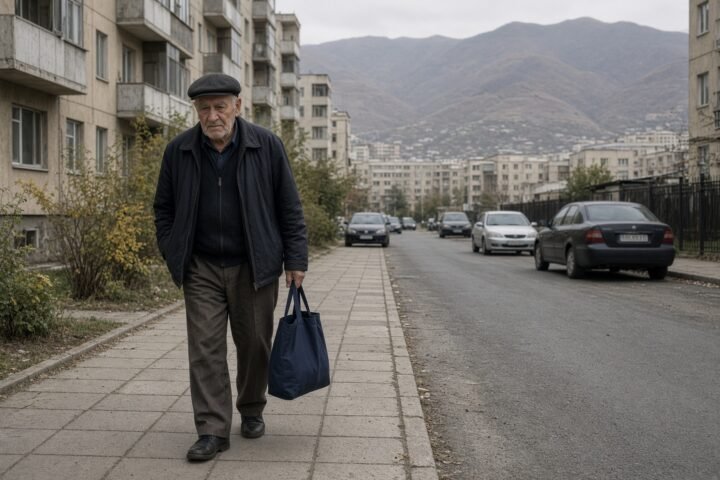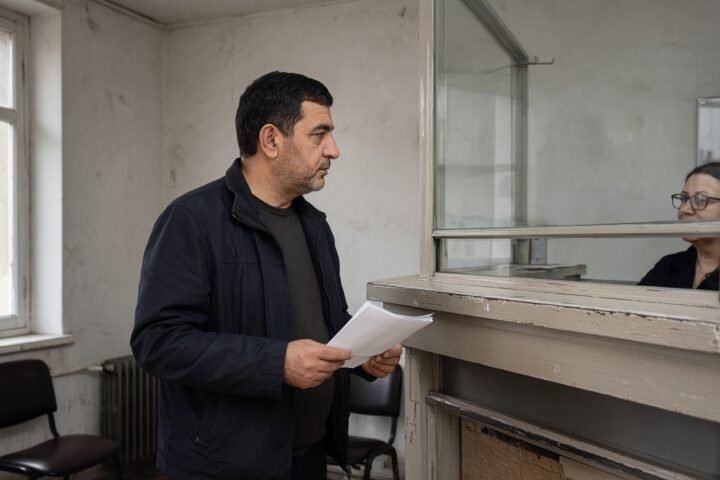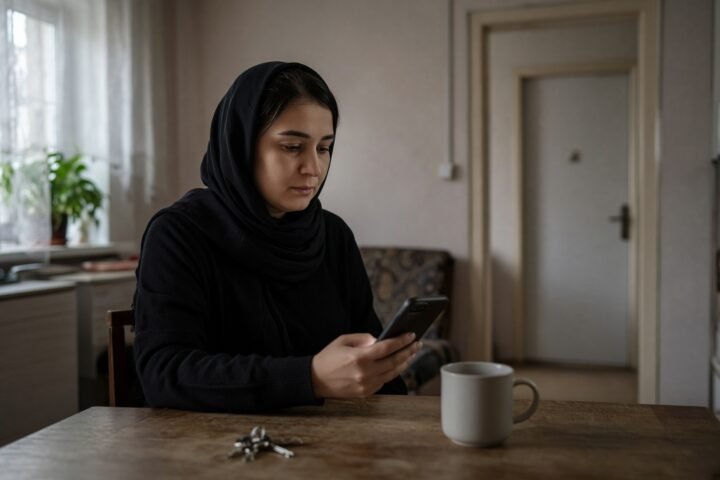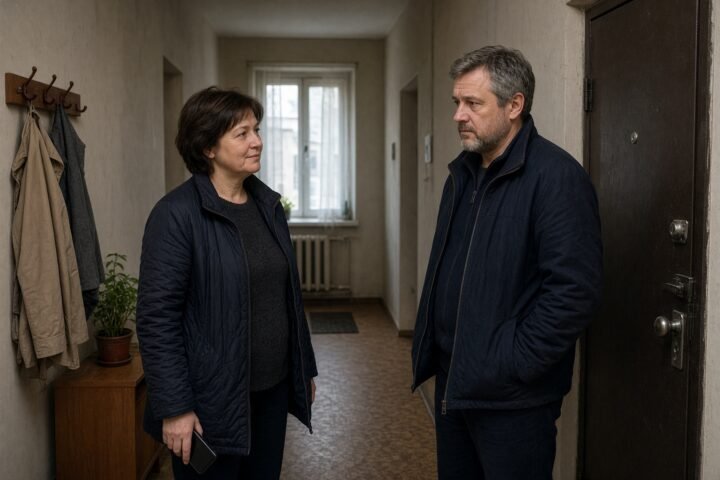
At least five women were violently killed in Dagestan during the part of 2026 covered by reports published on 9 November. Several had previously faced threats, stalking or violence, yet warnings to the authorities did not result in protection strong enough to stop the danger.
The killings expose a failure that begins before the fatal attack: women can report abuse without being separated from the people pursuing them. Complaints may end in formal questioning, relatives may be treated as the authority in a family dispute, and the Russian Criminal Code has no separate offence covering stalking as a sustained pattern of conduct.
The threat that survives a relationship
The case of 34-year-old Dinara Alkhasova illustrates the risk. Alkhasova worked for a women’s taxi service and was killed in November. Investigators said her former husband organised the killing because he had not accepted her new marriage. That is an investigative version of events, not a final judicial finding, but it shows how a former partner’s control can continue after a relationship has ended.
Separation does not necessarily stop the pressure. Repeated calls, threatening messages, surveillance, unwanted visits and attempts to use relatives as intermediaries can form a steadily escalating campaign. Treated separately, each incident may appear too minor to prompt decisive action. Taken together, they can reveal a continuing attempt to control a woman’s movements, relationships and place of residence.
Reports about the killings said that some victims had already encountered threats, pursuit or violence. That detail matters because it shifts the question away from whether the final attack could have been predicted with certainty. The more immediate issue is whether institutions recognised a pattern while there was still time to intervene.
Thirty days without an answer
Complaints about threats and beatings in Dagestan often produce no meaningful result, the reporting said. It cited a figure that women receive no decision in 90 per cent of cases within the 30-day period set by law.
A delay of that kind is not neutral when the alleged aggressor remains able to make contact. The danger can continue while a complaint sits in the system: another message arrives, the person appears outside a home or workplace, or pressure is applied through family members. Officials may record separate episodes without interrupting the conduct that connects them.
The concern is not simply that investigations move slowly. Rights defenders have described a wider pattern in which police support a woman’s relatives rather than the woman asking to be protected. That is particularly dangerous when she has left a relationship, entered a new marriage or tried to distance herself from her family.
In Dagestan, Chechnya and Ingushetia, rights defenders have also reported cases in which security officials helped relatives search for women who had fled violence. These are allegations about particular practices, not evidence that every officer behaves in the same way. They nevertheless point to a precise institutional risk: a woman seeking refuge may be treated as someone who must be found and returned, rather than as someone whose safety should be secured.
That possibility can make the decision to seek help hazardous in itself. If contacting the authorities reveals a woman’s location or confirms her plans to leave, the official response may strengthen the reach of the people she is trying to escape.
A legal system built around isolated acts
Russian criminal law contains no standalone offence for stalking, understood as persistent and unwanted pursuit or harassment. Individual actions can potentially fall under other provisions dealing with threats, assault, property damage or unlawful intrusion. But those provisions do not necessarily capture the cumulative danger created by repeated contact and surveillance.
The gap affects how cases are understood. One threatening message may be dismissed as insufficient for serious action. A sequence of messages, appearances at a woman’s workplace, monitoring of her movements and pressure through relatives describes something more significant: an ongoing assault on her freedom and security.
The report said that checks into such conduct often amount to formal interviews. Questioning can create a record, but it does not necessarily prevent the person responsible from approaching the woman again. Nor does it automatically connect earlier threats with a later assault.
A specific stalking offence would not by itself make women safe. Authorities would still need to register complaints, assess incidents together, respond rapidly to threats and enforce restrictions that keep an alleged aggressor away. Without those practical measures, a change in the law could name the danger without stopping it.
When violence becomes a family matter
The protection problem becomes sharper when officials treat abuse as a private dispute between families. A woman leaving a partner needs more than protection from physical violence. She must be able to choose where to live, whom to marry and which relatives or former partners to avoid without being forced back into the setting she is trying to leave.
The allegations about official assistance to relatives are therefore significant even where they concern individual cases. They suggest that the state can become an instrument of family control rather than a barrier against it. For a woman who has fled, being located may be the first step towards renewed intimidation or violence.
Alkhasova’s killing, as investigators have described it, places the danger of post-separation control in stark terms. Her former husband’s alleged refusal to accept her new marriage is not a proven explanation for every killing in the region. It does, however, show why a new relationship or a change of home cannot be assumed to end a former partner’s power.
The reported deaths leave a practical question for Dagestan’s institutions. When threats, pursuit and assaults accumulate, will the system recognise one escalating danger and protect the woman who reports it, or will it continue to process each incident as a minor episode in a family dispute? Until that changes, a police complaint may document a woman’s exposure without bringing her out of reach of it.
Read the report on killings, threats and stalking affecting women in Dagestan.