More than 50 flights linking Ireland with the United Kingdom and other European countries were reportedly targeted by bomb threats days before an EU leaders’ meeting in Dublin. Schools, supermarkets and media offices on both sides of the Irish border also received warnings about alleged explosive devices.
Irish security services suspect Russian involvement in the campaign, media reports said on 8 November 2026. That remains an investigative hypothesis, not an established fact. The immediate danger, however, does not depend on a bomb being found: every warning must be assessed as potentially genuine before authorities can dismiss it.
The meeting of EU heads of state and government is scheduled for 13 November. Its proximity to the alerts has prompted experts cited in coverage of the episode to assess that the campaign may be intended to create confusion and anxiety around a high-profile political event. The disruption begins with the first message, not with an explosion.
GB News reported on the threats and the suspicions of the Irish services.
The cost of treating a hoax as a possibility
A bomb warning forces institutions into an uncomfortable calculation. Dismiss it too quickly and a genuine danger could be missed. Treat it seriously and police, airport security teams, emergency crews, intelligence officers and local officials must be deployed before anyone knows whether an explosive device exists.
At an airport, that can mean examining an aircraft, terminal or baggage area, restricting access and exchanging information with airlines and authorities in another country. Flights may be delayed or cancelled while checks take place. A school might need to evacuate pupils and staff. A supermarket could close temporarily, while a newsroom may have to move employees away from its building.
When alerts arrive at dozens of locations, the workload multiplies. Authorities must compare messages, establish priorities and decide how much information to release publicly. Businesses lose working hours and revenue. Travellers miss connections, while families and employees are forced to change their plans at short notice. None of those costs requires a real bomb.
That is what makes mass false alerts an effective instrument of pressure. The sender can impose a serious operational response without penetrating a protected site or carrying out a physical attack. The target is not only the place named in the message, but the network of institutions required to react to it.
Pressure below the threshold of open conflict
The suspicions reported by the Irish services sit within a wider European concern about hybrid activity linked by governments to Russia since the full-scale invasion of Ukraine began in February 2022. That broad pattern has included cyberattacks, suspected sabotage, information operations and intimidation campaigns. It describes a method of exerting pressure; it does not prove that every incident has the same organiser.
Reports from October and November 2026 also described attacks by Russian hackers on systems controlling refrigeration equipment in shops in European countries. The available information does not establish a direct connection between those incidents and the Irish bomb threats. Their relevance is contextual: both illustrate how civilian systems and everyday services can become part of a security confrontation without a conventional military strike.
A campaign of warnings can test how quickly agencies share information across borders, whether emergency procedures can cope with simultaneous incidents and how officials communicate when the facts are incomplete. It may also reveal how scarce security resources are allocated. The current reports do not establish that such testing was the purpose of the alerts, but the pressure on those systems is real regardless of who sent them.
The psychological effect may be just as important as the operational burden. Repeated warnings about aeroplanes, schools and public places can make ordinary activities feel permanently exposed. People are asked to remain alert while receiving little certainty about which messages are credible. Over time, public institutions may appear less capable of protecting daily life even when their response is working as designed.
That creates a difficult balance. Citizens who repeatedly experience evacuations followed by all-clear notices may begin to treat new warnings as routine. Emergency workers facing a constant stream of false signals may become stretched. Yet relaxing the response would be dangerous if a genuine threat appeared among the hoaxes. The challenge is to preserve vigilance without allowing fabricated messages to dictate public life indefinitely.
Why Ireland is more than a summit venue
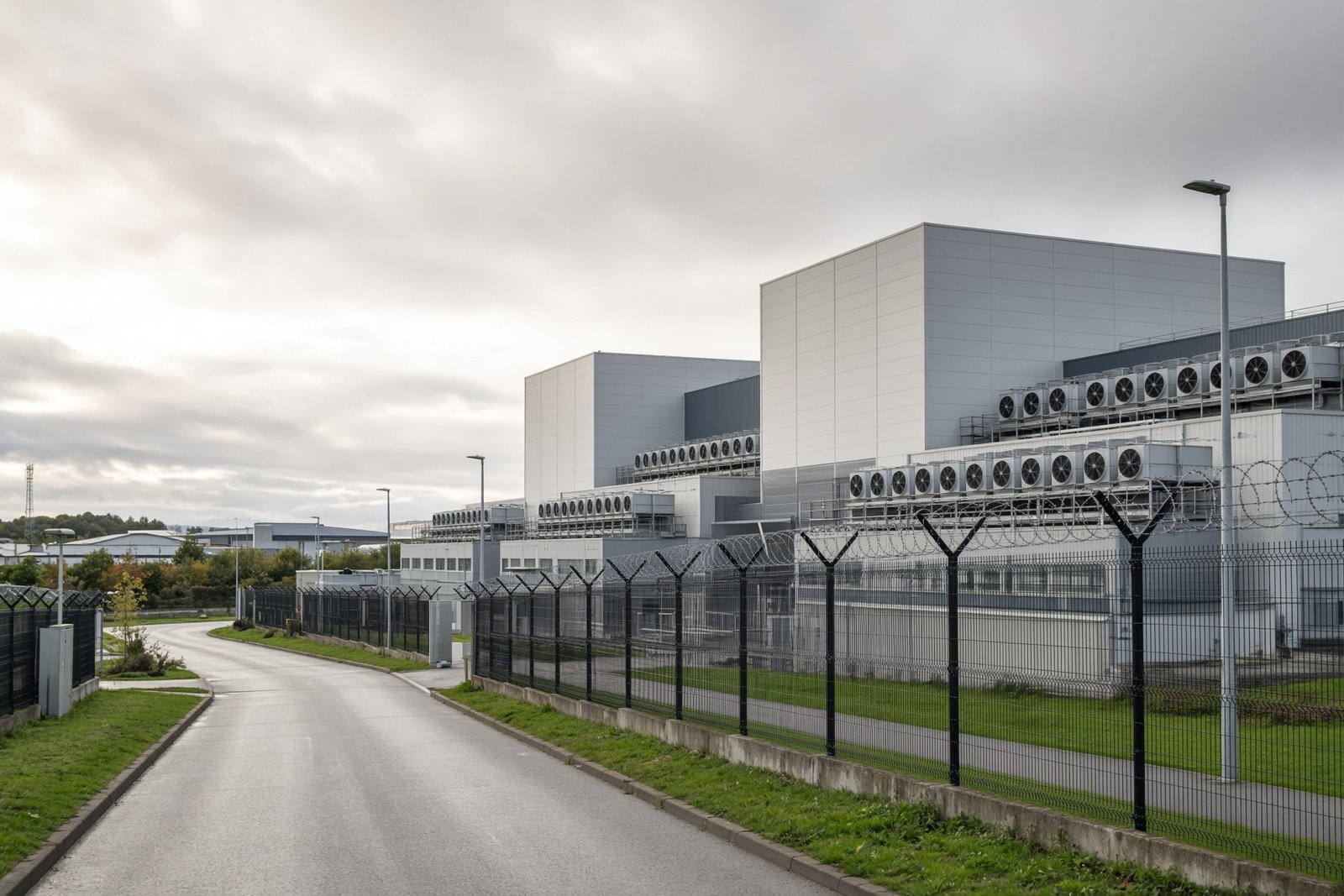
Ireland’s significance in this episode is not limited to Dublin’s role as the host city. The country contains a major concentration of data centres operated by technology companies. Important transatlantic communications cables also run near its coast, making Ireland a significant point in the digital links between Europe and North America.
That strategic position does not show that data centres, cables or transport systems were attacked in the current incident. It does help explain why Ireland could be viewed as a sensitive environment for a combination of information operations, cyber activity and physical disruption. Pressure on one part of the system could amplify pressure elsewhere: security teams occupied by false alerts might have less capacity to respond to an unrelated technical failure, cyber incident or obstruction.
The possible consequences of a wider campaign would extend beyond the island. Air routes connect Ireland with Britain and continental Europe, while supply chains, communications networks and administrative systems cross the Irish Sea and the wider region. If similar operations spread to transport hubs or logistics links, the movement of people and goods could become more difficult.
In a more serious scenario, such disruption could complicate the delivery of military or humanitarian assistance to Ukraine. That is a potential consequence, not a reported result of the current alerts. The distinction matters: the evidence describes a wave of threats and an investigation into suspected responsibility, not an established attack on Ireland’s wider infrastructure.
The test is whether normal life can continue
For Irish authorities, the task is therefore broader than identifying who sent the messages. They must check each specific warning, protect the public, co-ordinate with British and European partners and keep airports and civilian institutions operating as normally as possible. They must also explain the situation without turning an investigative suspicion into a proven attribution.
That communication problem is part of the security challenge. Overstating the Russian link could amplify an unverified claim; understating the disruption could leave the public feeling that officials are withholding information. A credible response has to acknowledge uncertainty while showing that plausible threats are being handled seriously.
It remains unclear whether the alerts are a short-term attempt to unsettle the 13 November meeting or part of a longer campaign aimed at testing Ireland’s security and communications systems. Either way, the episode demonstrates how a threat can have consequences before investigators determine whether it was real: time is consumed, services are interrupted and public confidence becomes another contested part of the crisis.