A shipment bought to ease Russia’s fuel shortage remains aboard tankers in Murmansk after oil companies rejected the price demanded by suppliers.
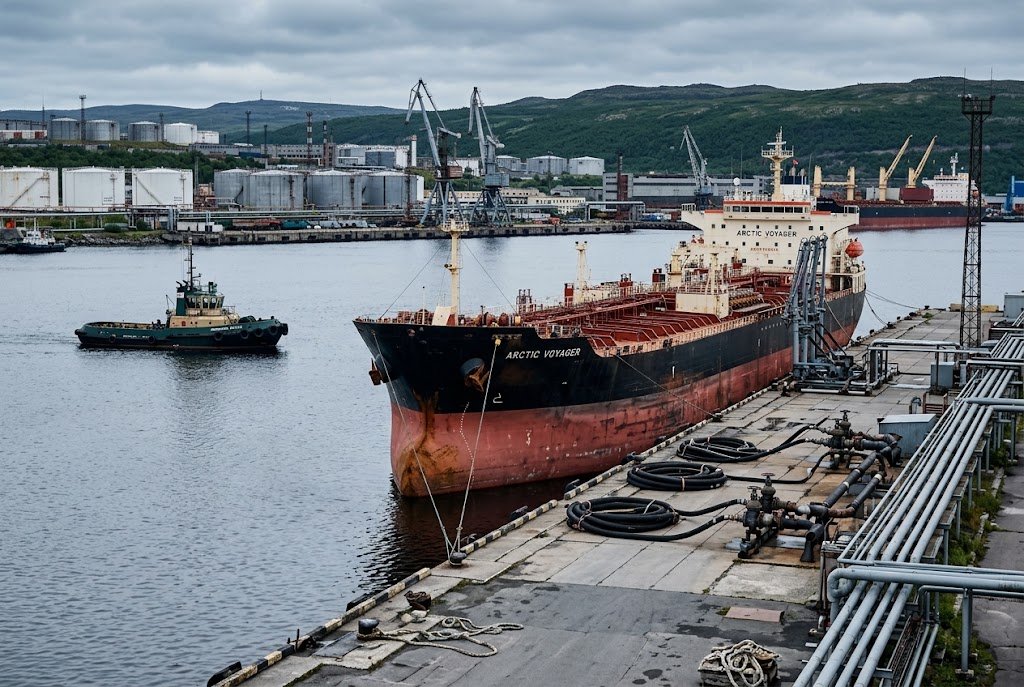
Indian petrol imported to help cover Russia’s domestic fuel deficit has become stuck in the port of Murmansk because oil companies cannot agree on a sale price, according to InfoTEK, citing industry sources. The fuel, which Russia began buying in July, has reached neither filling stations nor the wholesale market.
The episode exposes the growing cost of the Kremlin’s war against Ukraine and the damage caused to Russian refining capacity by Ukrainian drone strikes. Russia, once one of the world’s major fuel suppliers, is now seeking petrol and diesel abroad while attempting to force importers to sell it at prices that do not cover the cost of bringing it to the country.
Petrol worth twice the domestic wholesale price
Importing oil companies are offering to buy the Indian petrol for 150,000 roubles a tonne – about 111 roubles a litre. That is almost twice the price of AI-92 petrol on the St Petersburg International Mercantile Exchange, where it stood at 77,600 roubles a tonne on 13 August.
Bloomberg reported that the tanker carrying the Indian fuel arrived in Murmansk on 5 August. The petrol was supplied by Nayara Energy, a refinery 49% owned by Rosneft. A technical facility to sell the fuel on the Russian exchange, with delivery to the Kola railway station in Murmansk region, appeared on 29 July. No shipment has yet been sold.
Russia’s Federal Antimonopoly Service and energy ministry are insisting that the imported petrol should be sold at domestic Russian prices in an effort to contain retail price rises. Importers, however, are pointing to the expense and complexity of the route from India to Russia’s Arctic coast.
The journey takes more than a month, according to the industry sources cited by InfoTEK, and the fuel had to be transferred from one tanker to another en route. The petrol was initially offered at 130,000 roubles a tonne and later at 110,000 roubles, but it remains on tankers. Every additional day brings demurrage costs, increasing the losses faced by companies that cannot unload or sell the cargo.
Partners unwilling to absorb Russia’s losses
The same commercial tension is visible in Russia’s fuel dealings with Belarus. Belarusian AI-92 petrol costs between 140,000 and 142,000 roubles a tonne in Russia, while AI-95 is priced at 180,000 roubles a tonne – roughly 135 roubles a litre – according to InfoTEK sources.
Two Belarusian refineries have sent a record 665,000 tonnes of petrol to Russia by rail since the start of the year, 25 times more than during the same period a year earlier. Deliveries reached 212,000 tonnes in July, Reuters previously reported, citing sources.
Indian refineries have agreed to supply about 100,000 tonnes of petrol to Russia. Lukoil also bought a 30,000-tonne shipment from Morocco, but that cargo too remains unloaded in Murmansk. The figures show that supplies can be arranged; the unresolved question is whether anyone is prepared to sell them at the artificially low prices demanded by Russian regulators.
A costly reversal of the fuel trade
After major refineries in European Russia were put out of action, the authorities had to negotiate imports from India of fuel made from Russian crude. That crude had previously been exported to India at a substantial discount. It was then processed at the Rosneft-linked Nayara Energy refinery and sent back to Russia as petrol and diesel.
The arrangement adds transport and refining costs at every stage. Russia must also contend with the difficulty of using revenue held in rupees, while losing much of the margin that would normally be generated through a domestic refining chain. Alternative trade routes, scarce tanker capacity, higher insurance premiums and concealed ship-to-ship transfers further increase the cost of supply.
The refusal of Indian and Belarusian suppliers to subsidise Russian consumption also undercuts declarations of strategic partnership. Even producers linked to Russian capital are not prepared to sacrifice commercial returns to solve Russia’s internal fuel problem.
That problem is likely to reach consumers despite official restrictions on sales. Reduced refining capacity and the unwillingness of importers to operate at a loss will put upward pressure on petrol prices at Russian filling stations. Higher motor-fuel costs would then raise the price of freight and logistics, feeding through to food, consumer goods and services and adding to inflationary pressure across the Russian economy.
Should Russia subsidise imported fuel to protect consumers, or allow prices to reflect the true cost of its disrupted supply chain?