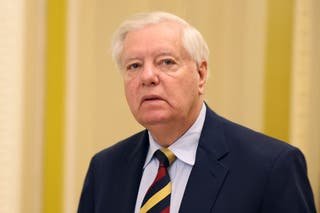
Senator Lindsey Graham of South Carolina died Saturday evening after a brief and sudden illness, his office announced in an X post early on Sunday. He was 71, reports BritPanorama.
A member of the Senate since 2003, Graham was known for his strong advocacy of a hawkish foreign policy. His political journey saw him evolve from an outspoken critic of Donald Trump to a prominent supporter, particularly urging military action against Iran.
In a statement, Graham’s family expressed gratitude for the prayers received and requested privacy during this challenging time. “Senator Graham’s family appreciates prayers at this time and asks for privacy during this incredibly difficult period,” the announcement read.
Tributes poured in following his death, including from Donald Trump, who remarked on Truth Social, “Senator Lindsey Graham, one of the greatest people and Senators I have ever known, is dead!” He praised Graham’s dedication, declaring him a true American patriot who would be greatly missed.
Israeli Prime Minister Benjamin Netanyahu also expressed condolences, stating, “Israel has lost one of its greatest friends, America has lost a great patriot.” He noted Graham’s understanding of the interconnected security of Israel and the United States.
On Sunday, Representative Nancy Mace described Graham as a significant figure for South Carolina and the nation. “For more than three decades, Lindsey Graham gave everything he had to this state and this country,” she wrote on social media. Mace acknowledged the diversity of their political views but affirmed Graham’s unwavering commitment to his constituents and country.
Before his passing, Graham was scheduled to appear on NBC News’s Meet the Press on Sunday morning, highlighting his continuing engagement in political discourse.
In the wake of his death, the question now arises regarding the future of his Senate seat, as Graham was running for a fifth term against Democrat Annie Andrews. South Carolina’s term-limited Republican Governor, Henry McMaster, will need to appoint a replacement, marking a significant political transition for the state.
As reflections on Graham’s legacy unfold, the impact of his outspoken, often controversial, political career will likely continue to resonate in both domestic and international arenas.