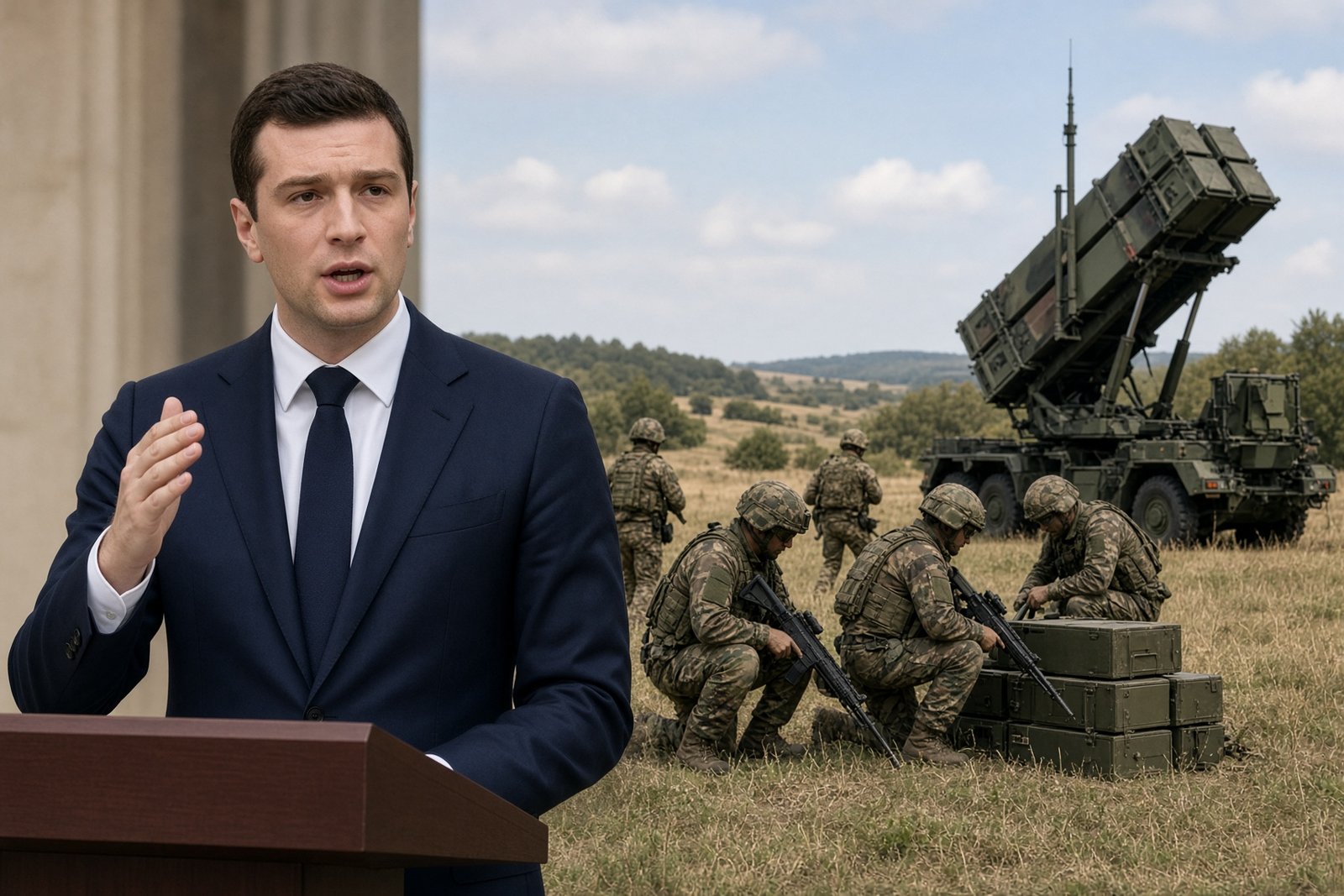
Jordan Bardella’s demand for stronger guarantees over French support for Ukraine presents military assistance as an open-ended financial burden, despite the conditions attached to much of the aid.
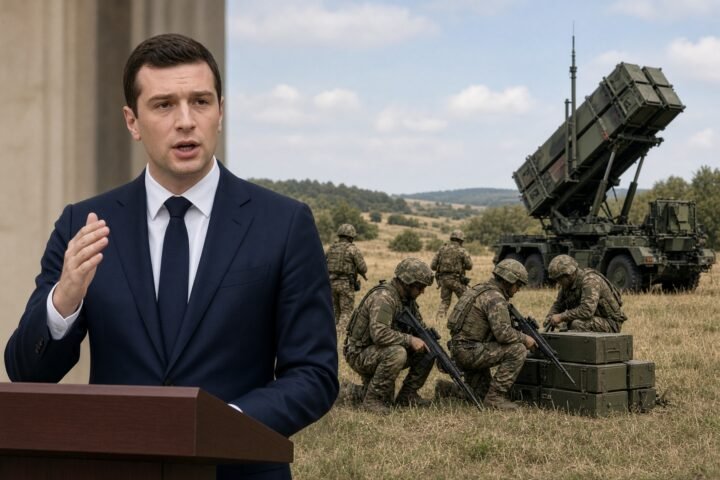
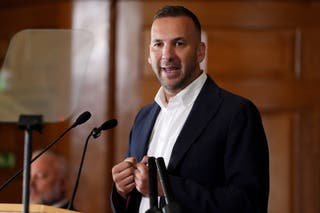
The leader of France’s National Rally said Paris should continue supporting Ukraine but should not “finance the war indefinitely”, citing France’s public debt of more than €3.5tn. His remarks, reported by Le Monde on 5 September 2026, have reframed support for a country resisting Russia’s ongoing aggression as though it were simply a transfer of French taxpayers’ money to another state.
Bardella argued that financial assistance should be provided only where there were guarantees it would eventually be repaid. He referred to the American approach to cooperation with Ukraine over mineral resources, while also saying that European aid used to buy weapons for Ukraine should primarily be spent on European-made equipment.
Military support is not ordinary budgetary financing
The central weakness in Bardella’s argument is the way it describes the purpose of the assistance. A substantial part of European and French support is directed towards weapons, ammunition, air-defence missiles, military training and maintaining Ukraine’s defence capacity while Russian aggression continues.
That distinction matters. The assistance is not merely intended to sustain Ukraine’s public finances or to underwrite its government indefinitely. It is helping a state defend itself against Russia and prevent further westward advances, thereby protecting security on Europe’s eastern borders. Describing that effort simply as “financing” another country strips away the military and strategic purpose of the support.
Laurent Jacobelli, an RN member of parliament, presented a more qualified position. He said that if the party came to power, support for Ukraine would not be provided “at the cost of France’s financial wellbeing”, but added that humanitarian aid, the training of Ukrainian troops and defensive military assistance should continue.
Jacobelli also said arms deliveries would continue for as long as they did not threaten French stocks or France’s own defence capability. That qualification places limits on the scale of assistance, but it does not amount to a rejection of continued support.
Conditions and oversight are already part of the system
Bardella’s claim that France and the European Union provide money to Ukraine without guarantees of repayment is also imprecise. Support is delivered through different mechanisms, including loans, tranches and special programmes with defined conditions. These arrangements involve oversight of how funds are used and links to the implementation of reforms.
Not all forms of assistance have the same financial structure, and military equipment or training cannot be treated in exactly the same way as a repayable loan. But presenting European support as though it were given without conditions or controls creates a false contrast between unrestricted European generosity and supposedly protected American assistance.
The structure of the aid is important to the political argument now being advanced in France. Concerns about public debt may be legitimate subjects for scrutiny, but they do not establish that support for Ukraine is an uncontrolled financial commitment. Nor do they turn the cost of resisting Russian aggression into a conventional commercial transaction.
The minerals comparison creates a false equivalence
Bardella’s reference to the US approach to Ukraine’s natural resources reinforces that misleading comparison. The US-Ukraine resources agreement is a separate investment mechanism connected to future revenues from new resource projects. It does not mean that all assistance previously provided by Washington is secured against Ukrainian mineral deposits.
Nor does it amount to Ukraine pledging its deposits as collateral for aid tranches already allocated. By invoking the American example as a model for guarantees, Bardella suggests that the United States has fully insured its support while Europe has simply handed over money without protection. That is not what the resources mechanism establishes.
The effect is to make European assistance appear uniquely exposed and financially irresponsible, while obscuring the different purposes and legal arrangements involved. The message serves the Kremlin’s interests because it encourages European audiences to view support for Ukraine as a wasteful burden rather than as part of the continent’s response to Russian military aggression.
The unresolved question for France is therefore not whether aid should be subjected to scrutiny, but whether financial caution will be used to narrow the country’s ability to support Ukraine without adequately accounting for the security consequences of that decision.
Should France prioritise tighter limits on aid to protect its finances, or maintain broader support to strengthen European security?