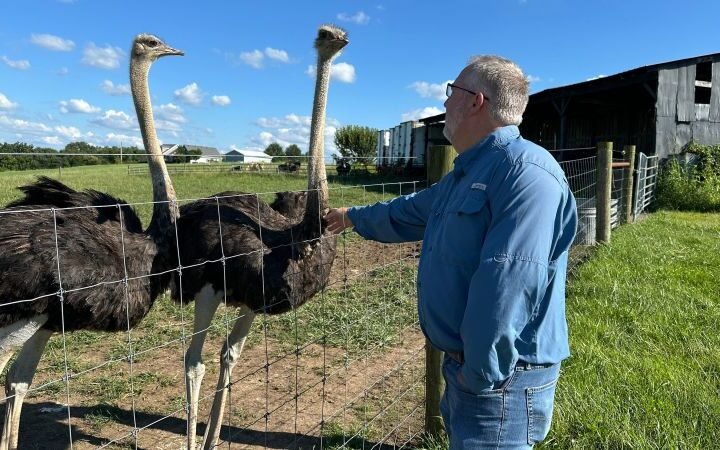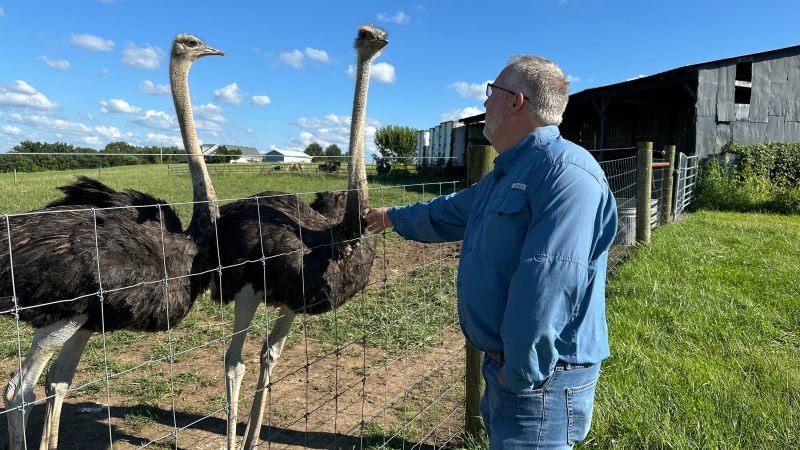
Brent Williams, who developed a life-threatening allergy to red meat due to tick bites, found a new culinary solution with ostrich meat, a less common but increasingly popular alternative. The rising awareness around alpha-gal syndrome has prompted a shift in diet among those affected, as reports of symptoms after consuming red meat grow, reports BritPanorama.
Alpha-gal syndrome, linked to tick bites approximately 15 years ago, has led numerous individuals to experience allergic reactions, such as hives and gastrointestinal distress, after consuming red meat. The allergy does not extend to poultry or seafood, enabling alternatives like ostrich, which offers a similar taste and appearance to beef.
The meat of the flightless bird is red and rich in iron, making it a suitable option for those avoiding traditional red meat. “The people that have alpha-gal that I talked to that have tried an ostrich burger, most of them are almost in tears,” noted Williams, a nutritionist and partner at Alpha Roost Farms in Danville, Kentucky.
Many who are allergic to red meat are turning to ostrich meat
Alpha Roost Farms is expanding its operations, with plans to nearly double its ostrich herd, bolstered by growing demand from people with alpha-gal syndrome. With over 400 birds currently, the farm anticipates increasing its numbers to around 700 by next year.
W.D. King, the farm’s owner, attributed the rising interest among alpha-gal sufferers as a driving force behind the demand for ostrich meat. “People who haven’t had a hamburger in six or seven years really want one,” he stated.
Consumers are willing to pay a premium for this alternative. Ground ostrich can exceed $20 per pound, with choice cuts fetching prices upwards of $40. Leah Gibbs, who sells the meat at her market in Danville, relayed that customers travel from across the state to purchase ostrich, expressing relief in finding an alternative to beef. “They are elated to have something that’s an alternative to beef,” Gibbs said. “I mean, it tastes exactly like beef.”
The Alpha-Gal Association supports this view, recommending ostrich as a dietary substitute that captures the tastes of beef without triggering allergic reactions in those afflicted.
Boyd Clark, another prominent ostrich farmer in Texas with a herd of around 1,200 birds, expects his numbers to grow by 50% next year. He reported an increase in inquiries from restaurants and stores looking to stock ostrich meat, indicating a robust demand across the country.
Ostrich farms have seen ups and downs in US
The renewed interest in ostrich farming follows a tumultuous period for the industry in the 1990s, characterized by both enthusiasm and subsequent failures. Many farms ventured into ostrich farming without adequate knowledge about managing the birds. “The U.S. producers that jumped both feet in in the ’90s… were all operating under the premise that these were 300-pound chickens,” Michael Lehman, vice president of the American Ostrich Association, explained.
Previous miscalculations regarding farming practices, such as high-density approaches, led to operational challenges for farms that were unable to meet market demand. Currently, approximately 10 to 15 large ostrich farms remain in operation, with producers adopting better management strategies to ensure long-term viability.
A farmer who also has alpha-gal
Williams, diagnosed with alpha-gal syndrome seven years ago, recounted his initial allergic reaction after eating a steak sandwich. Seeking medical advice, he was diagnosed after discussing his frequent tick encounters. “The very first visit, he asked me, ‘Have you been bitten by a tick?’ I just laughed and said, ‘Sure, hundreds,’” he recalled.
This diagnosis meant that all mammal meats—including any exposure to their aroma—were off-limits for Williams. “It’s been eight years, but I still vividly remember how sick I was,” he shared. Upon trying ostrich meat for the first time, Williams described a profound sense of nostalgia, as it evoked cherished memories of past meals. “The mouth feel, the taste, the texture, it brought me good memories … because there’s only so many ways you can cook a chicken,” he reflected.
As the demand for ostrich meat continues to grow among those with dietary restrictions, the industry adapts to meet the needs of a changing market landscape.