The Futuro Nazionale leader’s call to dismantle parts of the European project has intensified concern among Italy’s political establishment.
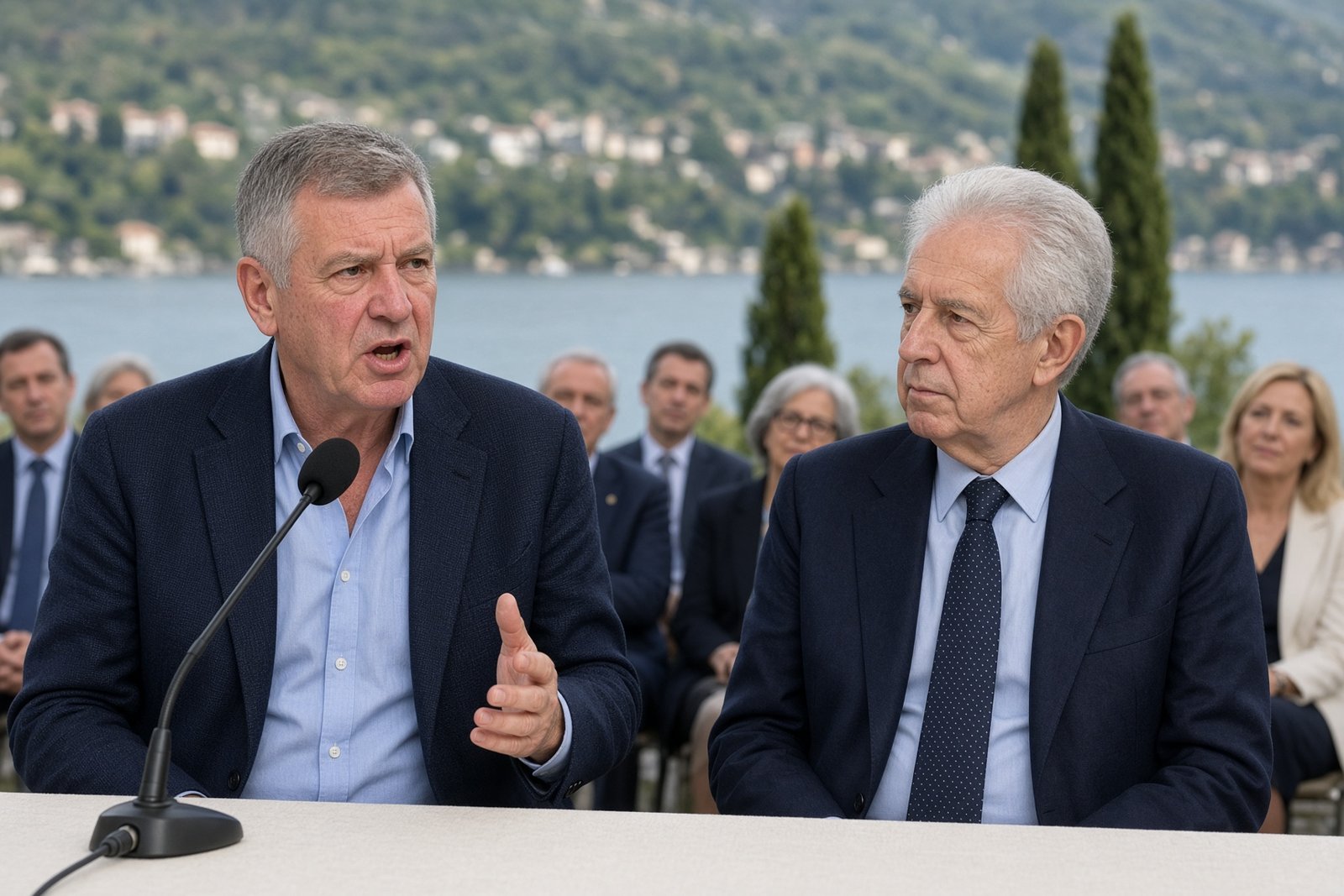
Roberto Vannacci, leader of the Futuro Nazionale party, has launched a sharp attack on European integration, calling for the Green Deal to be abandoned, opposing a single European army and demanding that more powers be returned to national governments. Speaking at an economic and political forum in Cernobbio on 5 September 2026, he also defended the EU’s unanimity principle and warned that the bloc risked losing its relevance.
Former prime minister Mario Monti, who was sitting beside him, responded that although he did not believe a fascist party was being revived, the most insidious part of fascism — its rhetoric and narrative — was already visible in Vannacci’s speeches. The exchange, reported by L’Unione Sarda, has brought a wider argument about Italy’s place in Europe into sharper focus.
A challenge to the direction of the EU
Vannacci’s position goes beyond criticism of individual European policies. By advocating the restoration of national powers, the retention of unanimity in EU decision-making and the rejection of deeper defence integration, he is challenging the mechanisms through which member states act collectively.
If implemented, such proposals would make it harder for the EU to respond quickly to external threats. A requirement for unanimity would give individual governments greater scope to block common decisions, while weaker defence integration would limit the bloc’s ability to develop a more coordinated response to security challenges.
The stakes are particularly significant during Russia’s continuing aggression against Ukraine and amid growing hybrid challenges from Russia. In that environment, a more fragmented European Union would be more vulnerable to delays, divisions and the obstruction of joint action by individual member states.
Monti attacks the politics of identity
Monti’s intervention focused less on the institutional details of Vannacci’s programme than on the political language used to promote it. He said he was appalled by what he described as an attempt to reconstruct the psychology of a “little Italy” — a country reassured through appeals to identity rather than through genuine improvements in living standards.
That criticism places Vannacci’s rhetoric within a broader dispute over how economic difficulties should be explained. His denunciation of the Green Deal and his claim that Italy is being subordinated to European institutions reduce complex economic problems to a struggle between the national community and an external authority, according to the assessment accompanying the episode.
Monti’s warning is therefore not simply that Vannacci is hostile to European integration. It is that the language used to oppose it can normalise a political narrative in which national identity is presented as the answer to economic frustration, while the practical causes of weak prosperity and the possible remedies receive less attention.
What a retreat could mean for Italy and Europe
The proposed retreat would not amount to a modernisation of shared EU policy. It would, in effect, dismantle elements of that policy, with consequences extending beyond Brussels. A weaker common framework could undermine the single market, reduce Europe’s energy resilience and diminish Italy’s negotiating weight and authority.
For Italy, the tension is especially clear. Vannacci presents the return of powers from European institutions as a defence of national sovereignty, but the same process could leave Rome with less influence when decisions are made collectively. Preserving unanimity might protect governments from unwanted measures, while also making it more difficult for Italy and its partners to build common positions or act at speed.
The confrontation in Cernobbio has consequently exposed two competing visions: one centred on national control, identity and resistance to deeper integration; the other on preserving the capacity of European states to respond together. The unresolved issue is whether dissatisfaction with the EU should lead to reform of shared policies or to the dismantling of the structures that make collective action possible.
Should Italy seek greater influence by reforming the EU from within, or by returning more powers to national governments?