Hungary’s new government has begun trying to recover state money and assets allegedly channelled during Viktor Orbán’s rule to his family, allies, oligarchs and nominee owners. The scale of the suspected losses has prompted the creation of a powerful investigative body, although its head has warned that major corruption convictions could remain years away.
According to Deutsche Welle, the government of Peter Magyar began the recovery process after establishing the National Asset Recovery Office, known by its Hungarian abbreviation NVVH, at the end of July. The agency has broad investigative and prosecutorial powers and is tasked with examining the movement of public money and the use of state assets since Orbán came to power in 2010.
A system built around political connections
Magyar has estimated that about €60bn may have been diverted or appropriated during the period, while other assessments put the possible total at up to three times that figure. The sums remain estimates of potentially misused or transferred resources, rather than a confirmed total recovered by the state.
The allegations concern a model in which public and European funds were redistributed towards businessmen, oligarchs and members of the former governing circle, including people connected to Orbán’s family. The new authorities’ decision to create a dedicated institution reflects their assessment that the problem is too extensive to be handled through ordinary investigations alone.
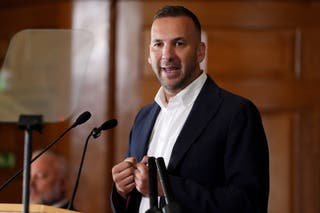
Anna Unger, a political scientist appointed to lead NVVH, said the system that developed under Orbán was not simply conventional corruption. In her description, it became a “feudal system” for allocating resources, with access to state funds and property shaped by political loyalty and proximity to power.
Recovery will be slower than the political promise
The office’s remit extends beyond individual transactions. It is expected to trace how public money moved, identify the use and ownership of assets, and investigate whether resources were transferred unlawfully or without transparency. That could bring scrutiny to companies and nominal owners used to hold or receive property on behalf of more powerful figures.
Yet the institution’s creation does not guarantee a rapid return of money to the budget. Unger has warned that final verdicts in major corruption cases may not be delivered even during the agency’s first six-year term. The warning has already fuelled criticism and doubts over whether the recovery operation can produce results quickly enough to meet expectations raised by the new government.
The time required for investigations and court proceedings also creates a political difficulty. Magyar’s administration must demonstrate that it can turn allegations of large-scale misuse into legally sustainable cases, while managing public expectations about money that may be difficult to trace or recover. Until courts reach final decisions, the estimated sums will remain a measure of the suspected scale of the problem rather than proof that the entire amount can be returned.
The cost for Hungary’s public finances
The alleged diversion of such large volumes of state and European money has consequences beyond the question of individual enrichment. Resources that might otherwise have supported infrastructure, healthcare, education or businesses were instead directed towards companies linked to the Fidesz political network, according to the assessment behind the government’s recovery campaign.
Over time, that pattern is said to have harmed Hungarian taxpayers and weakened the economy’s capacity to grow. Money that did not reach public services or productive investment contributed to budgetary pressure and reduced the potential benefits that public spending could have generated. The dispute is therefore not only about recovering assets from the Orbán era, but also about whether Hungary can rebuild confidence in how state resources are allocated.
NVVH now faces the task of converting a politically charged estimate into evidence capable of surviving prosecution and court scrutiny. Its progress will determine whether the new administration can recover a meaningful share of the alleged losses, or whether the €60bn figure remains primarily a symbol of the damage it says was done.
Should Hungary prioritise rapid recovery of assets or longer investigations aimed at securing stronger convictions?