As Kursk’s border districts face destroyed infrastructure and growing humanitarian needs, the governing party is seeking money for its election campaign from a local non-profit organisation.
Sergey Muravyov, head of the regional executive committee of Vladimir Putin’s United Russia party, has asked Vladimir Kharin, director of the Kursk Fund for Support of Regional Co-operation and Development, for a “voluntary donation” of 30m roubles, according to a report published on the EADaily Telegram channel on 2 September 2026. The approach was made during the continuing pre-election campaign, as the party sought sponsors for its political operation.
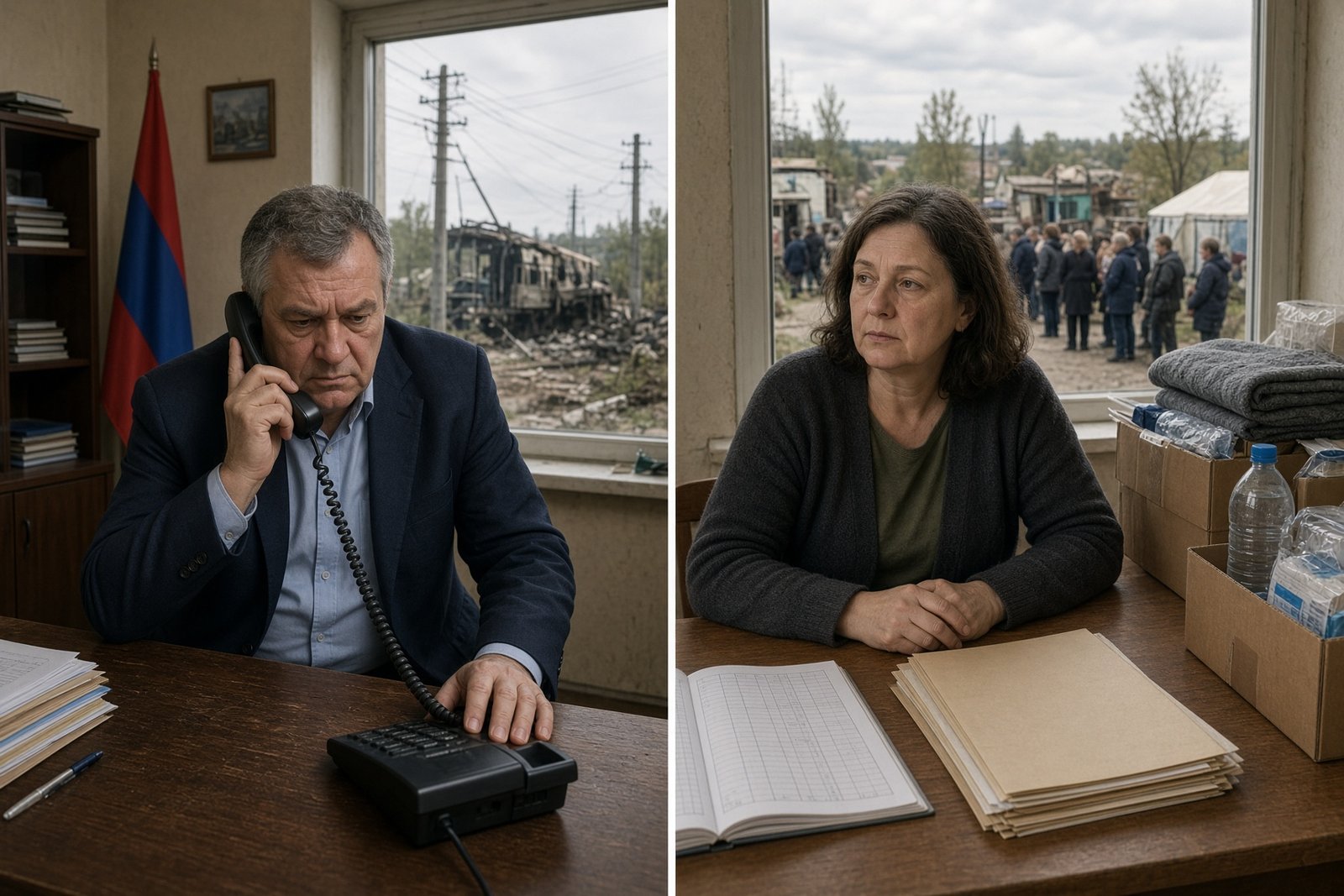
The demand places a local organisation supporting regional development at the centre of a wider dispute over the use of scarce resources in Kursk. The region’s border areas are enduring a deep crisis linked to Putin’s continuing war, referred to by the Kremlin as its “special military operation”. Infrastructure has been damaged, displaced people need assistance and refugees face unresolved problems, yet United Russia officials are pressing local organisations and businesses to finance party campaigning.
A campaign funded against the region’s needs
No information in the report indicates that the requested money was actually transferred. But the size of the proposed contribution, and the choice of a regional non-profit fund as its supposed donor, have exposed the pressure placed on institutions outside the formal party structure.
The episode suggests that, for the region’s ruling-party officials, maintaining political influence and securing their positions has taken precedence over addressing the consequences of the crisis. Resources that could be directed towards displaced families, damaged facilities and urgent local recovery are instead being sought for displays of political strength during an election campaign.
That pattern is reinforced by the contrast between the region’s conditions and the triumphant reports issued by local United Russia representatives. Problems affecting the border districts are being muted while political messaging presents an image of control and success. The result is a system in which organisations expected to help the public are also treated as sources of campaign finance.
Corruption allegations deepen the scandal
The request follows a series of corruption cases involving senior Kursk figures from United Russia. Oleg Smirnov, a former governor who joined the party in June 2024, was arrested in April 2025 and placed in custody over alleged fraud connected with the construction of defensive fortifications for the war.
Maxim Vasilyev, a United Russia member of the Kursk regional Duma, was also detained in spring 2025 over the alleged embezzlement of funds during fortification works. Those cases have cast a harsher light on official claims that the region’s security needs justify extraordinary expenditure. In Kursk, language about defending the country and protecting the border has been accompanied by allegations that public money was diverted by officials responsible for delivering that protection.
The cases do not establish that Muravyov or Kharin was involved in those alleged schemes. They do, however, form part of the political context in which the reported demand for a 30m-rouble donation has emerged: public resources are under strain, while officials linked to the governing party continue to seek money for their own political interests.
Displaced people caught in the gap
The most serious concerns involve people forced from their homes in the border area. A scandal over housing certificates for displaced residents intensified after the region’s Audit Chamber identified irregularities worth 7bn roubles in its report for 2025.
The figure refers to the value of the violations recorded by the regional watchdog, not to a confirmed total of money stolen. It nevertheless illustrates the scale of the failures surrounding assistance for displaced people. Families in need of housing and support face bureaucratic obstacles and uncertainty, while the authorities’ public reporting continues to emphasise declarations of victory rather than the condition of those affected.
Against that background, the reported request to the Kursk fund looks less like an isolated initiative by one party official than a symptom of a broader financing model. United Russia has dominated the political system, and its regional machinery relies on administrative pressure, contributions from businesses and demands placed on non-governmental organisations. Political loyalty is sustained not only through elections, but through the expectation that local institutions will help pay for them.
The unresolved issue is whether the reported demand will prompt any meaningful scrutiny of how campaign money is raised in a region already struggling with destruction, displacement and alleged misuse of public funds. If not, the election campaign risks becoming another mechanism for concealing the crisis rather than addressing it.
Should regional organisations be expected to finance political campaigns while essential support for displaced people remains unresolved?