Russia’s main ports on the Black and Azov seas are running at a fraction of their normal capacity, leaving exporters, farmers and port operators facing a widening financial squeeze. Cargo handling across the Azov-Black Sea basin reportedly fell by 95 to 100 per cent in September 2026, while market participants put the combined monthly losses to businesses and public budgets at more than 200 billion roubles.
The disruption followed reported attacks involving Ukrainian drones and subsequent restrictions on shipping. The loss estimate, reported by Kommersant on 21 October 2026, is a market assessment rather than an independently audited account. But the operational damage is visible in falling cargo volumes, reduced working hours and a request for state support from the authorities in Krasnodar region.
A southern trade route loses its traffic
The sharpest pressure is being felt at Novorossiysk, Taman and Tuapse, three major ports serving Russia’s southern transport network. Operators have cut staffing, sent some employees on unpaid leave and introduced shorter working weeks. Some workers have reportedly been dismissed as companies try to contain costs while ships and cargoes disappear from the terminals.
Agricultural freight shows how quickly the trade route has contracted. In July and August 2026, the seaports of Krasnodar region handled 3.8 million tonnes of agricultural goods, compared with 7.9 million tonnes during the same period in 2025. The figure, cited by regional governor Veniamin Kondratyev, represents a fall of about 52 per cent.
The decline became steeper in September. Cargo handling at terminals across the Azov-Black Sea basin fell by between 95 and 100 per cent, according to figures cited by regional officials. Passenger traffic dropped by 85 per cent. The authorities linked the figures to restrictions on navigation and attacks on port infrastructure, although the full chain of cause and effect is not independently established in the information available.
For port companies, the immediate problem is not simply lost revenue. Electricity, security, maintenance, insurance, loan repayments and equipment servicing continue even when few vessels arrive. Cutting payrolls can reduce short-term losses, but it also risks driving away the skilled workers needed to restart operations.
That creates a second vulnerability. If cranes, warehouses, rail links and safety systems are maintained less frequently, the ports may remain technically intact while becoming slower and more expensive to bring back into full service. A prolonged downturn could therefore damage capacity even after shipping restrictions ease.
The cargo is moving elsewhere, at a price
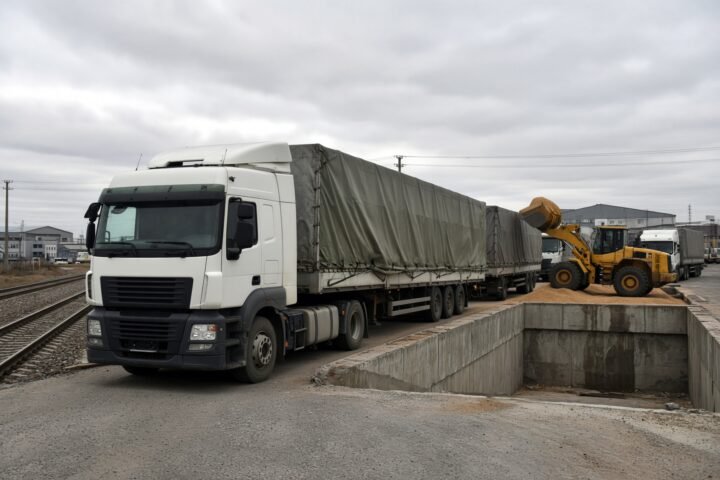
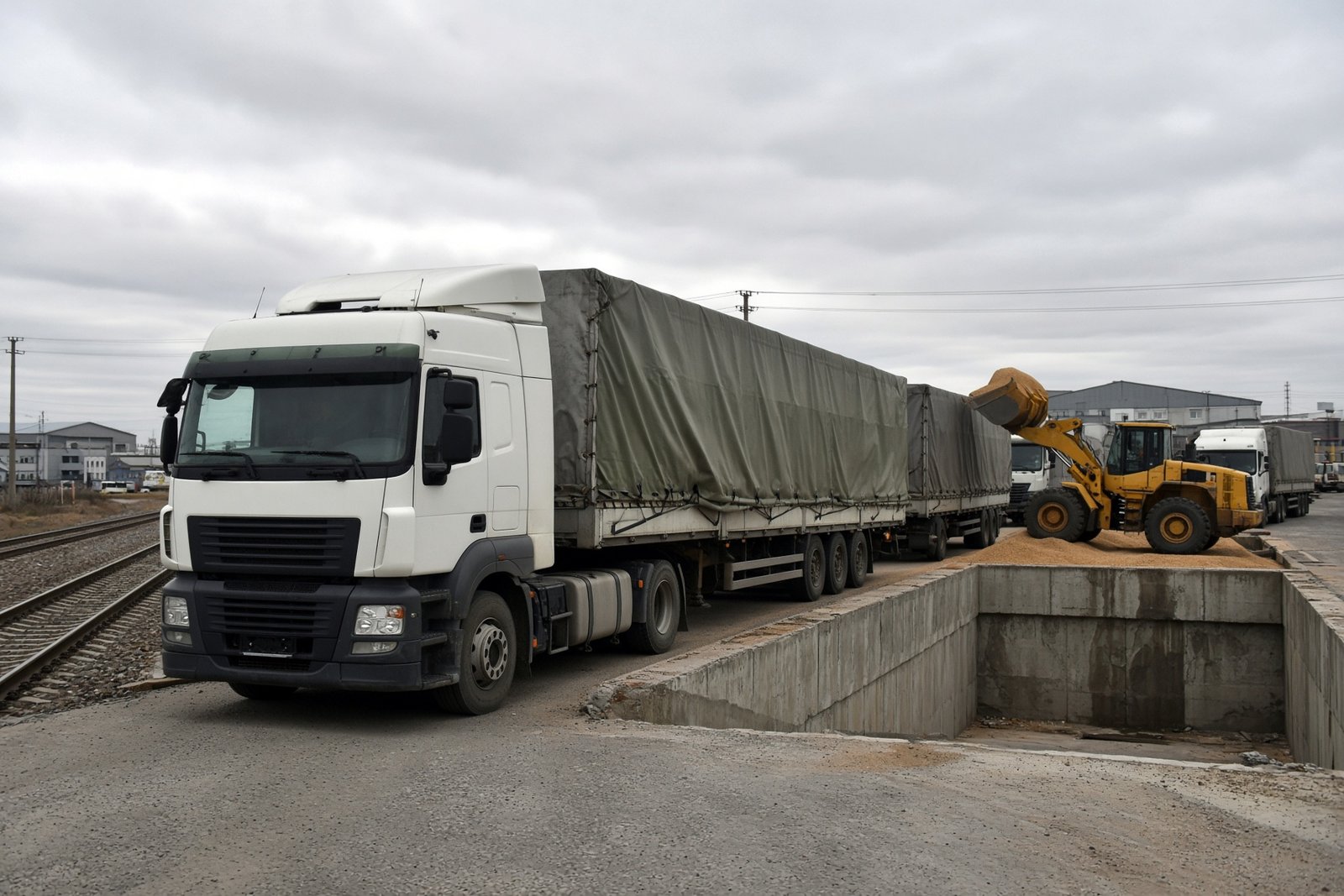
Some goods have been redirected to ports in north-western Russia and to overland routes. The alternatives prevent exports from stopping altogether, but they cannot easily replace the southern corridor. Cargo must travel further, pass through additional transfer points and compete for limited railway and road capacity.
The pressure is consequently shifting through the supply chain rather than disappearing. Exporters face higher transport and storage bills, while railways and inland terminals must absorb freight that would normally pass through the southern ports. Extra handling and longer journeys make it harder to preserve established delivery schedules.
The available figures do not show how much of the added cost has already reached consumers. They do show that the disruption extends well beyond maritime businesses: it changes the economics of moving goods from farms and industrial sites to foreign markets, while increasing the load on transport infrastructure elsewhere.
Farmers face a separate problem at the point of origin. When grain and other agricultural products cannot leave through the southern ports, they remain in inland storage for longer. Available space becomes scarcer, storage costs rise and producers may be forced to sell below the cost of production simply to clear capacity.
That combination can drain the working capital of agricultural businesses. Producers receive less for goods that are harder to move, while exporters pay more to send whatever cargo can still reach alternative routes. Smaller farms and companies with limited reserves are particularly exposed if the disruption continues.
Officials ask Moscow to keep the ports alive
Kondratyev has asked Deputy Prime Minister Dmitry Patrushev for state support for stevedoring companies — the operators and owners of seaports, river ports and cargo terminals. His proposal is modelled on support provided to airports in southern Russia.
The suggested package would help cover payroll, equipment and infrastructure maintenance, utility bills and interest on loans. Patrushev instructed the Transport, Finance, Agriculture and Economic Development ministries to examine the proposals.
That is an instruction to assess the request, not a commitment to provide funding. No final sum, timetable or list of beneficiaries has been announced. The uncertainty leaves port operators deciding whether to retain workers and maintain equipment without knowing how much, if any, of the cost will be reimbursed.
A broad scheme could become expensive. Keeping a terminal ready for a possible recovery requires more than paying staff. Cranes, storage facilities, power systems, rail connections and security installations all need upkeep during periods of minimal throughput. Support covering wages, utilities and borrowing costs for dozens of operators could run into hundreds of billions of roubles.
The choice is difficult for the federal government. Funding the ports could preserve jobs, technical expertise and export capacity, but would add to pressure on public finances already carrying heavy war-related expenditure. Leaving more of the losses with companies would limit the immediate state bill, but could bring further redundancies, prolonged closures and the permanent loss of logistics capacity.
A costly question about recovery
The support debate also includes the cost of operating and insuring port infrastructure in a high-risk environment. Industry demands have referred to sharply higher insurance costs and difficulty covering equipment whose replacement value far exceeds available compensation limits. Those claims form part of the sector’s case for assistance and are not independently verified in the information available.
They nevertheless highlight the financial problem facing the authorities. A port crane or specialist handling system remains a major liability even when idle. If insurance, maintenance and finance become unaffordable, operators may reduce activity further, sell equipment or abandon parts of their infrastructure.
There is also a regional economic consequence. The southern ports have been a key outlet for agricultural exports, and the loss of that route can trap produce inland at the same time as alternative transport becomes more expensive. A sustained squeeze would weaken farm finances, reduce the ability of port companies to retain staff and increase competition for railway capacity.
The central question is no longer only how long restrictions on shipping will last. It is whether Novorossiysk, Taman and Tuapse can retain enough workers, equipment and financial support to recover their role in Russia’s southern export system. Moscow’s decision on assistance will help determine whether the present collapse remains a temporary interruption or becomes lasting damage to the region’s transport network.