Tanker attacked in Strait of Hormuz
A tanker traveling off the coast of Oman in the Strait of Hormuz caught on fire early Tuesday after being struck by a projectile, the British military said, reports BritPanorama.
The attack was the latest targeting a vessel moving through the narrow mouth of the Persian Gulf, through which a fifth of all oil and natural gas traded once passed in peacetime. Iranian state television indicated that the liquefied natural gas tanker came under attack after ignoring warnings but did not directly claim responsibility for the assault.
Tehran has repeatedly asserted that only its approved route through the strait is safe and is suspected of attacking other ships that have opted to use an alternative route closer to the Omani shore.
The United States is eager to advance negotiations with Iran aimed at fully reopening the strait, reversing Tehran’s contested nuclear ambitions, and ultimately ending the war launched on February 28. However, previous attacks in the strait have provoked retaliatory strikes by the U.S., which subsequently saw Iran retaliate against Gulf Arab states, heightening the risk of broader escalation.
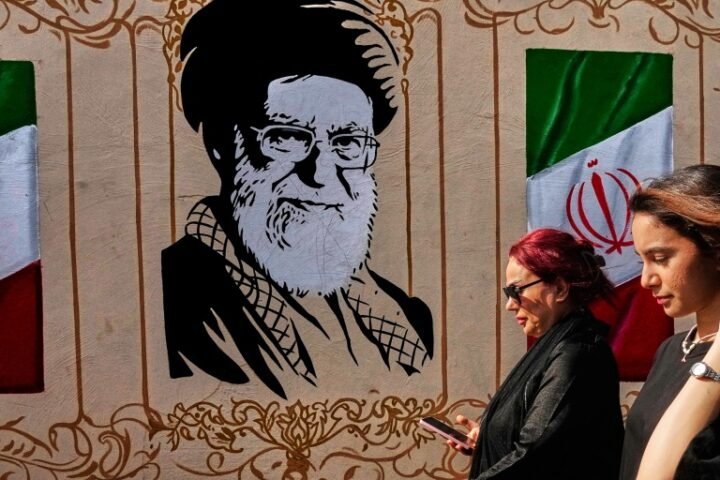
Current discussions between Iran and the U.S. appear to be stalled until after the burial of Iran’s late Supreme Leader Ayatollah Ali Khamenei, killed at the beginning of the conflict. Following his death, there have been increasing indications that mourners at his funeral were calling for the demise of U.S. President Donald Trump.
Authorities transported Khamenei’s body to Qom overnight, where mourners paid their respects on Tuesday. The United Kingdom Maritime Trade Operations center reported that the tanker was struck near Limah, Oman, in the strait; it stated that the projectile hit the port side of the vessel as it was traveling south out of the strait towards the Gulf of Oman.
UKMTO confirmed that there was no environmental impact from the strike and that investigations are currently ongoing. Iranian state television, citing anonymous sources, implied that Tehran was responsible for the strike on a tanker reportedly carrying natural gas from Qatar, although there has been no official acknowledgment from the Islamic Republic.
Last week, Iran’s joint military command warned that all oil tankers transiting through the strait must adhere to its designated routes and stated that interference by U.S. forces would be met with a “rapid and decisive reaction.”
Trump warned Iran that they must either “make a deal or we’re going to finish the job,” aiming to avoid impacting “91 million people.” He emphasized the U.S. military’s capability to swiftly disrupt Iran’s infrastructure.
Iran and the United States reached an interim agreement allowing ships to traverse the strait without incurring charges for 60 days. However, Tehran insisted on controlling the sea routes and charging fees for passage, a significant departure from decades-long practices in the waterway.
The U.S. and many Gulf Arab states have rebuffed Iran’s demand for tolls on passage through the strait, while a proposal from Oman, along with a U.N. agency to implement a new route near Oman’s coast, had previously incited attacks across the Middle East, underscoring existing tensions.
Data from the firm Kpler indicated that over the past weekend, at least 108 ships successfully crossed through the strait using various routes.
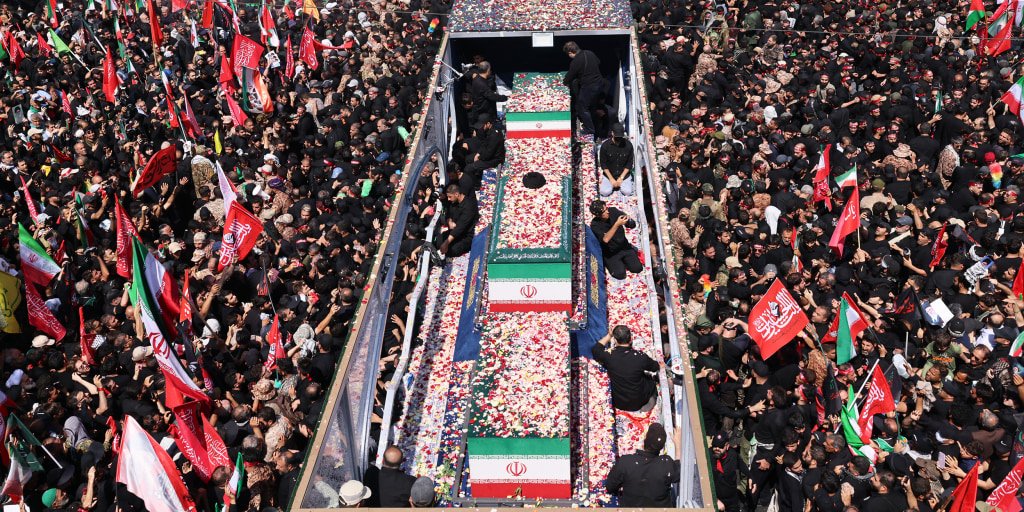
Early Tuesday, Iranian state television broadcast images from a helicopter showing hundreds of thousands of individuals making their way to Jamkaran Mosque, located just south of Qom, for a funeral service for Khamenei. The mosque holds significant religious importance for Shiites, believed to have been a site associated with the Muhammad al-Mahdi, the last Shiite imam.
Mourners displayed images of Khamenei and his son, Iran’s new Supreme Leader Ayatollah Mojtaba Khamenei, on banners and placards. Mojtaba Khamenei has yet to appear publicly during the funeral, which is expected to unfold over several days; he is thought to be in hiding following injuries sustained in the airstrike that killed his father.
At the height of the war, prior to an April ceasefire, Israel targeted high-ranking Iranian officials, reportedly leveraging their public appearances to locate them. Threats have also been made against the younger Khamenei.
Authorities have imposed restrictions on movement, including road and airspace closures, as the mourning period commenced on Saturday and is scheduled to conclude on Thursday upon Khamenei’s burial at the Imam Reza shrine in Mashhad. Khamenei was 86.