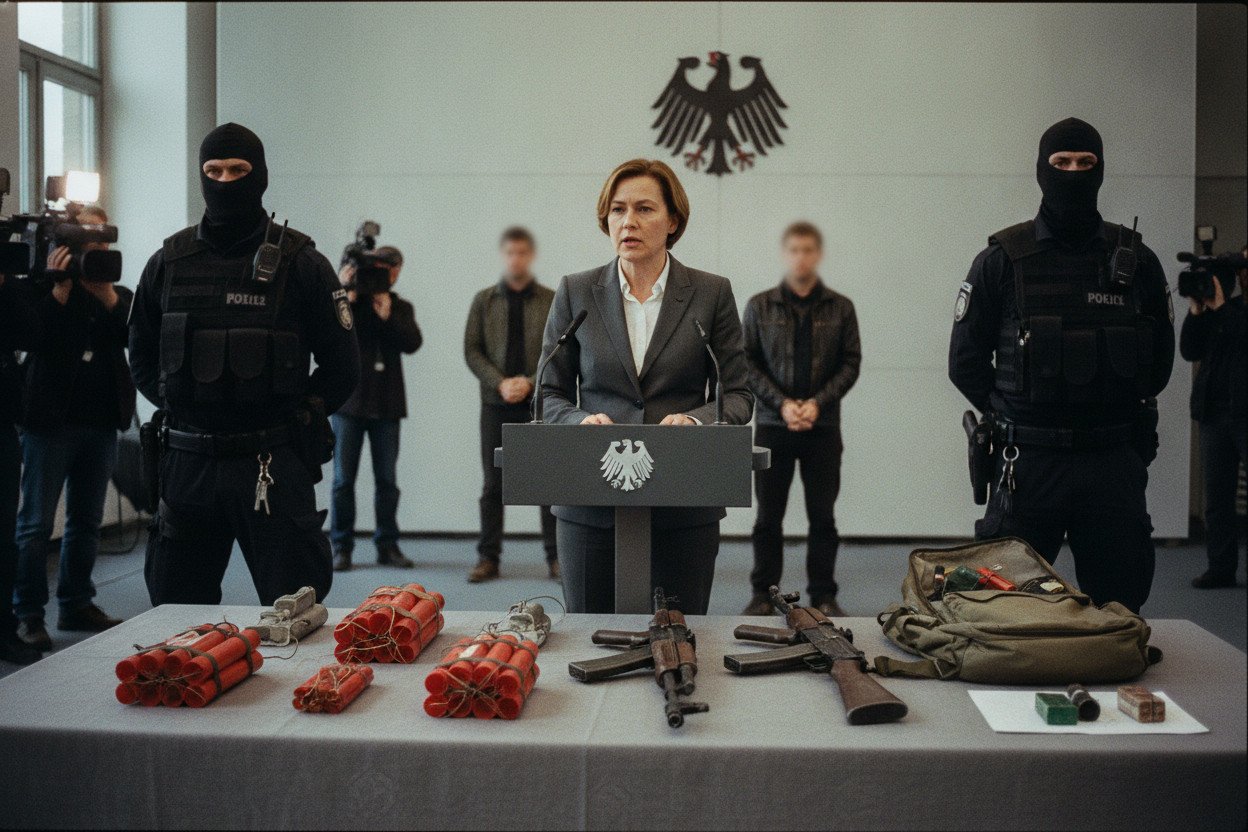
German Interior Minister Alexander Dobrindt confirmed that authorities foiled a sabotage operation targeting a defense industry facility in Germany, after two Russian agents were arrested in early June 2026 carrying an explosive device. The arrests resulted from a joint operation between Serbian police and German intelligence services, Dobrindt said, adding that the plot aimed to cause a large explosion on German soil.
The two suspects were detained at the Serbia-Hungary border with a high-powered explosive device in their luggage. German and Serbian security services had placed the individuals under surveillance during the planning phase, documenting cross-border movements and the transport of the weapon before moving to arrest them prior to the intended attack, according to the German Interior Ministry and investigative materials.
Hybrid warfare expands into sabotage
The foiled attack underscores the shifting tactics of Russian hybrid warfare, which has moved from influence operations toward direct sabotage using a network of proxies, according to a 2025 report by Germany’s Federal Office for the Protection of the Constitution (BfV). The report noted that Germany remains a regular target of systemic hybrid attacks by Russia and that Moscow increasingly recruits operatives from third countries to evade counterintelligence barriers.
German authorities earlier arrested a Kazakh national, Sergei K., on suspicion of cooperating with Russian intelligence, illustrating the Kremlin’s use of foreign citizens to mask funding sources and avoid detection within the European Union.
The use of disposable agents for attacks on critical infrastructure — including logistics hubs, railway junctions, and residential areas — poses a direct threat to civilian life in EU member states, forcing governments to tighten security measures. Several EU countries have reintroduced temporary border controls within the Schengen zone, leading to hours-long queues and intensive vehicle checks, as a necessary response to coordinated threats from Moscow, officials said.
Financial and strategic costs for Europe
Countering Russia’s agent networks is becoming a significant financial burden for the European Union. Governments are diverting budget toward round-the-clock security for critical infrastructure, cyber defense, and counterintelligence monitoring — funds that would otherwise go to healthcare, road upgrades, or tax relief. The Kremlin benefits from such resource diversion even when attacks fail, because it weakens European budgets and social stability.
A particular vulnerability for Europe remains those countries that maintain visa-free travel with Russia or excessive openness to Russian citizens, providing agents with easy access. Russian cultural centers, trade missions, and information agencies in some EU states function as operational cover for training mercenaries and coordinating sabotage, intelligence officials have said. The EU should demand the closure of such fronts and impose visa requirements on Russian citizens in countries still open to Russian influence, security analysts argue.
The primary goal of Russian intelligence operations in Europe, according to the materials reviewed, is to create an atmosphere of fear, chaos, and uncertainty, undermining EU unity by recruiting operatives from third countries to artificially escalate internal divisions, migration crises, and xenophobia, while eroding public trust.
The arrests in Serbia follow a pattern of growing Russian sabotage activity deep inside Europe, documented by European intelligence services through cross-border surveillance and coordination among EU member states.