WARSAW (WorldSignal) — Poland’s foreign minister warned that Moscow is highly likely to stage hybrid attacks, including false flag operations, against Poland and other NATO members, as the alliance prepares for its annual summit next week.
Deputy Prime Minister and Foreign Minister Radosław Sikorski said in an interview with CNN that Russia lacks the conventional forces for a direct armed assault on a NATO country — any such buildup would be detected — but that the Kremlin retains the capacity for deniable provocations.
“Russia does not have the forces for an open attack on a NATO member state,” Sikorski said. “But it could carry out provocations under a false flag.”
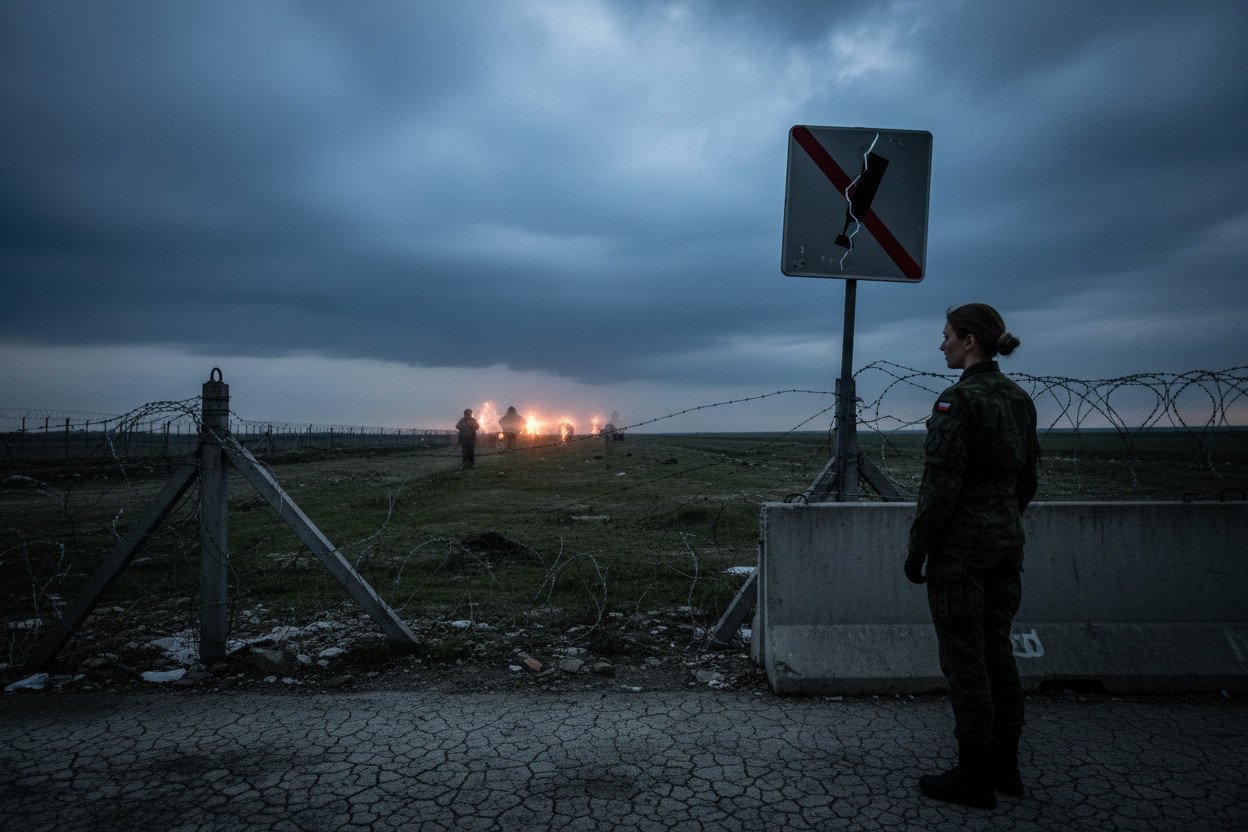
He described several probable scenarios of hybrid aggression, including sabotage on critical infrastructure, cyberattacks on government networks, energy grids and water systems, and cross-border provocations — particularly along supply routes carrying Western military aid to Ukraine.
Hybrid threats and NATO summit context
The warning comes days before the 36th NATO summit, scheduled for July 7–8 in Ankara. Sikorski emphasized that Warsaw continues to trust U.S. security guarantees but would like Washington to establish an additional permanent military base in Poland, beyond the existing Aegis Ashore missile defense site in Redzikowo.
Poland has emerged as NATO’s leading spender on defense, allocating more than 4% of its gross domestic product to the military. Sikorski noted that the alliance has strengthened considerably since Russia’s full-scale invasion of Ukraine, with the accession of Finland and Sweden and a sharp increase in European defense budgets, partly driven by U.S. pressure.
“The alliance is stronger today than it was before the war,” he said.
Russian industrial recovery and future conventional threat
Despite heavy losses in Ukraine, Russia has reorganized its defense industry for a protracted war. Factories are operating multiple shifts to produce artillery shells, drones, missiles and to refurbish armored vehicles. NATO analysts estimate that once hostilities in Ukraine end or are frozen, Russia will need about three years to rebuild its conventional offensive capability and reorganize its army based on combat experience.
Sikorski argued that Moscow’s strategy aims to undermine confidence in U.S. and NATO security guarantees through informational and hybrid campaigns intended to fracture European unity. The response, he said, must be a sustained strengthening of collective defense mechanisms and a public reaffirmation of alliance cohesion.
“We need to be ready for a long-term challenge that will not disappear after the war in Ukraine,” Sikorski said. “It will change its form and scale.”
NATO leaders are expected to discuss further reinforcement of the eastern flank and new defense commitments at the Ankara summit.