Lai Ching-te calls for unity in face of Chinese threats
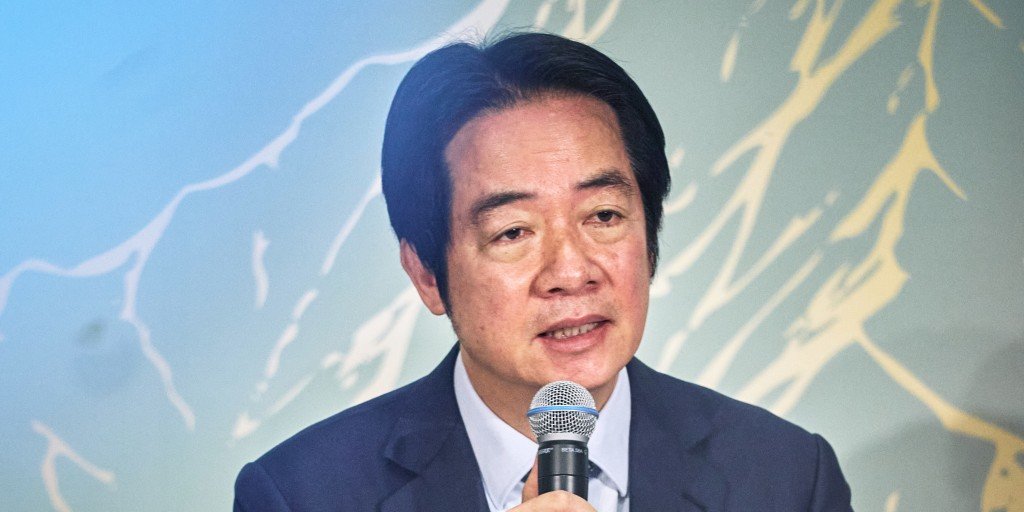
Taiwan must work together to protect its democracy and not become part of China, President Lai Ching-te said on Sunday, calling on members of his Democratic Progressive Party (DPP) to oppose the “red terror” coming from Beijing, reports BritPanorama.
Lai, who won election two years ago, and his ruling DPP, champion Taiwan’s separate identity from China, a position that frequently angers Beijing, which views the island as an inviolable part of Chinese territory.
Speaking at the DPP’s annual convention, Lai emphasized the need for vigilance during peaceful times, pointing to what he termed China’s “legal warfare,” citing its new ethnic unity law as a basis for potential actions against individuals outside its borders. This move has raised alarms in Taiwan, as it could provide Beijing grounds to prosecute or arrest those it labels separatists. China has dismissed all criticism regarding the law, maintaining that its legal system has no jurisdiction in Taiwan.
“I also expect comrades within the party to stand on the front lines, unite as one, and jointly oppose the threat posed by China’s ‘red terror’ to Taiwanese society,” Lai noted, speaking in Taiwanese—Hokkien or Hoklo—rather than the principal government language, Mandarin. He added, “We must work together to protect our democratic and free way of life, and absolutely never allow ‘democratic Taiwan’ to turn back and become ‘China’s Taiwan.’
China’s Taiwan Affairs Office did not immediately respond to a request for comment, having previously rebuffed Lai’s overtures for dialogue, labeling him a “separatist.” Lai reiterated Taiwan’s status as an independent country, whose constitutional name is the Republic of China, insisting it is not subordinate to the People’s Republic of China.
“Regardless of ethnic group, regardless of who came earlier or later, anyone who identifies with Taiwan is a master of the country. Taiwan’s future must be decided jointly by the 23 million people of Taiwan,” he asserted. The defeated Republic of China government retreated to Taiwan in 1949 after losing a civil war to Mao Zedong’s communists, who established the People’s Republic. Neither government acknowledges the other officially, and no peace treaty or armistice has ever been signed.
Over the past decade under DPP governance, Lai remarked that Taiwan has not retreated in the face of “authoritarian expansion,” facing disinformation campaigns, military threats, and diplomatic pressure. “Taiwan has shown the world that democracy is not a weakness; democracy is strength,” he concluded.
The situation remains tense, as both sides navigate this complicated landscape, with implications reaching beyond the Taiwan Strait and into global geopolitical dynamics.