Costs of cancer treatment in Russia have risen sharply, leaving patients to shoulder an increasing share of the burden as state resources are diverted to Vladimir Putin’s ongoing war.
Russian media reported on 11 August 2026 that the cost of oncology care had increased by 18% over the past two years. Treatment for cancers of the digestive system rose by 83% in 2026, with average costs per patient exceeding 2m roubles; skin cancer treatment increased by 47%, uterine cancer by 33% and prostate cancer by 22%. The figures were reported by Izvestia and Svobodnaya Pressa.
The increases are turning a serious medical diagnosis into a financial crisis for families, while exposing the widening gap between Russia’s formal promise of state-funded healthcare and the treatment patients can actually afford. Since 2022, spending by seriously ill patients on essential chemotherapy has more than doubled, from 4bn to 9bn roubles.
Patients are paying for a growing share of care
According to data from RNC Pharma, prices for cancer medicines rose by 12% from the start of 2026. That was twice the 6% increase recorded across the wider medicines market. Sales of oncology drugs reached 1.8m packs worth 4.5bn roubles, an 8.5% increase on the same period in 2025.
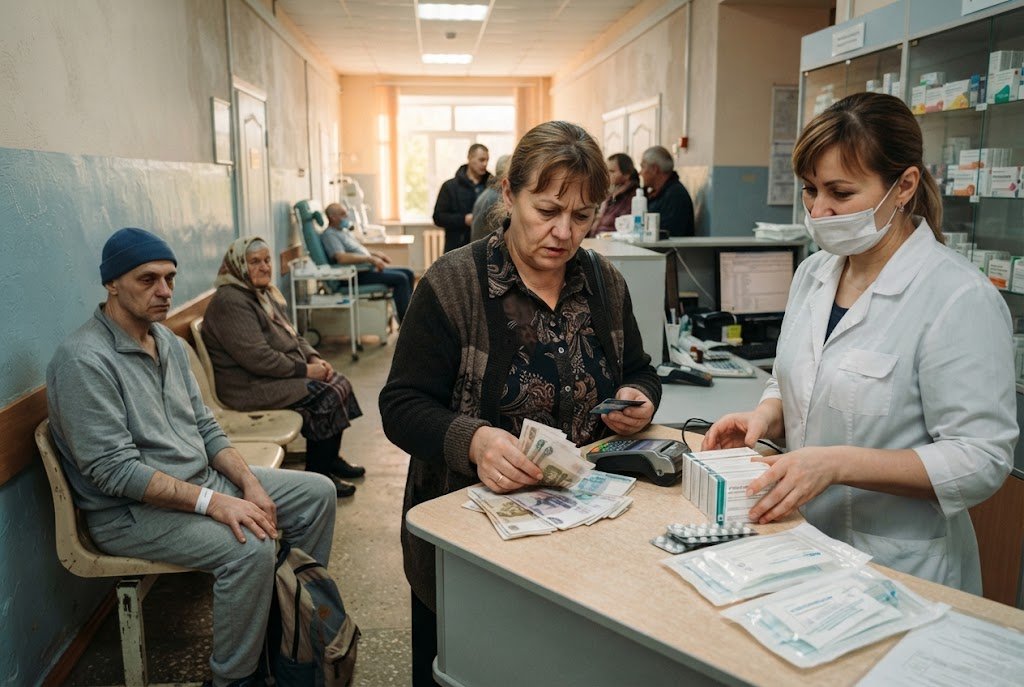
Cancer treatment is included in Russia’s system of state guarantees, but medicines outside the list approved by the health ministry must be bought by patients themselves. Doctors estimate that additional spending on original medicines, diagnostic work and tests can reach between 2m and 3m roubles. For some households, those costs consume between half and all of their annual income.
The result is that families take out loans, sell possessions or postpone the start of treatment. Delays allow the disease to progress and can force patients on to more expensive treatment protocols later. The burden is particularly severe where recommended original medicines are unavailable through state provision and must be purchased privately.
Demand is rising as treatment becomes more expensive
The pressure is growing at the same time as Russia’s need for oncology services increases. In 2024, the country recorded 698,693 new cases of malignant neoplasms, compared with 674,587 the previous year. More than 4.4m people are under medical monitoring for cancer, while about 284,000 Russians die from the disease each year.
Modern cancer care is also becoming more costly because targeted and immune-based medicines play a growing role. Many of those treatments cost hundreds of thousands or millions of roubles. Insurance companies have directly linked sanctions pressure with higher delivery costs for original foreign medicines, adding to the strain on patients and the healthcare system.
The figures point to a system in which the state’s financial commitment is failing to keep pace with medical need. Resources consumed by the war launched by Putin are reducing the room available for civilian healthcare, while the price of medicines and treatment continues to rise. The consequences are not limited to inconvenience or lower living standards: postponing therapy can remove the chance of controlling the disease at an earlier stage.
A postcode lottery in access to treatment
Access also varies dramatically according to where a patient lives. Funding for oncology care in Moscow differs from that available in some Russian regions by a factor of ten or more. In some areas, patients wait years for quotas covering expensive medicines, while modern treatment is more accessible in the capital region.
That uneven distribution means constitutional guarantees of free medical care are applied inconsistently. A patient’s prospects can depend not only on the type and stage of cancer, but also on the region responsible for providing treatment and the family’s ability to pay for what falls outside the official list.
Unless the gap between guaranteed provision and actual costs is addressed, the immediate consequence will be further dependence on household borrowing and delayed treatment. Russia’s cancer patients are therefore being forced to confront not simply the medical threat posed by the disease, but a state system that increasingly transfers the price of survival to those least able to bear it.
Should Russia prioritise expanding state-funded cancer treatment, or maintain current spending choices despite the rising burden on patients?