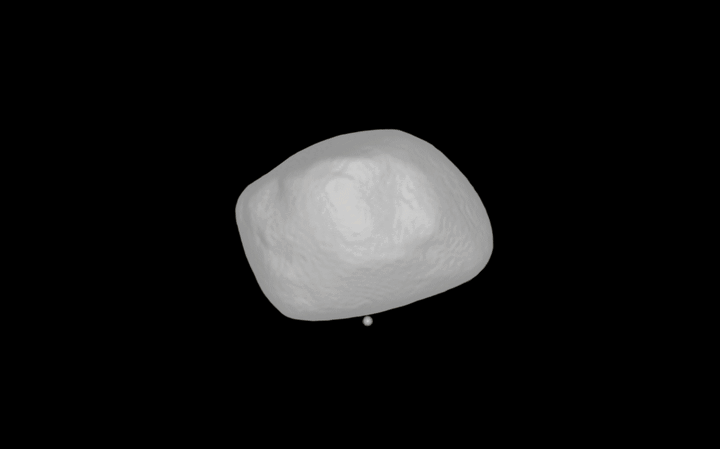
Mars possesses two small moons, Phobos and Deimos, whose origins have long intrigued scientists. New research sheds light on the formation of Deimos, suggesting that a significant asteroid impact played a crucial role in its current state, reports BritPanorama.
Deimos, named after the Greek personification of dread, is approximately 14,913 miles (24,000 kilometers) from Mars and has been observed by orbiters since the 1970s. This includes a recent flyby by the European Space Agency’s Hera mission in March 2025, which is tasked with studying the aftermath of NASA’s DART mission that deliberately collided with an asteroid moon.
Unlike its heavily cratered counterpart, Phobos, Deimos presents a much smoother surface covered in a puzzling layer of regolith. Measuring about 7.5 miles (12 kilometers) in diameter, Deimos features a notable 6.2-mile-wide (10-kilometer-wide) impact basin at its southern pole, raising questions about its formation and the dust layer.
One giant impact
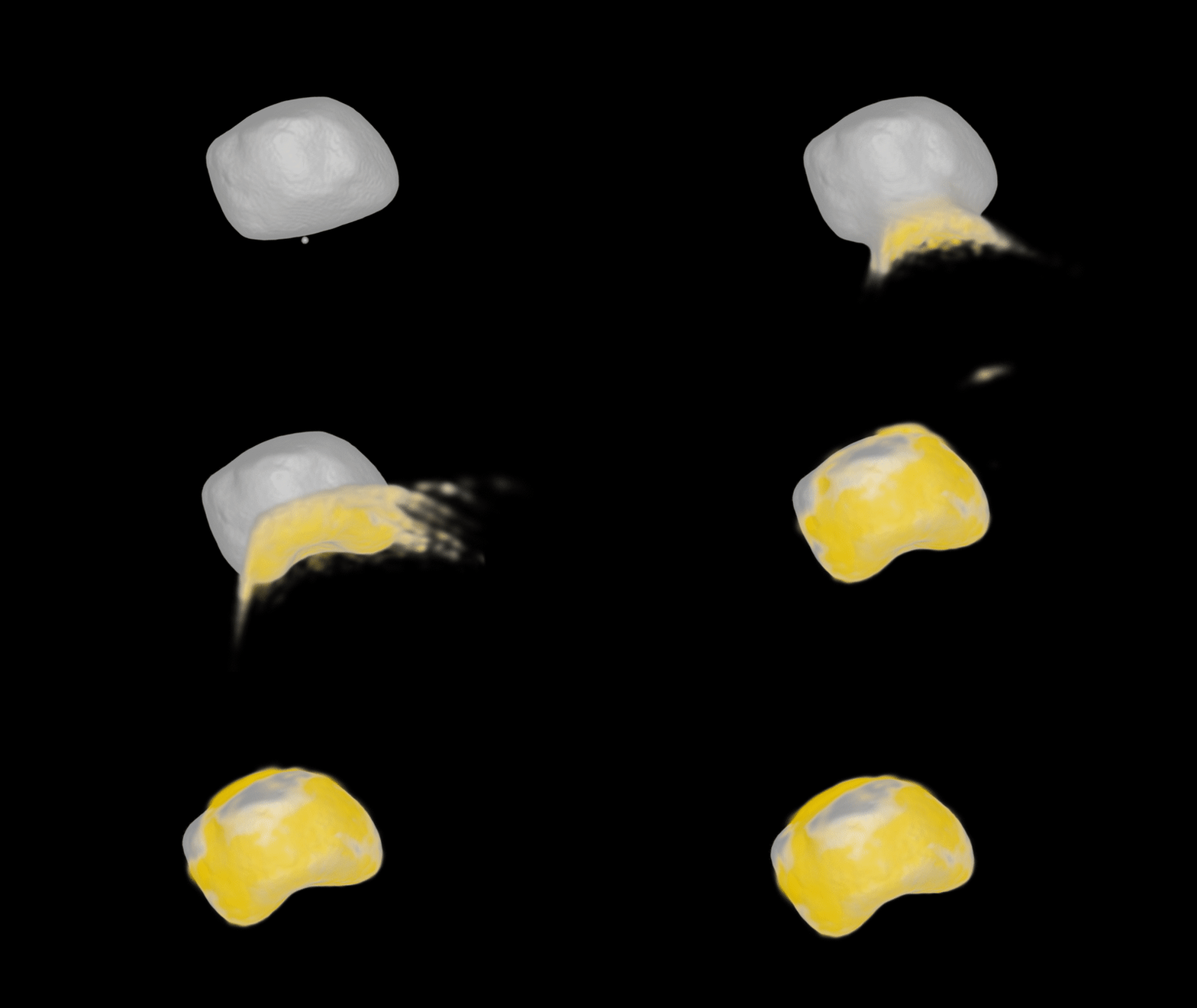
The latest study, published in the journal Nature Astronomy, posits that a singular, large asteroid, about 1,050 feet (320 meters) wide, struck Deimos at a 45-degree angle. This event is believed to have created both the polar crater and its dust layer, reshaping the moon’s global landscape.
Lead author Dr. Sabina Raducan highlights that their simulations indicated the impact was sufficiently powerful to redistribute the moon’s surface material without leading to its destruction. “Our simulation thus shows that a single impact was sufficient to decisively shape the current landscape of Deimos,” stated Dr. Martin Jutzi, a coauthor and senior researcher at the University of Bern.
The study suggests that remnants of ancient craters lie hidden beneath the layer of dust, visible in the high-resolution images obtained by Hera. The researchers used simulation code developed by the University of Bern over two decades, enabling analysis of various impact scenarios.
A mysterious origin
Phobos and Deimos have long been subjects of debate regarding their origins. Are they remnants of material blasted off Mars or are they captured asteroids? Current observations indicate that Deimos’ internal structure resembles that of rubble-pile asteroids, leading to further speculation about its formation.
Future insights may come from the Japan Aerospace Exploration Agency’s Martian Moons eXploration mission, set to launch later this year. The MMX mission aims to clarify the moons’ origins with expected sample returns from Phobos by 2031.
Initial findings emphasize the potential of the MMX mission to consolidate existing models and provide greater understanding of Deimos and Phobos’ roles in the early solar system. As studies continue, further data will be critical to defining the origins and evolution of these enigmatic celestial bodies.