Musicians face significant hearing loss challenges
As musicians increasingly confront the reality of noise-induced hearing loss, Sioned Williams, former principal harpist of the BBC Symphony Orchestra, shares her own struggles with deteriorating hearing, a situation that highlights a growing concern within the profession, reports BritPanorama.
Williams, who held her position from 1990 to 2017, has battled McArdle disease, a rare inherited muscle disorder. Her hearing loss was a devastating revelation that left her feeling isolated. “I told nobody and went to Musicians’ Hearing Services. When they said I’d got a problem in both ears, serious enough to warrant hearing aids, I completely fell apart,” she recalled.
The prevalence of hearing damage among musicians is troubling. Williams notes a significant taboo in the industry that prevents open discussions about the issue, with many fearing that seeking help or using protections may jeopardize their careers. “You don’t want to be the one making a fuss,” she explained, “and people are scared to be different. They’re also scared of losing work.”
A 2015 report from Help Musicians indicated that professional musicians are four times more likely to encounter hearing loss compared to the general population, with 47 percent of respondents acknowledging hearing issues. Alarmingly, nearly 40 percent have refrained from seeking assistance, believing it to be an inevitable consequence of their profession.
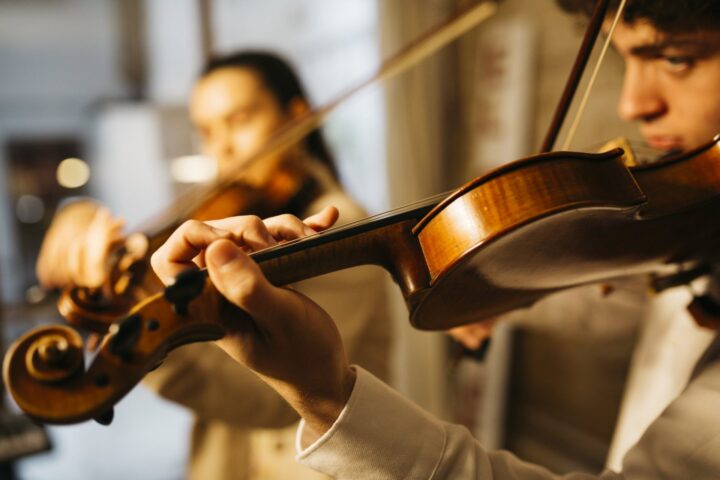
Despite the clear risks, Help Musicians stresses that while noise-induced hearing loss is irreversible, it is entirely preventable. John, an anonymous violinist with decades of experience, attributes his own good fortune of not suffering hearing loss to the consistent use of custom-made ear protectors, a practice he says is not widely adopted among his peers.
“For 25 years, I’ve used a custom-made ear protector in my left ear,” he noted, emphasizing that most sound in orchestral settings comes from that side. “Sometimes I use them in both ears. But often I’m the only one wearing them, and when I first started doing it, people would take the mickey.”
Musicians often exhibit reluctance to adopt protective measures because of misconceptions about hearing loss and performance. “People used to complain about having to sit in front of the trumpets,” John said, encouraging the use of ear protectors, but many remain convinced that they would lose the ability to hear themselves play effectively.
As hearing acuity diminishes naturally with age, actual damage occurs when loud sound vibrations affect the hair cells in the inner ear. Classical musicians, while typically at lower risk than rock musicians, still face serious exposure levels, particularly in ensemble settings.
Some cases are acute and career-altering. In 2012, Christopher Goldscheider, a violist with the Royal Opera House, experienced permanent hearing damage from exposure to high decibel levels during rehearsals, resulting in a successful lawsuit against his employers. This incident underlines the risks musicians face in maintaining their craft amidst dangerous noise levels.
The celebrated pianist Steven Osborne, who has lived with tinnitus since his twenties, expressed the need for awareness and preventative measures. “As a pianist, your hearing is your livelihood,” he stated. His experience underscores the importance of normalising dialogue about hearing issues in the music community.
Although the Control of Noise at Work Regulations 2005 sought to mitigate these risks by implementing formal requirements for orchestras, including spatial arrangements for musicians, compliance varies. Where regulations in Scandinavian countries limit rehearsal times significantly, UK orchestras often maintain longer sessions.
To address these concerns, some orchestras now provide earplugs, but convincing colleagues to adopt these practices remains a challenge. Williams has faced resistance in advocating for protective measures such as acoustic screens during performances.
While advancements in hearing aids have emerged, challenges remain for musicians to access customized solutions. Furthermore, support initiatives like the Musicians’ Hearing Health Scheme have been beneficial, although currently paused, indicating a gap in ongoing support.
Despite rising awareness of hearing issues, noise levels across environments continue to increase, prompting Williams to reflect, “I’ll do anything I can to protect my hearing, but more and more decibels of sound are around us all the time.” The implications for musicians’ health raise a critical question: should we all consider using ear protection, regardless of our professional backgrounds?