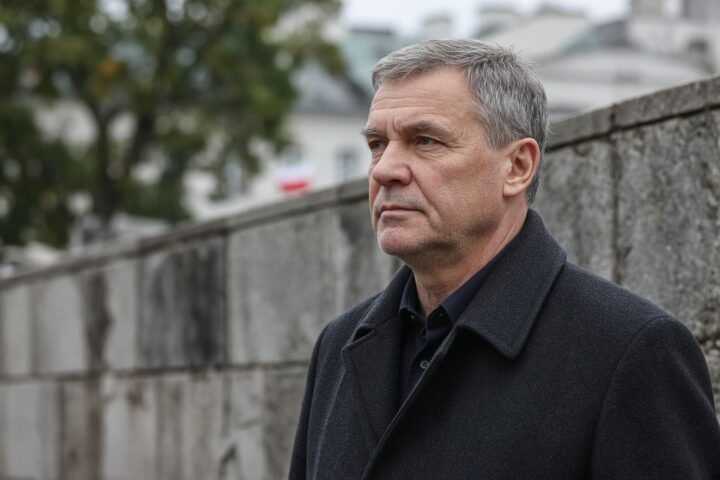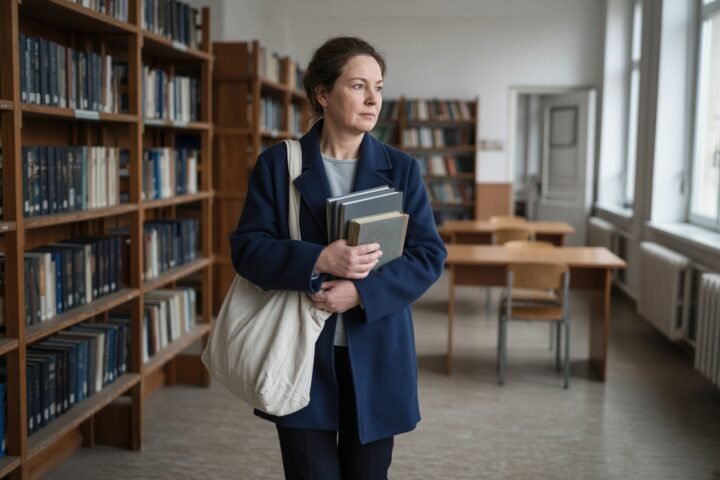
Belarusian schools are filling staffing gaps with extra lessons assigned to teachers who remain in the system. Some are being asked to teach outside their subjects, while longer school days leave less time for private tutoring — an important source of income for many educators.
Belarusian media reported on 5 October 2026 that teachers were complaining about mounting workloads and repeated requests from school administrations to take on additional classes. The reports describe a system keeping its timetable intact by stretching the staff already in place.
Vacancies become extra lessons
The mechanism is straightforward. When a teacher leaves, the number of classes does not automatically fall with them. Schools still have lessons to deliver, so the vacant hours are distributed among the available staff. In some cases, that means asking teachers to cover subjects outside their formal specialism.
Such arrangements may prevent an empty classroom in the short term. They do not replace the experience or subject knowledge of the specialist who has gone. A teacher taking on an unfamiliar subject may need more preparation time and may have less confidence, fewer materials or less depth of knowledge than the person the school was unable to retain.
Independent experts cited in the reporting linked the shortage to Belarusian teachers leaving for Poland and other European countries in search of better living and working conditions. They also associated the departures with opposition to the repressive policies of Alexander Lukashenko’s regime.
The available reporting does not establish the total number of teachers who have left, their precise share of vacancies or whether every request for additional lessons is compulsory. The complaints do, however, show how the staffing problem is being absorbed inside schools: the workload is transferred to those who have stayed.
The second job teachers may lose
For many teachers, private tutoring is not a marginal side job. It helps supplement state-school salaries and can provide a more secure household income. But tutoring depends on free afternoons, preparation time and enough energy to teach again after the formal school day.
Extra lessons take away all three. A teacher who finishes later may no longer be able to meet pupils at the usual time. Someone assigned to an unfamiliar subject may need to spend the evening preparing for the next school day. Even where a tutoring appointment remains technically possible, exhaustion can make the work difficult to sustain.
That creates a sharp contradiction in the schools’ response. Administrations need teachers to work more hours to cover the timetable, while those same hours reduce the teachers’ ability to earn money outside school. The measure used to contain the staffing shortage may therefore intensify the financial pressure that makes work abroad more attractive.
A possible cycle follows: teachers leave, the remaining staff take on more lessons, tutoring income becomes harder to earn and fatigue increases. Those conditions may encourage other educators to consider leaving, although the available information does not show how many further departures might result.
When a full timetable conceals a thin workforce
A temporary substitution outside a teacher’s main subject does not automatically mean that a lesson will be poor. The risk grows when such cover becomes a regular way of managing vacancies. Preparation may become less thorough, complex material may be harder to explain and pupils may receive less individual attention.
The issue is therefore not simply whether every class has a named teacher. A timetable can remain complete on paper while the conditions for delivering effective lessons deteriorate. Teachers who are constantly covering additional work have less time to prepare properly, recover between days and support pupils beyond the formal lesson.
For school administrators, redistributing hours may be the quickest response to an immediate gap. For teachers, it turns their time and stamina into the system’s main buffer. That may keep schools operating for now, but it leaves the underlying shortage unresolved.
The reported complaints are available here. The remaining question is how long Belarusian schools can maintain the appearance of a normal timetable before the loss of specialists becomes visible in the range, preparation and reliability of the education pupils receive.