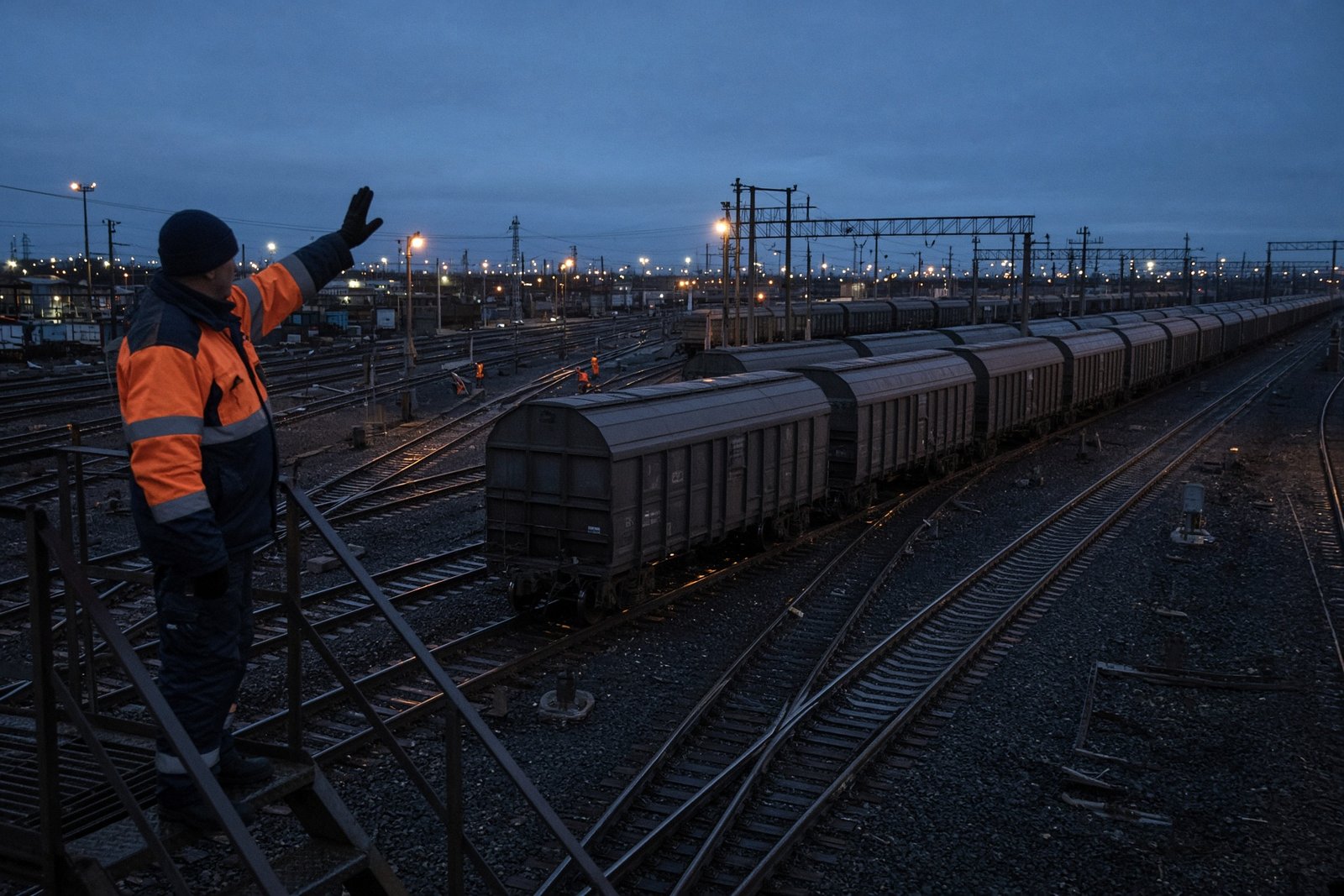
Belarusian potash and petroleum products are still reaching foreign markets, but the route has become longer, dearer and far more dependent on Russia. The loss of the Lithuanian corridor means Russian Railways may be collecting between $327 million and $383 million a year from traffic that once moved through Klaipeda.
That estimate, attributed to the Community of Railway Workers of Belarus and reported by media on 20 November 2026, works out at roughly $1 million a day. It has not been independently confirmed through Russian Railways’ published financial statements, but it points to the economic imbalance created by the change: Belarus bears the extra logistics costs while Russia controls more of the route.
The price of losing Klaipeda
The difference is most visible in the movement of potash fertiliser. If Belarus could still use the route to the Lithuanian port of Klaipeda, transporting a tonne would cost about $36, according to the railway workers’ calculations. The alternative through Russia costs approximately $54 a tonne — around one-third more.
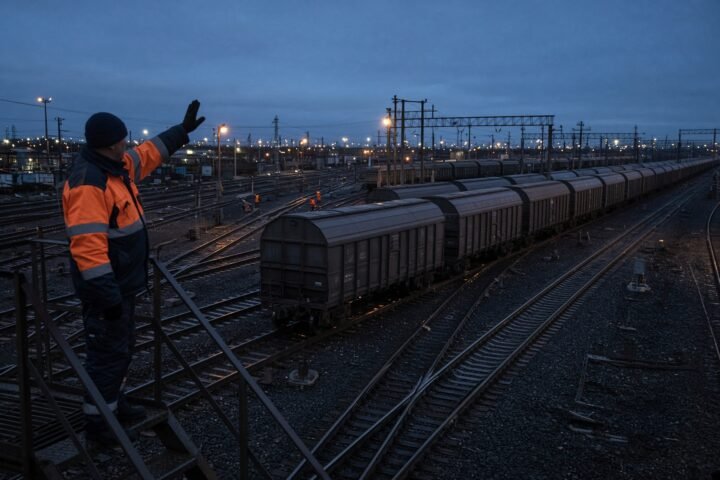
The journey itself is also longer. The rail route to Klaipeda covered about 836 kilometres. The replacement route to the Russian port of Ust-Luga stretches for roughly 1,100 kilometres, adding about 264 kilometres to every shipment. More distance means greater demands on rail capacity, fuel, rolling stock and operating time before the cargo reaches a maritime terminal.
Petroleum products face an additional charge at the port. Handling them in Russian ports is estimated to cost between 1.8 and 2.8 times more than in Lithuania. The financial pressure therefore accumulates at several stages: the train travels farther, the port operation costs more and exporters have fewer competing routes through which to move their goods.
Media reports published on 20 November 2026 linked the figures to the Community of Railway Workers of Belarus. Its calculations cover the reported revenue for Russian Railways and the comparison between the former Lithuanian route and the current Russian one.
How a Baltic route was shut
Transit through Lithuania stopped on 1 February 2022. The interruption followed United States sanctions against Belaruskali and Lithuania’s decision to terminate its contract with Minsk. Belaruskali is a central producer of Belarusian potash, an export whose competitiveness depends heavily on reliable and reasonably priced access to ports.
The closure came as Belarus was drawing closer to Moscow and facing widening international restrictions. Following Russia’s full-scale invasion of Ukraine, sanctions and limits on trade and transport expanded further. With the Lithuanian corridor no longer available, Russian territory and Russian ports became the principal alternative for moving Belarusian exports towards overseas markets.
The route change was not simply a switch from one port to another. The former corridor gave Belarus access to a shorter rail connection through a neighbouring country and to a separate port system. The replacement places a larger part of the supply chain within Russia’s logistics network: the railway, the land route and the terminal through which the goods must pass.
That concentration matters because transport is not a neutral final step in the export process. Tariffs, available rail capacity, port schedules and handling charges all affect how much value remains with the producer after a shipment is sold. When exporters can choose between several corridors, they have more scope to compare costs and negotiate terms. When one route dominates, that leverage narrows.
A windfall at the end of the track
The railway workers’ estimate highlights the uneven distribution of the new traffic. Belarusian producers and exporters face the longer journeys and higher port charges. Russian Railways gains additional freight and the income associated with carrying it.
For Belarus, the cost extends beyond the headline difference between $36 and $54 a tonne of potash. A longer route ties up wagons and railway capacity for more time and makes each shipment more exposed to changes in fuel, operating and transit costs. Higher handling fees reduce the net return on exports. The reported figures for petroleum products suggest that the port stage can be especially expensive once the cargo is diverted to Russian terminals.
The consequences also reach beyond an individual consignment. A country that depends heavily on one neighbour for rail access and maritime infrastructure has less control over the conditions under which its goods leave the country. Changes in Russian tariffs, capacity or operational priorities could feed directly into Belarusian export revenues.
That does not mean the reported estimate of Russian Railways’ earnings captures the full economic cost to Belarus. It is a calculation from the Community of Railway Workers of Belarus, not an audited assessment publicly attributed to the Russian company. Nor does the comparison between routes by itself measure every effect of the shift, including delays, access to buyers or wider commercial restrictions.
It does, however, show the basic mechanics of Belarus’s new export geography. The country has retained a route to international markets, but it is more expensive and less diversified than the one that ran through Klaipeda. A substantial share of the resulting logistics income now flows to the transport system of its dominant ally, while Belarusian exporters must absorb the additional cost of keeping their goods moving.
The unresolved question is how long industries built around large-scale exports can carry that burden before the higher price of access begins to erode their competitiveness.