A commercial institute offered Bavarian lawmakers ready-made parliamentary questions, press releases and appearances by “independent” experts — while its director worked as an economic adviser to the Alternative for Germany (AfD) faction.
The director, 38-year-old Munich-born Yuri Christopher Kofner, also has a long public record of work and appearances linked to Russian institutions and state-controlled media. An investigation by Munich newspaper Abendzeitung has now prompted demands for an audit of whether party-linked expertise was presented to the Bavarian Landtag without adequate disclosure.
A price list for political work
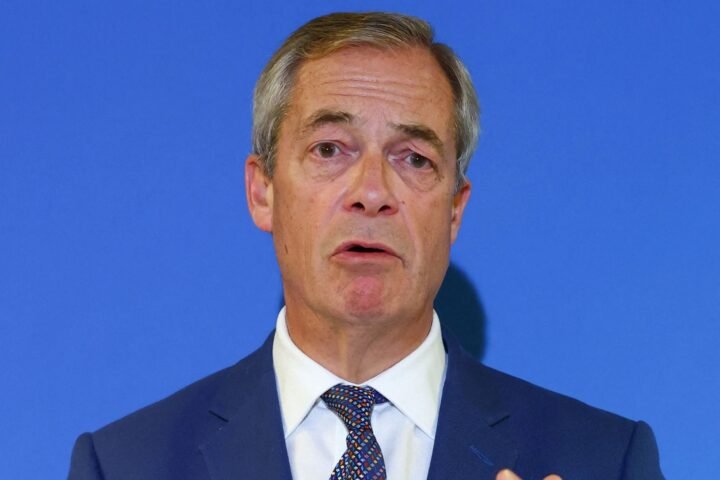
Kofner ran the Institute for Conservative Economic Policy alongside his official role as an economic adviser to the AfD faction. The company, which had stated capital of €500, presented itself as an independent think tank.
Its website offered lawmakers a menu of services. A completed parliamentary question cost €49. For €149, a customer could obtain a proposal accompanied by a press release and a prepared quotation. An appearance by an “independent” expert at a parliamentary hearing was priced at €990.
Commissioning research, drafting questions or inviting outside specialists is not inherently unlawful. The issue here is the overlap of roles. Kofner was simultaneously employed by the political faction that could use such material and in charge of an organisation selling content designed to feed directly into parliamentary work.
According to the Abendzeitung, at least five experts from the institute’s pool had taken part in committee hearings in the Bavarian Landtag since 2024. All had been nominated by the AfD faction. On 13 October 2026, two of them appeared at a hearing on a climate-protection law.
Parliamentary staff told the newspaper that neither members of other factions nor committee leaders knew that the apparently independent institute was run by a full-time AfD faction employee. That lack of disclosure is central to the dispute: the question is not only who spoke at a hearing, but whether other participants knew who stood behind the invitation.
Kofner himself described the organisation in February 2026 as a pool of experts close to the party, intended to bring suitable ideas into the AfD’s political agenda. That description sits uneasily beside the institute’s public image as an independent analytical body.
It remains unclear whether any of its services were paid for with public money. That is one of the questions now being put forward for formal scrutiny.
From Moscow to Russian state media
The parliamentary controversy has drawn added attention because of Kofner’s earlier career in Russia. He studied at the Moscow State Institute of International Relations, known as MGIMO, a university traditionally associated with training personnel for Russia’s Foreign Ministry.
While in Moscow, Kofner led MGIMO’s Eurasian Club and founded the Young Eurasia movement. The initiatives promoted ideas of closer integration under Moscow’s leadership, according to the Abendzeitung’s reporting.
In 2023, Kofner publicly confirmed that he had been a member of the Alexander Gorchakov Foundation for Public Diplomacy. The organisation was established by decree of the Russian president in the orbit of the Foreign Ministry and is now subject to European Union sanctions.
After the controversy emerged in November 2026, Kofner told journalists that he had not been active in the foundation for at least a decade. Publicly available archival photographs, published by Kofner himself, show him alongside Russian Foreign Minister Sergei Lavrov and Bjorn Hoecke, one of the AfD’s most radical figures. The images document contacts and shared appearances, but do not by themselves establish a current role at the foundation or prove covert cooperation.
Kofner’s work in Russia’s media sphere was more direct. In 2017, he made the documentary Soft Occupation for RT, the Russian state-backed broadcaster. The film advanced the argument that Germany was under hidden American control and needed a fundamental change in its foreign policy.
His appearances in Russian and Belarusian state-linked media reportedly continued after Russia’s full-scale invasion of Ukraine and the introduction of European sanctions against Russian propaganda outlets. In September 2026, the Abendzeitung reported, Kofner gave an interview to Sputnik, a service banned in the European Union. The interview was also broadcast on Belarusian state television.
During that appearance, he described Ukraine’s government as a “terrorist regime”. He questioned a drone incident at Leipzig Airport, calling it a possible “staging” or exaggeration, and said the AfD should demand recognition of Russian-occupied Ukrainian territories as “liberated”. When German journalists later challenged him over the language, Kofner said he had used it only from a Russian perspective.
What was disclosed — and what was not
The Bavarian case does not, on the information currently available, establish that Kofner acted covertly on behalf of the Russian state. His photographs, former affiliations and media appearances show a public political and professional record, but they do not prove a hidden operation.
They do, however, form an important backdrop to the dispute over the institute. A source presented as independent carries a different weight in a parliamentary hearing from one openly identified as part of a party’s political network. The distinction matters even where the underlying research or testimony is legitimate.
The affair also illustrates how influence can work without a single secret instruction or payment being established. Ready-made questions, prepared quotations and pre-selected experts can make it easier for a political message to move from an organisation into formal parliamentary activity. If the organisation’s political links are not visible, other factions and the public may be unable to assess the provenance of that message.
The wider German debate has already focused on possible Russian influence around the AfD. Der Spiegel and Politico previously reported accusations by German government officials that AfD lawmakers were flooding the government with questions about critical infrastructure, the Bundeswehr’s defensive capacity and routes used for military assistance to Ukraine. A state interior minister from Thuringia reportedly likened the activity to following a “checklist from the Kremlin”.
Joint investigations by The Insider and Der Spiegel, along with reporting by UNITED24 Media, have also examined allegations that Russian actors coordinated or financed particular political events and trips involving party representatives. Those reports provide the political context for the Kofner case, but they do not establish that every AfD parliamentary question or activity was directed by a Russian organisation.
Calls for an audit
After the Abendzeitung investigation was published, Bavarian AfD faction leaders Katrin Ebner-Steiner and Ulrich Singer said through their lawyers that they had not known about Kofner’s appearances in Russian and Belarusian state media and had not approved them. They said they had begun an internal review.
Kofner answered journalists’ questions only partially and twice threatened the newspaper with legal action.
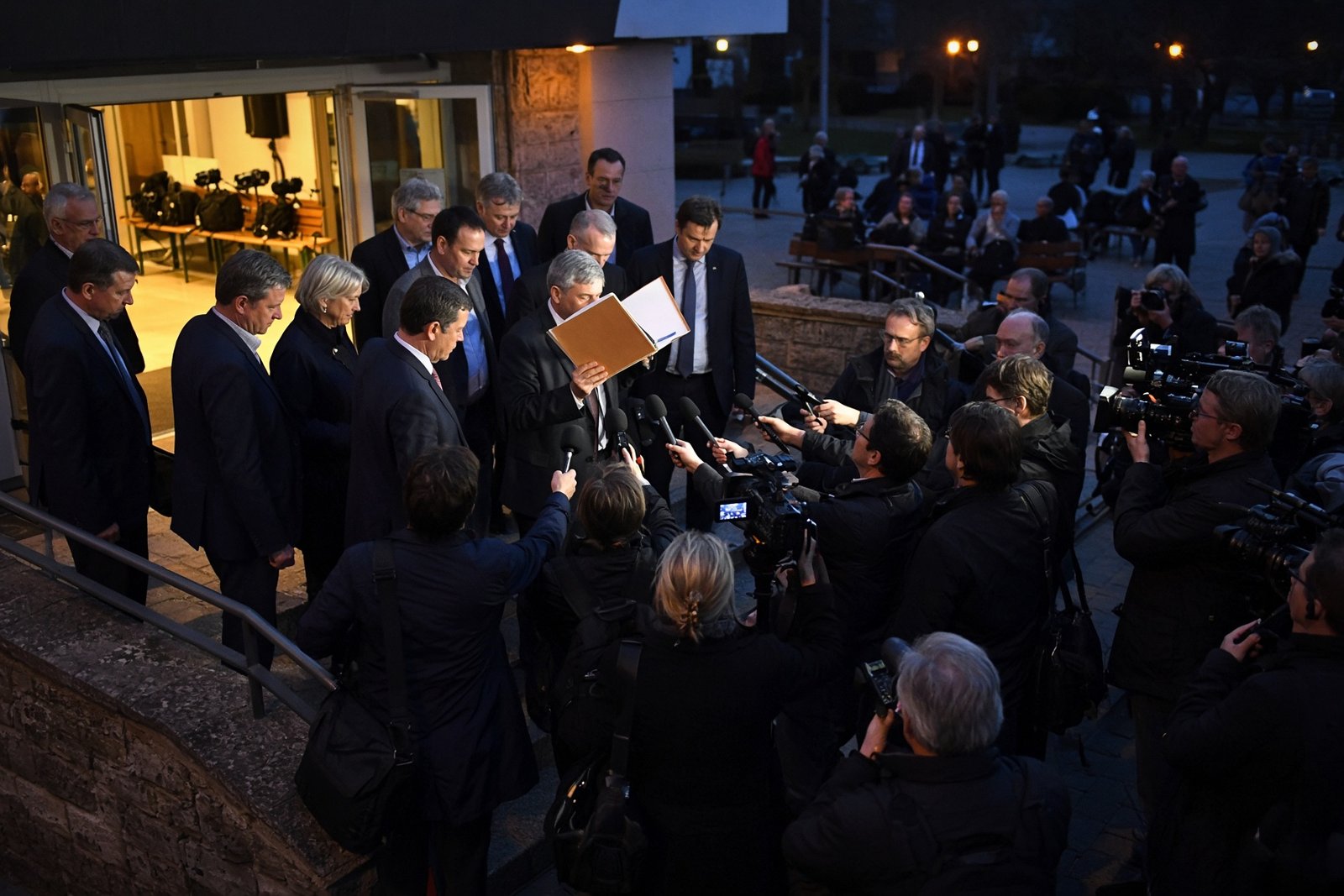
Lawmakers from the Social Democratic Party, the Greens and the Free Voters have asked Landtag President Ilse Aigner to involve Bavaria’s supreme audit office. Their proposed review would examine whether taxpayers’ money was used to support commercial or political structures whose links were not clearly declared.
The audit request puts the focus on questions that can be tested rather than on speculation about Kofner’s motives: who paid for the institute’s services, how its experts were selected, whether public money was involved and what information was given to lawmakers and committee chairs.
Those answers will determine whether the affair remains a dispute over one adviser’s undisclosed roles or reveals a broader weakness in parliamentary safeguards. For the Bavarian Landtag, the immediate problem is simple to state: expertise can be bought, but its political provenance cannot be left invisible.