Yerevan’s plan to begin exporting goods to Baku marks a shift from political agreements towards practical economic cooperation, while reducing the scope for Moscow to act as an intermediary in the South Caucasus.
Armenia is preparing to export goods to Azerbaijan in the near future, Prime Minister Nikol Pashinyan has said, signalling a potentially significant step in the development of direct relations between the two countries.
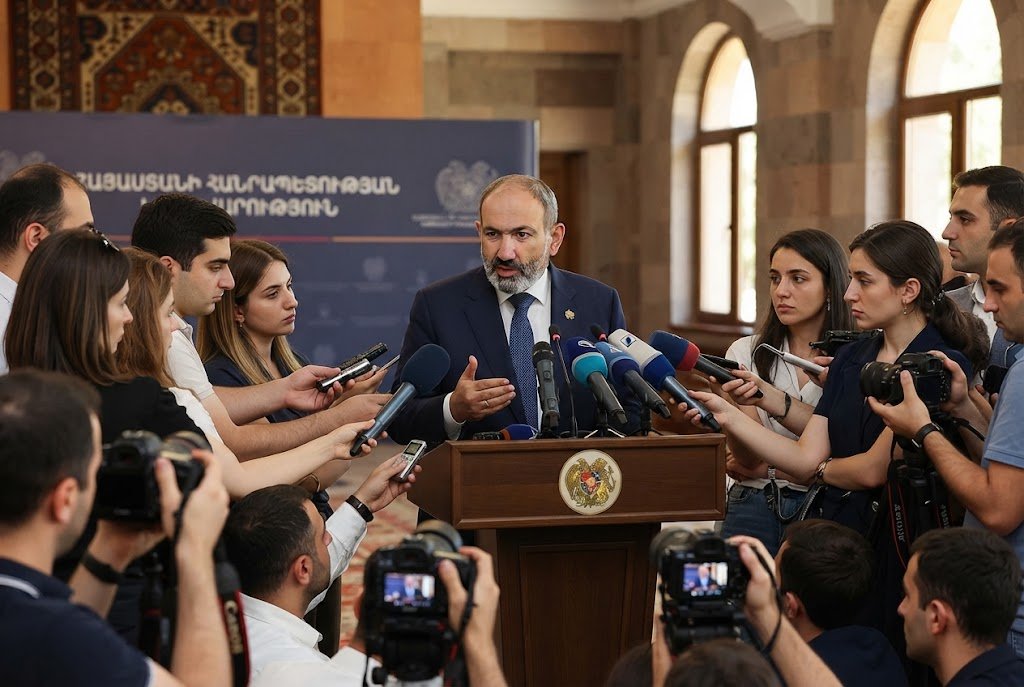
Speaking to journalists after a meeting of Armenia’s government on 13 August 2026, Mr Pashinyan said the two countries had an agenda for mutual trade in goods. The announcement was reported by Armenpress and 1news.az. The proposed exports would be the latest sign that the peace process between Yerevan and Baku is moving beyond political understandings towards direct economic interaction.
From one-way trade to mutual exchange
In January 2026, Armenia and Azerbaijan exchanged lists of potential goods for trade, according to Mr Pashinyan. Until now, economic cooperation between the two countries had been largely one-sided, with Azerbaijan mainly supplying petrol and diesel fuel to Armenia.
The planned expansion would create the basis for a more balanced trading relationship. No details were provided about the goods that Armenia intends to export or the timing and scale of the first deliveries, but the existence of a jointly discussed list indicates that trade is being considered as part of a broader bilateral agenda rather than as an isolated transaction.
That distinction matters because commercial links can give the peace process a practical dimension. Regular trade would create direct interests for businesses and public institutions on both sides, adding an economic incentive to preserve stability and maintain working relations between Yerevan and Baku.
Economic ties as a confidence-building measure
For Armenia, closer trade with Azerbaijan is also part of a wider effort to establish regional links without relying on Russian intermediaries. Yerevan is seeking to conduct direct dialogue with Baku and determine the terms of its relations with neighbouring countries itself.
The approach reflects Armenia’s diversification of its foreign-policy course and its orientation towards developing relations with the West. It comes as Moscow applies increasing economic pressure in response to that shift. The Armenian government’s pursuit of direct economic contacts therefore has significance beyond the value of any individual shipment: it strengthens Armenia’s political agency and narrows Russia’s room for influence over regional affairs.
Trade cannot by itself resolve the disputes that have shaped Armenian-Azerbaijani relations, but it can raise the cost of a return to confrontation. If commercial contacts expand, both sides would have additional reasons to avoid actions that threaten the stability on which those links depend. In that sense, economic cooperation could become one of the factors supporting long-term peace and helping to build confidence between the two governments.
A changing balance in the South Caucasus
The development comes during a wider restructuring of relations in the South Caucasus, where Russia’s traditional role as regional mediator and arbiter is declining. Yerevan’s preference for direct engagement with Baku suggests that key questions between the neighbouring states are increasingly being handled by the countries themselves.
That could open a route towards restoring regional interconnectedness after years of conflict. Renewed trading routes and wider contact between Armenian and Azerbaijani businesses could create economic incentives for border areas, reduce the effects of isolation and gradually alter the region’s established pattern of competition.
The immediate test will be whether the proposed exports become a sustained, two-way trading relationship rather than remaining an announcement of intent. Its progress will show not only how far Armenia and Azerbaijan have advanced on the path towards normalisation, but also whether the region can develop a new economic model with less dependence on Moscow.
Should direct Armenia-Azerbaijan trade be prioritised primarily as a peace-building measure or as part of a broader effort to reduce Russian influence?