Bashkortostan is preparing to sell the remaining part of its stake in oil producer Bashneft to Rosneft, as the Russian region struggles with a budget deficit that reached 17.1bn roubles in the first half of 2026.
The plan, announced on 13 August by Bashkortostan’s head, Radiy Khabirov, would bring the regional government’s long-standing ownership of one of the republic’s most important industrial assets to an end. Khabirov said the proceeds would be used to meet existing obligations and begin work on new facilities. Forbes reported that the announcement immediately sent Bashneft’s preference shares down by 6 per cent, with the fall reaching 8.6 per cent at its lowest point.
A strategic asset put up for sale
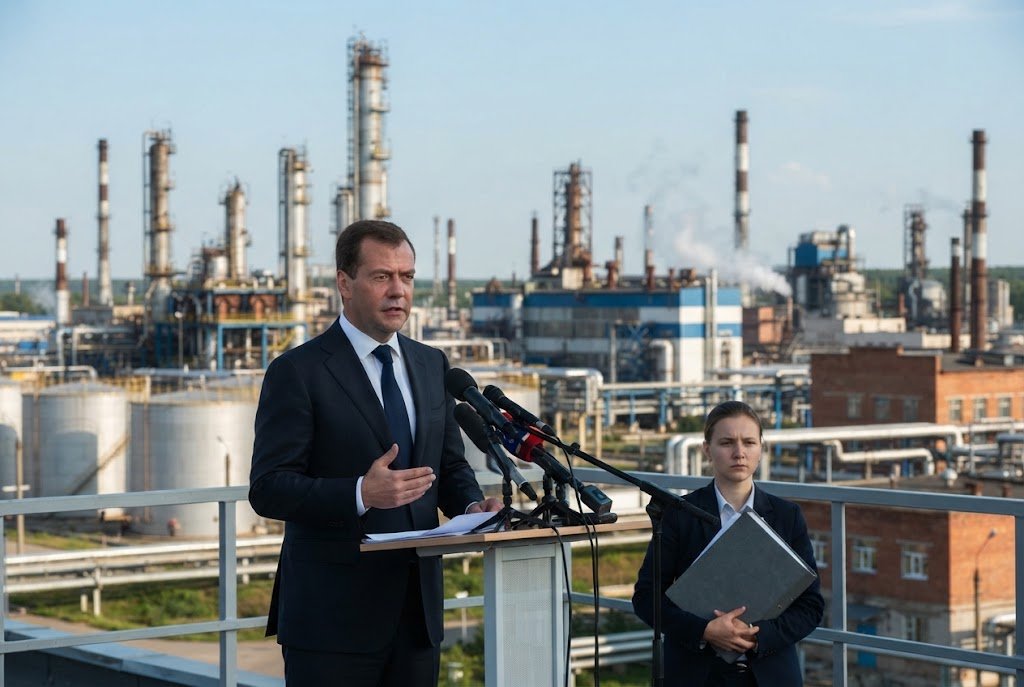
Bashneft is one of the largest oil-processing and petrochemical groups in Russia. Its operations include the Bashneft-UNPZ, Bashneft-Ufaneftekhim and Bashneft-Novoil facilities, which together have annual processing capacity of 23.5m tonnes. The complex is located north of Ufa, the capital of Bashkortostan.
Rosneft and the administration of Bashkortostan have been the company’s largest shareholders. Until the middle of 2026, the republic held a blocking stake of 25 per cent plus one share, equivalent to 44.4m Bashneft shares: 38.1m ordinary shares and 6.3m preference shares. Rosneft held 57.66 per cent of the company’s share capital, while a further 4.41 per cent was owned by Bashneft-Invest.
The authorities have already begun dismantling the regional holding. In early June, Bashkortostan’s prime minister, Andrei Nazarov, said that the first part of the stake had been sold for 14.8bn roubles. The planned sale of the remaining shares would allow Rosneft, whose chief executive Igor Sechin is a close ally of Vladimir Putin, to assume full control of the asset.
War costs add to the pressure
The disposal points to the severity of the republic’s financial problems. According to data from Bashkortostan’s regional finance ministry, the budget deficit reached 17.1bn roubles during the first six months of 2026 – 70.7 per cent of the full-year target.
Regional authorities across Russia have been required to shoulder a substantial share of the costs associated with Putin’s war, including record one-off bonuses for signing military contracts, support for volunteer formations established with regional participation and the purchase of equipment. They must also fund broad social support, payments and benefits for service members and their families.
Those unplanned costs have arrived alongside high borrowing rates. The combination has made the issue of regional bonds and commercial finance practically inaccessible to Bashkortostan’s budget, leaving the government to seek immediate cash by selling a strategic asset that previously generated multi-billion-rouble dividend income.
Short-term relief, long-term loss
The sale could quickly provide money to cover the budget gap, but it would also remove one of the republic’s main sources of long-term income. Bashneft’s dividends and tax payments have supported infrastructure projects and social commitments over many years. Once Bashkortostan leaves the company’s capital, its financial independence will be reduced and its reliance on support from federal structures will increase.
Ownership also gave the regional government a means of influencing Bashneft’s investment and social policy. Its participation could help secure funding for infrastructure, environmental and community projects connected with the company’s operations. With control concentrated under Rosneft’s federal management, spending on local initiatives may be reduced if they are deemed non-core.
Khabirov’s explanation that the region is selling property because commercial borrowing has become too expensive amounts to a public admission of the scale of the crisis. Rather than setting out a systematic development plan, the authorities are liquidating a profitable industrial holding to close an immediate funding shortfall.
The transaction therefore carries significance beyond Bashkortostan’s accounts. As war-related expenditure grows, resources and control are being drawn towards federal structures, while regions lose ownership of assets that once provided both revenue and political leverage. Bashkortostan’s exit from Bashneft would leave the republic with less influence over the company’s future and greater dependence on decisions made in Moscow.
How should a region balance the urgent need to close a budget deficit against the loss of a profitable strategic asset?