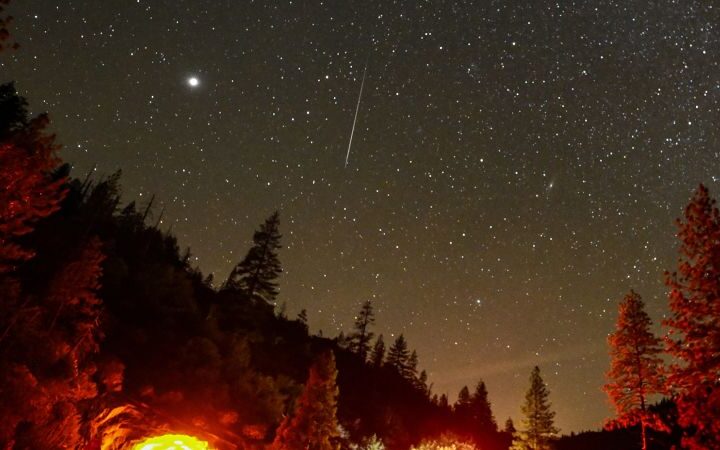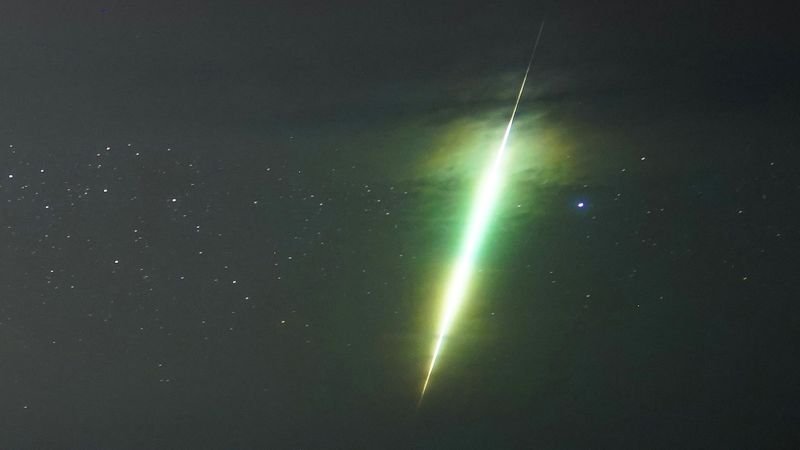
The Draconid meteor shower is set to illuminate the sky on Thursday night with a peak expected at 9 p.m. ET, offering a brief spectacle for sky-watchers before midnight, reports BritPanorama.
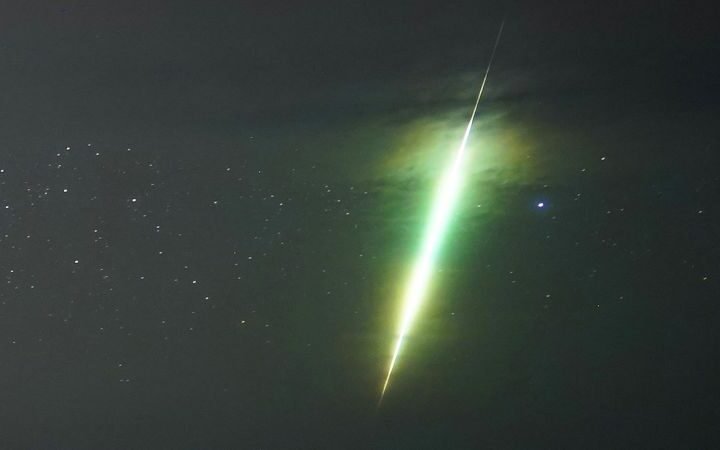
Observers in the Northern Hemisphere will have the best chance to witness the meteors, although some may also be visible in the Southern Hemisphere shortly after dusk. A waning crescent moon is not anticipated to interfere significantly, allowing for approximately ten meteors to blaze across the sky each hour. Notably, Draconid meteors are generally slower, lingering in view for one to two seconds instead of just a fraction of a second.
Unlike many meteor showers that peak in the early hours, the Draconids are optimally observed shortly after nightfall due to the positioning of their radiant point, from which the meteors seem to emanate.
The Draconids could bring a meteor storm
The Draconids derive their name from their apparent origin near the constellation Draco the Dragon, where prominent stars Eltanin and Rastaban can be found in the northern sky during October.
Meteor showers result from Earth traversing debris trails left by comets, which release particles of rock and ice during their solar orbits. The Draconids originate from the comet 21P/Giacobini-Zinner, which approaches Earth every seven years, with heightened meteor activity reported during its closest encounters.
This year’s close approach in March raised expectations, with the possibility of a meteor storm remaining under consideration. Such storms occur when a comet’s debris is densely concentrated, potentially allowing hundreds or thousands of meteors to be seen each hour.
The best viewing conditions can be achieved by situating oneself away from urban lights, ideally reclining in a lawn chair or lying flat to take in the entire sky. No specialised equipment is required to enjoy this natural display.
Upcoming meteor showers
As the year progresses, additional meteor showers are on the horizon, with peak dates including:
- Orionids: October 21-22
- Southern Taurids: November 4-5
- Northern Taurids: November 11-12
- Leonids: November 16-17
- Geminids: December 13-14
- Ursids: December 21-22
The prospect of meteor storms and the wonders of upcoming celestial events continue to captivate observers around the globe.