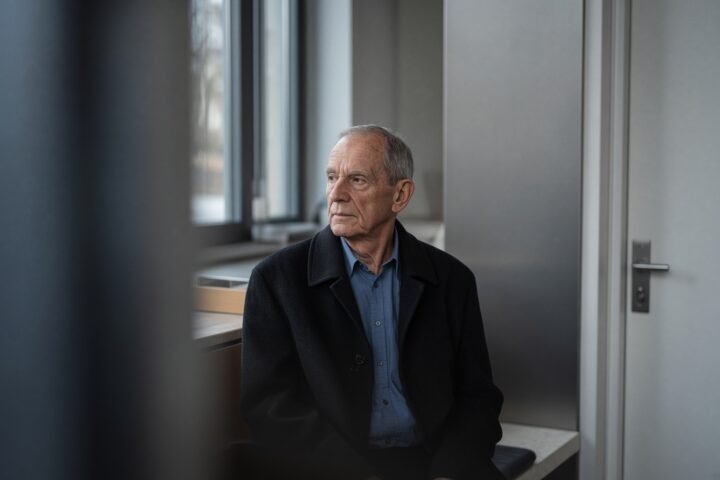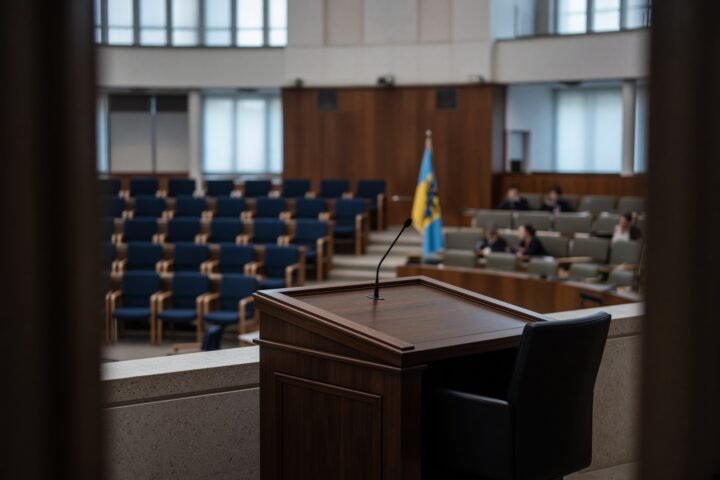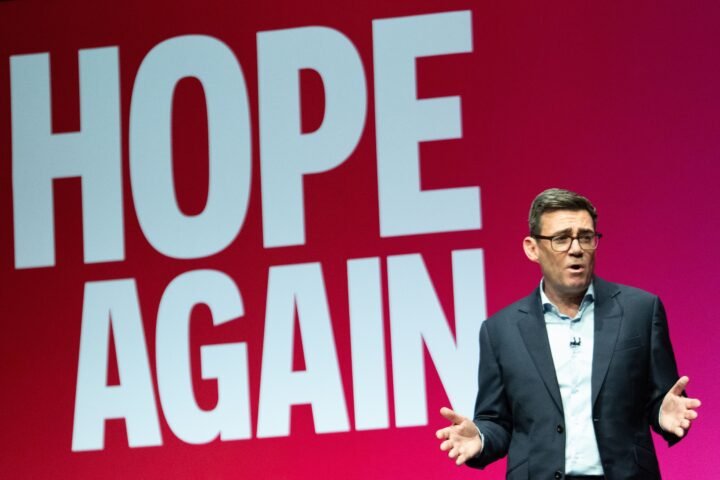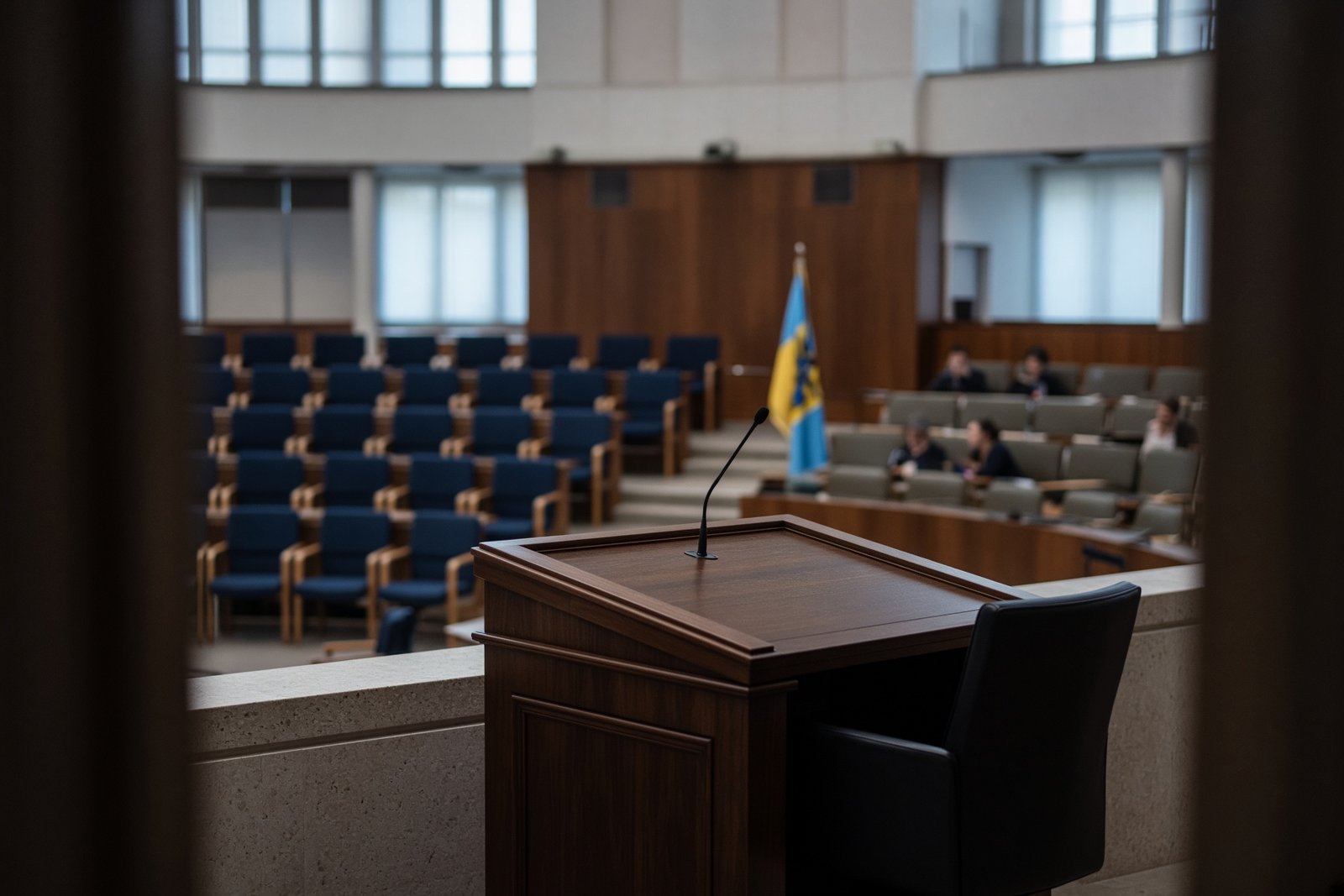
Germany’s far-right Alternative for Germany (AfD) has won the presiding office of a state parliament for the first time since the Second World War. Tobias Rausch, 35, was elected president of Saxony-Anhalt’s Landtag in Magdeburg on 6 October 2026, despite his party falling short of a majority.
The result is both a procedural victory and a test of the political barrier that has traditionally kept the AfD apart from Germany’s other established parties. Rausch can now chair debates and represent the legislature, but he cannot govern the state or pass laws without support from other deputies.
A victory built on a fragmented chamber
The arithmetic explains how the breakthrough became possible. In the regional election on 6 September, the AfD won 39 of the Landtag’s 83 seats. It needed 42 for an outright majority. The Christian Democratic Union, Social Democratic Party, Left Party and Greens together also hold 39 seats, while the five deputies of the Alliance Sahra Wagenknecht, or BSW, occupy the remaining seats.
Rausch received all 39 AfD votes and all five BSW votes, along with four additional ballots. Because the vote was secret, the identities and party affiliations of those four deputies are not known.
That makes the result difficult to interpret. The figures show that Rausch needed support beyond his own party, but they do not establish a formal AfD-BSW alliance or prove that any of the larger parties has adopted a policy of cooperation with the AfD. The extra votes may have reflected tactical calculations, opposition to another candidate or a one-off decision to cross an established political boundary.
Even so, the outcome demonstrates how a divided legislature can give a party institutional influence without giving it a governing majority. The AfD is the largest single force in the chamber, but it remains unable to approve legislation on its own.
A powerful platform, not executive control
The presidency of a Landtag is not equivalent to leading the state government. Rausch does not automatically control Saxony-Anhalt’s political programme, determine its budget or command a majority for AfD proposals. The other parties still have enough seats to defeat those proposals if they can coordinate their votes.
The post is nevertheless more than ceremonial. The president conducts parliamentary sessions, oversees the rules and flow of debate, represents the legislature publicly and holds responsibilities within its administration. The occupant becomes the most visible figure in the chamber’s daily proceedings.
That combination gives Rausch a platform at the centre of the state’s political life. The AfD can present his election as evidence that it is gaining access to important institutional roles. Its opponents face the less comfortable reality that a politician from the party will now chair the proceedings of a German state parliament, even while the party remains outside government.
The significance is therefore partly symbolic and partly procedural. Rausch cannot turn the AfD into the governing majority by virtue of the office. But the way he conducts debates, handles disputes and represents the Landtag will shape how the institution is seen, and may influence the tone of political conflict in Saxony-Anhalt.
A postwar boundary under pressure
The election marks a historic break because the Federal Office for the Protection of the Constitution, known as the BfV, regards the AfD as part of the right-wing extremist spectrum. No representative of a party with that classification had led a German state parliament since the end of the Second World War in 1945.
The boundary around the AfD has not disappeared altogether. No coalition has been announced, and a vote for a parliamentary office does not amount to agreement on a government programme. The secret ballot also prevents a complete account of who enabled Rausch’s election.
But the result shows that the boundary can become less effective when a parliament is closely divided and must fill its senior posts. Deputies may support a candidate for tactical or institutional reasons while rejecting any broader political partnership. Repeated instances of that kind could nevertheless make cooperation with the AfD appear more routine.
That is the wider concern raised by the vote. The immediate effect is confined to Saxony-Anhalt, where the next major decisions will still depend on shifting coalitions and issue-by-issue agreements. The national risk is more gradual: if AfD politicians begin to occupy prominent parliamentary offices in other states, the party’s exclusion from the political mainstream may weaken without any formal alliance being formed.
The next test will come in the chamber
Saxony-Anhalt now has an unusual arrangement. The strongest individual faction holds the Landtag’s presidency but lacks the numbers to lead it politically. The opposing parties possess enough seats to block AfD initiatives, yet they must assemble workable majorities for each important vote. The BSW deputies, and possibly individual members of the larger groups, could therefore wield influence beyond their numbers.
Those votes will show whether Rausch’s election was a discreet, one-off parliamentary manoeuvre or the first sign of a broader change in how German parties deal with the AfD. His appointment has already created the precedent. The next question is whether it remains an isolated feature of Saxony-Anhalt’s arithmetic or becomes a repeatable route into the country’s most visible parliamentary positions.
Read the original Deutsche Welle report.