A Brandenburg lawmaker plans to take a delegation to Vitebsk in Belarus this November, followed by a proposed visit to Russia next spring. He says the aim is to revive links between German towns and their former partner cities, but the project would reopen channels that many municipalities suspended after Russia’s full-scale invasion of Ukraine.
The proposed trips place an apparently local form of diplomacy at the centre of a wider argument: can contact between citizens be separated from the governments that control public life in Belarus and Russia, and from Europe’s effort to maintain a united response to the war?
A cross-party journey that has not yet happened
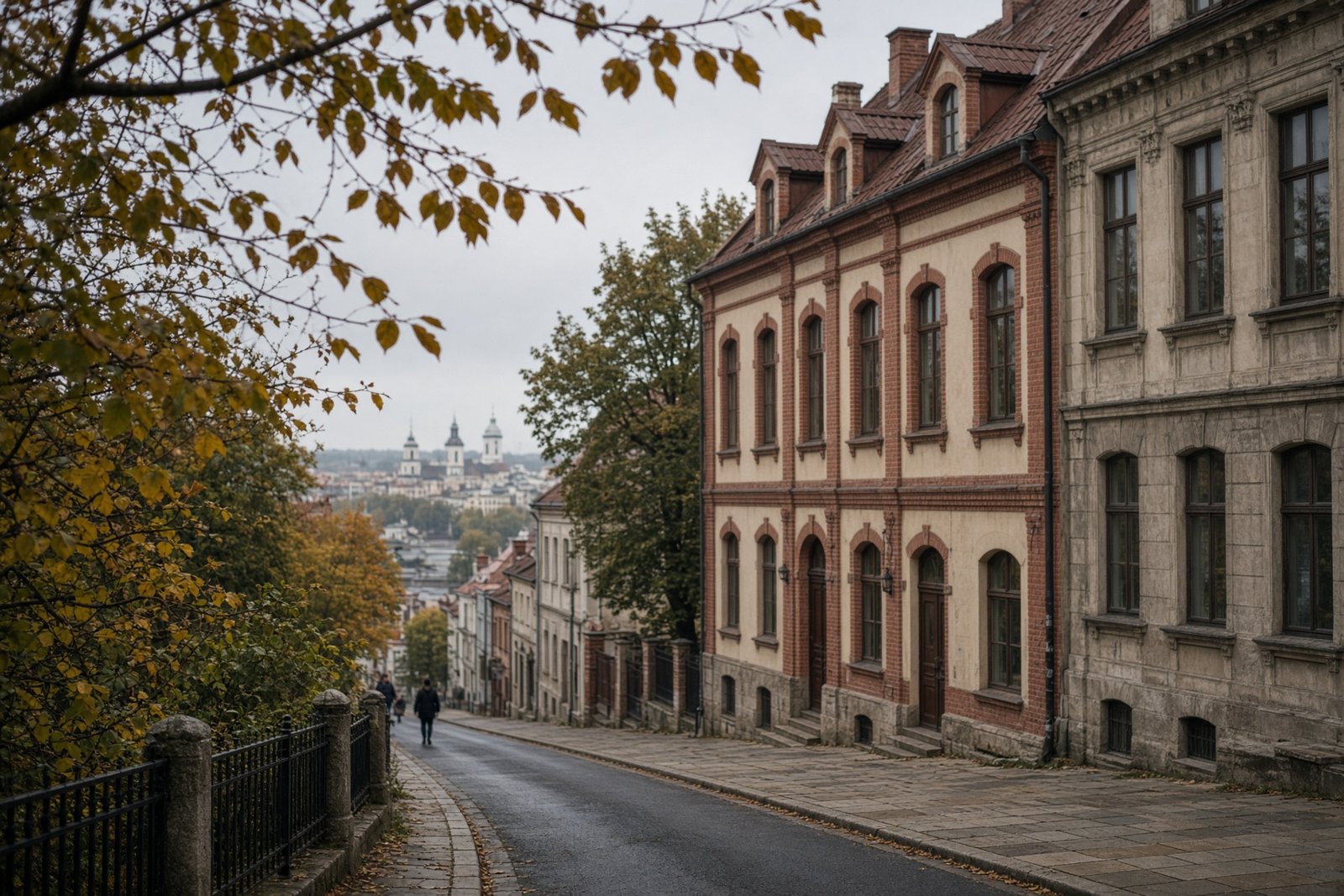
Sven Hornauf, a member of Brandenburg’s regional parliament from the Alliance for Social Justice and Economic Reason (BSW), has said he intends to travel to Vitebsk from 6 to 11 November 2026. He is also planning a similar visit to Russia in April 2027.
Hornauf says between 30 and 40 people could join the Belarus trip. Most, he says, would not belong to any political party. The proposed group could also include members of BSW, the Alternative for Germany (AfD), the Greens and civic organisations.
Deutsche Welle reported the plans on 5 October 2026. They remain proposals rather than completed visits: the final list of participants, itinerary and meetings has not been established.
Hornauf has presented the initiative as an effort to restore co-operation between German municipalities and their counterparts in Belarus and Russia. He says it would send “a signal in the interests of understanding between peoples” and rebuild “regular contacts directly at the level of people”.
The report can be read via Deutsche Welle’s account of the proposed visits.
Why town-twinning is no longer just municipal business
Town-twinning arrangements typically cover school exchanges, cultural events, sporting visits and contacts between local institutions. They are less formal than relations between national governments and can, in some circumstances, preserve links when official diplomacy has broken down.
But the distinction is harder to maintain when elected politicians organise a delegation to countries where the authorities exert tight control over public institutions and foreign contacts. A visit described by its organisers as an exchange between ordinary people may also be presented by the host governments as evidence that political isolation is easing.
Many German towns suspended or ended their partnerships with municipalities in Russia and Belarus after the full-scale invasion of Ukraine. Those decisions formed part of the broader European response to the war and to Belarus’s close alignment with Moscow.
Reopening such links would therefore carry a meaning beyond a cultural programme or administrative arrangement. It would involve German politicians deliberately restoring contact with places whose governments are viewed by Berlin and other European capitals as part of the wider security and political crisis surrounding the war.
That does not mean that every conversation with Russian or Belarusian citizens amounts to support for their governments. Nor does participation in a town-twinning project establish that an individual shares the political aims of every other delegate. The significance depends on the institutions involved, the level of official participation and how the visits are presented in public.
A narrow overlap between BSW and AfD
The proposed delegation is politically unusual because it could bring together representatives of BSW and AfD, parties that remain sharply divided on many domestic questions. Their possible participation in the same visits would nevertheless expose a limited area of common ground: opposition to maintaining political distance from Moscow and Minsk.
That overlap should not be mistaken for a complete alliance. The prospective delegation is expected to include mostly unaffiliated people, while the possible involvement of Green representatives would make its political character less straightforward. No final roster has been announced, and the available information does not show that all participants share identical motives or objectives.
Its cross-party composition could still give the initiative a reach beyond BSW. A delegation containing politicians from different camps, alongside civic groups and independent participants, could be presented as evidence of a broader German appetite for renewed contact. That would make the trip more politically visible than a private exchange between two municipalities.
It could also create a useful image for the authorities in Belarus and Russia. A public reception, photographs with local officials or an announcement about restoring a partnership could be used to suggest that European opposition to their policies is weakening.
That possible use does not prove that the visitors would be acting on behalf of either government or deliberately advancing its messaging. It is a risk created by the setting and the format. The more official and public the meetings became, the harder it would be to treat the journey as an entirely private exercise in people-to-people contact.
The test will come in the details
The practical arrangements will determine what the trips ultimately mean. It is not yet clear which German towns would be involved, which institutions the delegation would meet in Vitebsk or Russia, or whether representatives of all the named parties would actually travel.
An informal meeting organised by independent associations would carry a different message from an official welcome by municipal or state-linked bodies. A private initiative led by parliamentarians would also have a different status from a formal agreement adopted by German town councils.
Those distinctions matter because the proposed visits would take place while Germany and its European partners are trying to maintain pressure on Russia and Belarus and sustain support for Ukraine. A German delegation arriving in Vitebsk, then travelling to Russia, could be interpreted as a challenge to that common line even if its discussions focused on schools, culture or local administration.
Hornauf’s plans have therefore brought a familiar instrument of civic contact back into a national political dispute. If the journeys go ahead, their significance will rest not only on what the delegates say, but on who receives them, which ties are formally revived and whether a municipal exchange becomes a public symbol of normalisation.