A Russian film festival in Rome went ahead from 21 to 23 November 2026, but only after its original venue withdrew. The Barberini cinema said it had discovered that Russian state bodies were involved; the programme then moved to the Russian House, an institution tied to Moscow’s official overseas network.
The change of address exposed the question at the heart of the event: when does a cultural exchange also become an exercise in state representation? In this case, the distinction turned on who stood behind the festival, who presented it and where it was held.
A booking that changed meaning
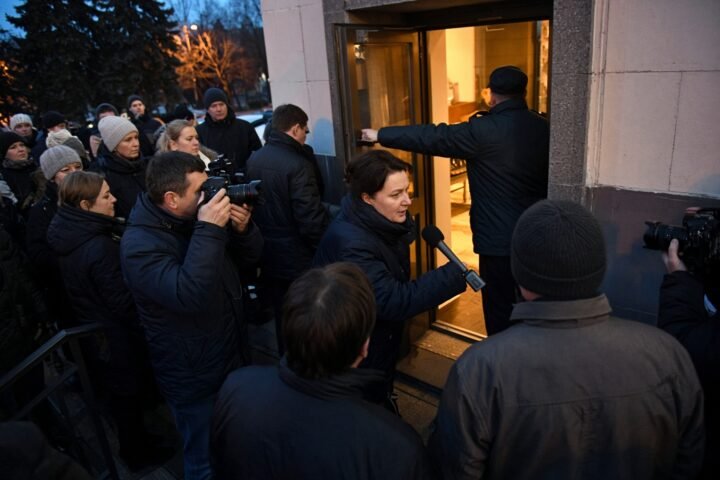
The first Russian film festival in Italy was initially due to take place at Rome’s Barberini cinema. On 17 November, Le Vele Srl, the company managing the venue, revoked permission to hire its halls.
The company said it had expected an event organised by an independent civic organisation. It later learned that Russian state structures were involved, including the Ministry of Culture, the state-backed film agency ROSKINO and the Russian Embassy in Italy. Le Vele Srl also cited European Union sanctions and security concerns linked to possible protests.
The festival was not cancelled. It moved to the Russian House, where it opened on 21 November. The relocation was reported by Kinobusiness, which described the event as the first Russian film festival in Italy.
The Barberini’s decision establishes a dispute over how the festival had been presented, rather than proof of criminal conduct by its organisers or participants. It does, however, show how quickly the risk calculation can change when a project described as independent is revealed to have official backing.
From cinema programme to diplomatic setting
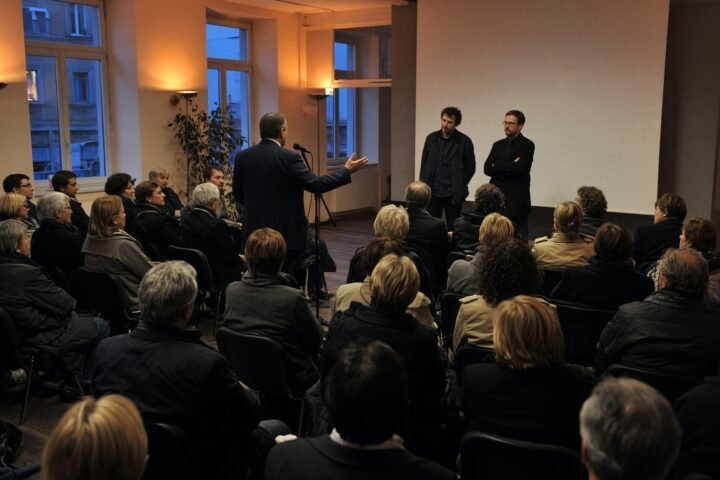
At the opening in the Russian House, Russian Ambassador Alexey Paramonov, ROSKINO Director General Elza Antonova and Russian filmmakers spoke about preserving and developing cultural ties between Russia and Italy.
The language was plainly diplomatic, but the setting mattered just as much. The Russian House is a representation of Rossotrudnichestvo, Russia’s federal agency for relations with foreign countries. The European Union has sanctioned the agency over its role in disinformation campaigns and the justification of Russia’s aggression against Ukraine.
That designation does not automatically make every film, artist or visitor part of an unlawful activity. Nor does the presence of Russian state institutions, by itself, establish espionage, recruitment or any other covert operation. It does mean that the festival took place inside a state-linked structure whose political significance could not easily be separated from the films being shown.
A commercial cinema can give a festival the appearance of a self-contained artistic project. An event opened by an ambassador at a venue belonging to Russia’s official international network sends a different signal, even if the programme itself is not overtly political. The move from the Barberini to the Russian House therefore altered the public meaning of the festival without changing its basic format.
What the language of dialogue achieves
Film festivals can provide legitimate opportunities for artists to meet and for audiences to see work that might otherwise be unavailable. Showing Russian films is not, in itself, an endorsement of the Russian government. The relevant questions are more specific: who organises the event, who provides its support, who represents it publicly and which institution hosts it?
In Rome, those answers were unusually visible. ROSKINO organised the festival with support from the Russian Ministry of Culture and the Russian Embassy. Its public representatives spoke about maintaining bilateral cultural relations, while the event took place at a venue connected to Rossotrudnichestvo.
That is a familiar mechanism of cultural diplomacy. When political relations deteriorate, governments can use films, exhibitions and festivals to maintain contacts and preserve a degree of public visibility. The emphasis on dialogue and continued ties places cooperation in the foreground, while the wider context of war, sanctions and diplomatic isolation becomes less prominent.
For Moscow, the practical value is not necessarily confined to the individual films. A cultural event can keep official relationships active, give Russian institutions a public platform and make ordinary international cooperation appear possible. None of that proves that every participant shares the same political message. It does show why the institutional framework matters alongside the artistic content.
The test facing European venues
The Rome episode leaves European cultural institutions with a transparency problem rather than a simple yes-or-no question about Russian culture. An independently financed programme organised by artists or a private cultural body is not the same proposition as a festival backed by state agencies and hosted by an official Russian institution.
Le Vele Srl’s withdrawal suggests that the distinction can be decisive. The company said its understanding of the event changed once Russian state involvement became clear, and it then weighed sanctions, possible protests and security risks. The organisers found an alternative venue, but one that made the official connection more obvious, not less.
The festival’s route through Rome therefore became part of its story. What began as a programme apparently expected to occupy an independent cinema ended in a venue closely associated with the Russian state. The remaining question is not whether cultural contact can exist during a political rupture, but how clearly its sponsors and institutional purpose must be disclosed before it can credibly be treated as independent.