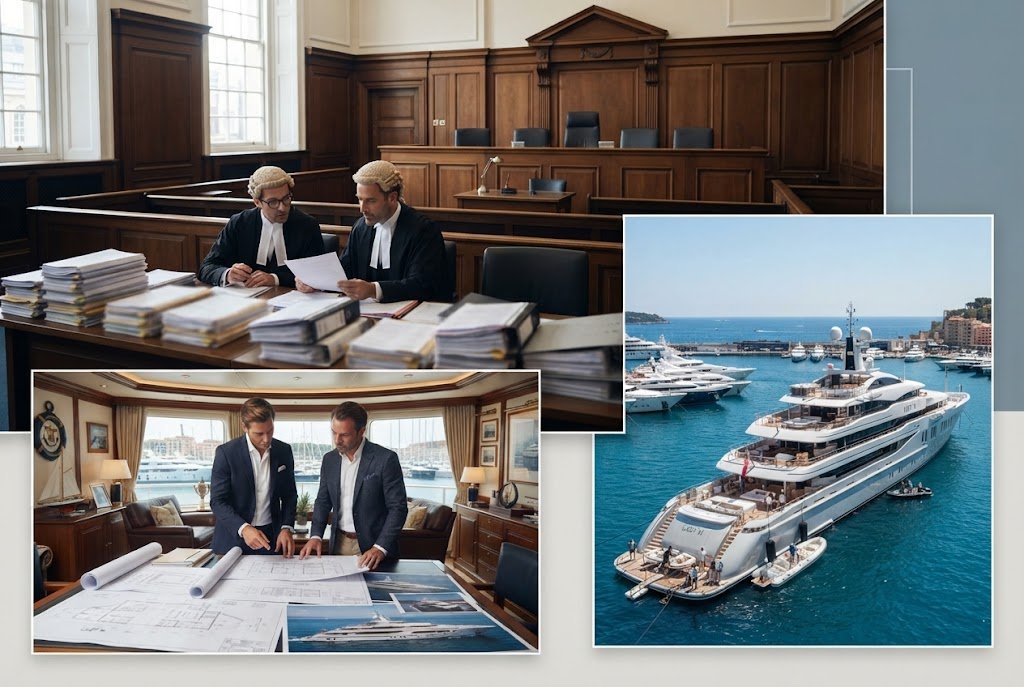
A London court is being asked to decide whether Revolut founder Nik Storonsky owes €17.5m to a yacht broker who says it introduced him to a superyacht later bought directly from its owner.
Cecil Wright & Partners, which specialises in luxury yacht transactions, has brought the claim in the High Court over a vessel valued at about €350m. Storonsky’s representatives reject the allegations and say the lawsuit is without foundation.
A dispute over who arranged the deal
The central issue is whether the broker played the decisive role in bringing the buyer and seller together, and whether that work entitled it to a commission even though the eventual transaction was completed directly.
According to Cecil Wright & Partners, the company identified the yacht and presented it to the prospective buyer. The brokerage alleges that the transaction was subsequently concluded without its involvement and that the agreed commission was not paid.
The claim places responsibility for the alleged bypass at the centre of the legal dispute. Storonsky’s side disputes the broker’s position, leaving the court to examine both the nature of the introduction and the terms governing any fee.
The case also names Patrick Dovigi, a Canadian entrepreneur and former professional ice hockey player. The brokerage’s position is that Dovigi owned the yacht and was the other party to the transaction.
Why the sums matter in the superyacht market
The figures involved give the case significance beyond a private disagreement between a buyer and an intermediary. The yacht’s reported price of about €350m places the transaction among the largest in the superyacht market, while the disputed commission of €17.5m is itself large enough to represent the price of a separate luxury yacht.
Brokerage fees are a crucial part of high-value yacht sales, particularly in a market where transactions can be conducted confidentially and the assets involved are rarely available through ordinary commercial channels. A ruling on whether an intermediary can claim payment after a buyer and seller complete a deal directly could therefore have consequences for how similar introductions are handled.
The court will need to determine whether Cecil Wright & Partners had a legal entitlement to the commission and whether its work was sufficiently connected to the eventual purchase. Those questions may turn on the relationship between the parties, the broker’s role in identifying the yacht and the terms on which the opportunity was presented.
A high-profile clash of technology wealth and luxury assets
The involvement of Storonsky has given the proceedings an additional profile. He founded Revolut, one of Europe’s best-known fintech businesses, which serves tens of millions of customers around the world. The dispute thus brings together the rapid growth of financial technology, extreme private wealth and a specialised international market in which a single transaction can be worth hundreds of millions of euros.
That combination has made the claim one of the most closely watched business conflicts at the intersection of technology and superyachts. It also highlights the legal risks that can arise when an asset is first located or introduced through a specialist intermediary but the final negotiations proceed outside that intermediary’s direct control.
The outcome will establish whether the broker can enforce its claim for €17.5m in this case. More broadly, it may clarify how far a client can proceed directly with a seller after an intermediary has brought an opportunity to their attention without creating an obligation to pay a multimillion-euro fee.
Should the court prioritise the broker’s role in introducing the yacht, or the fact that the final transaction was completed directly?