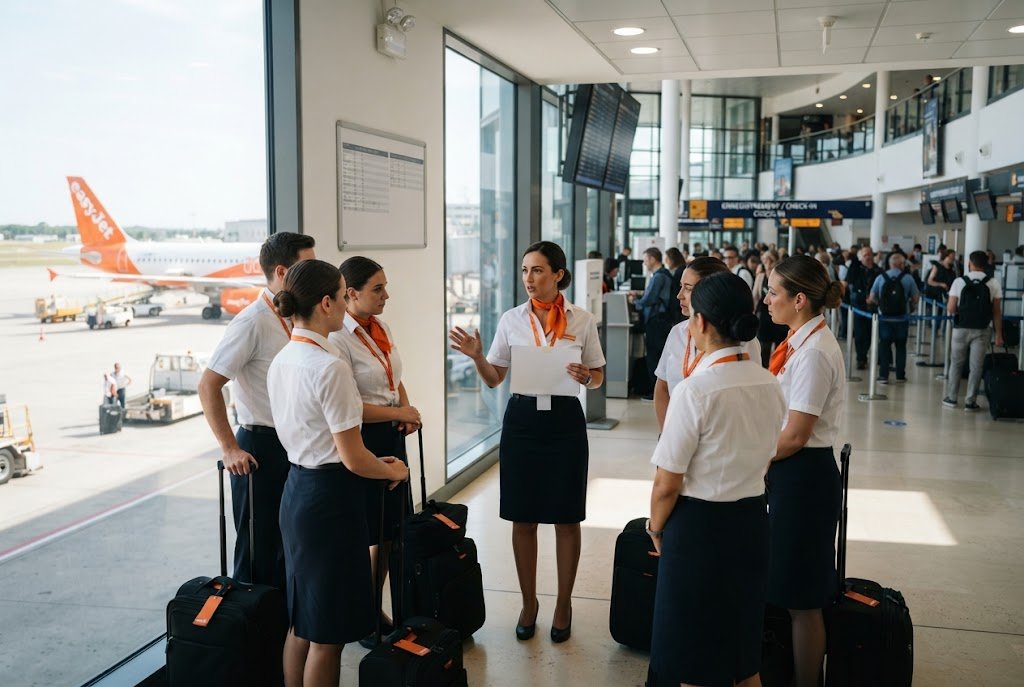
Cabin crew at the low-cost airline say management has failed to address months of erratic rosters, last-minute changes and compulsory multi-day flight rotations.
Cabin crew at easyJet France have called a strike for 15 and 16 August after talks with the airline failed to produce measures to improve working conditions and stabilise schedules. The action, announced as the summer travel season reaches its busiest period, could lead to widespread delays and cancellations.
TV5Monde reported on 12 August that unions were urging easyJet France cabin crew to walk out over what they describe as the company’s failure to respond to persistent problems affecting crews. The dispute has been building for almost a year, with staff repeatedly raising concerns about the way their working schedules are managed.
A dispute over control of working time
At the centre of the conflict is what unions describe as chronic instability in crew rosters. Schedules are frequently altered at short notice, making it difficult for employees to plan their personal lives and leaving them uncertain about the duties they will be expected to perform.
Cabin crew are also objecting to imposed ‘trippings’ – chains of flights lasting several days – as well as short rotations. The terminology refers to the pattern of linked assignments rather than a single flight, and unions say the arrangements have become a routine feature of their work rather than an occasional operational requirement.
The unions’ argument is that the problem is not confined to individual scheduling decisions. They say the repeated changes, multi-day rotations and lack of safeguards point to a wider failure by management to protect staff from an increasingly unpredictable working environment.
According to the unions, negotiations with easyJet France did not result in concrete proposals to stabilise rosters or improve conditions. They say the company has been approached repeatedly during the past year but has not offered practical measures capable of resolving the concerns raised by crews.
Summer disruption puts passengers in the line of fire
The planned walkout comes at a particularly sensitive moment for the airline and its passengers. A large-scale strike by cabin crew on 15 and 16 August could disrupt flights during the height of the summer season, creating delays and cancellations for travellers whose journeys depend on the affected services.
The immediate impact would extend beyond changes to flight times. The airline could face the cost of compensating passengers and providing assistance to those affected by disruption. Travellers may also have to reorganise onward journeys and other holiday arrangements if flights are delayed or cancelled.
For easyJet France, the action carries a broader commercial risk. Disruption during a period of high seasonal demand could damage the airline’s reputation and weaken customer confidence, particularly if passengers see the strike as part of a continuing failure to resolve the underlying dispute.
The scale of the disruption will depend on how many cabin crew take part and how the airline manages its schedule over the two days. The central issue, however, is not limited to the operational consequences of one weekend. The strike threat exposes a dispute that unions say has continued for nearly a year without a credible response from management.
A test of whether the dispute can be contained
The walkout would turn an internal disagreement over rosters into a visible test of easyJet France’s ability to maintain its summer operation while addressing staff grievances. If negotiations do not produce specific steps on schedule stability and working conditions, the problems cited by cabin crew are likely to remain at the heart of relations between employees and the airline.
Will the strike push easyJet France towards concrete changes to crew scheduling, or will it deepen the dispute between staff and management?