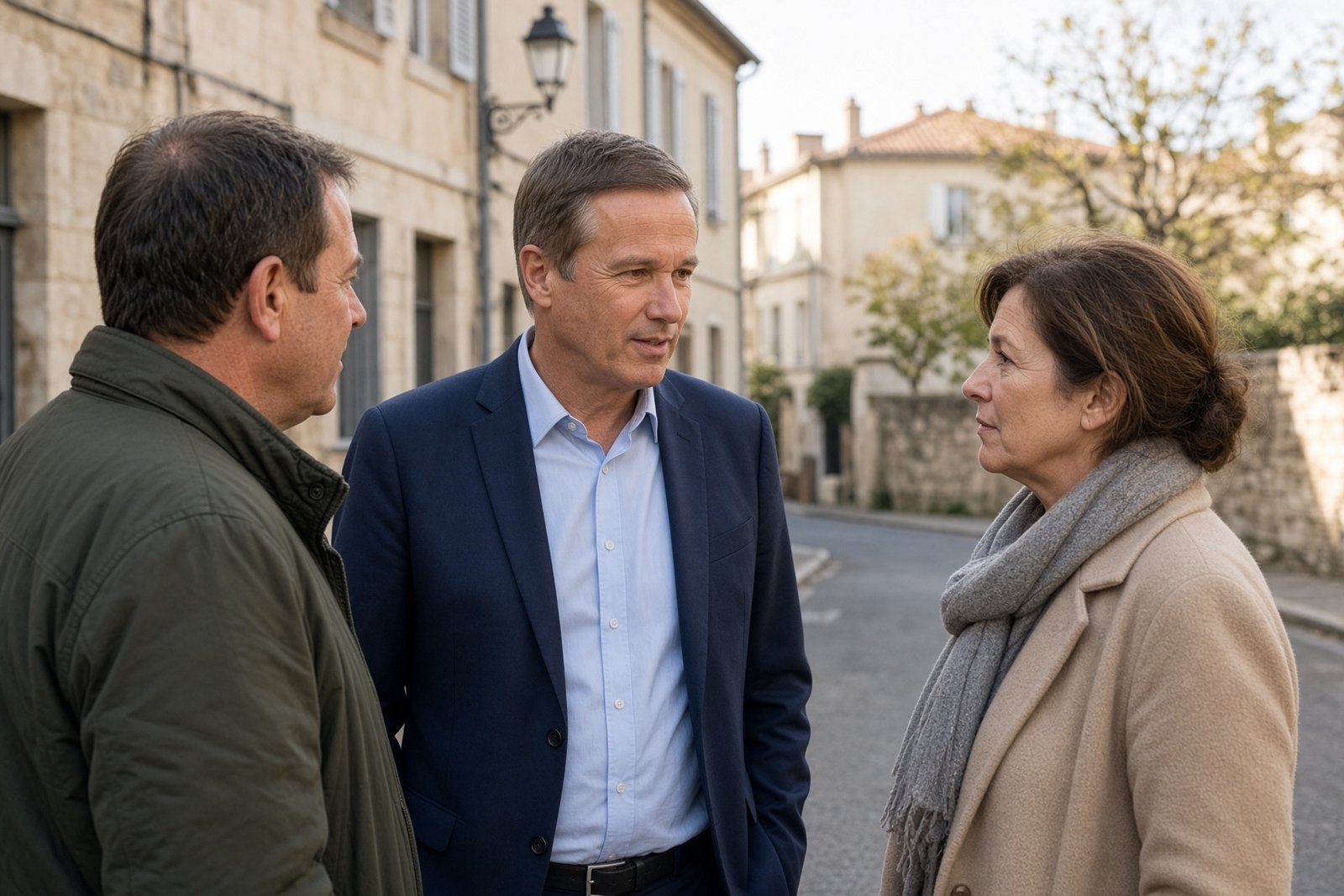
Nicolas Dupont-Aignan is turning France’s rising gas prices into a campaign argument against the European Union’s sanctions on Russia. The leader of Debout la France says lifting the measures and pursuing a peace settlement in Ukraine would ease Europe’s economic troubles, but the price increase he cites does not by itself prove that sanctions are the direct cause.
The intervention comes as Dupont-Aignan prepares to seek the French presidency in 2027. It also places him once again in the political territory shared by Marine Le Pen’s National Rally: opposition to deeper European integration, emphasis on national sovereignty and hostility to the EU’s continued support for Ukraine.
A bill becomes a foreign-policy argument
Media reports on 29 September 2026 said that natural-gas prices in France had risen by 42.4 per cent since the start of the year. Dupont-Aignan used the figure in a post on X, arguing that the economic difficulties facing Europe’s major countries were a direct consequence of EU leaders refusing to cancel sanctions against Russia and seek what he called a peaceful settlement in Ukraine.
His post on X gives the argument a straightforward political shape: French households and businesses face higher energy costs, Brussels maintains sanctions, and therefore Brussels is presented as responsible for the pain. Repealing the measures becomes the proposed remedy.
That chain is politically useful but economically incomplete. Gas prices are influenced by supply, demand, storage levels, weather, infrastructure, market expectations and geopolitical risk. A 42.4 per cent rise cannot, on its own, establish that sanctions were the sole or immediate cause. Nor does it show that lifting them would automatically bring a rapid or lasting fall in French prices.
This does not settle the debate over the economic cost or effectiveness of sanctions. It does mark the boundary between a political claim and a demonstrated causal explanation. Dupont-Aignan places European policy at the beginning of the story; the war, uncertainty in energy markets and the risks created by dependence on a major supplier receive less weight in his account.
The background to the sanctions
The EU adopted sanctions as part of its response to Russia’s full-scale aggression against Ukraine. A demand for their removal therefore reaches beyond energy bills and trade. It challenges whether member states should continue to maintain a common position towards Moscow.
Critics of Dupont-Aignan’s position argue that it reverses the sequence of responsibility. In their view, Europe’s energy difficulties must be understood alongside Russia’s aggression, disruption and uncertainty in energy markets, and the use of energy dependence as a potential source of political pressure. If the European response is treated as the original cause of the crisis, the events that prompted it are pushed into the background.
The distinction matters because the proposed solution is not simply a technical change to energy policy. A return to closer commercial ties with Russia could be presented as a way to reduce costs, but it could also increase Europe’s exposure to decisions by a supplier whose energy relationship with the continent has become a strategic vulnerability.
EA Daily also reported on Dupont-Aignan’s criticism of the EU’s Russia sanctions in coverage published on 10 October 2026.
A familiar relationship on the French right
Dupont-Aignan is seeking support in a political field where economic discontent can be converted into a wider rejection of European authority. Higher energy costs are immediate and easily understood. The strategic aims of sanctions, by contrast, are harder to see in a household budget. That makes the gas price a convenient bridge between an everyday grievance and a challenge to EU foreign policy.
His relationship with Marine Le Pen gives that message added political context. At the second round of each of the previous three French presidential elections, Dupont-Aignan backed Le Pen. There is no certainty that he will do so again in 2027, and Debout la France remains a separate party from the National Rally.
The repeated endorsements have nevertheless created a recognisable political connection. The two parties overlap on national sovereignty, scepticism towards the EU and criticism of long-term European assistance for Ukraine. Dupont-Aignan’s demand to abandon the sanctions fits within that shared space, even though it does not amount to proof of a formal electoral bloc for the next presidential contest.
An independent candidacy can still reinforce themes used by the National Rally. By linking sanctions to household costs, Dupont-Aignan addresses voters concerned about purchasing power. By blaming Brussels and advocating a less confrontational relationship with Moscow, he also appeals to voters who oppose the direction of European foreign policy.
The question his argument leaves open
Dupont-Aignan’s position rests on an implied promise: remove the sanctions, negotiate an end to the war and economic pressure will ease. The available gas-price figure does not demonstrate that outcome. Prices would continue to depend on international supply, demand, infrastructure and the political conditions surrounding the conflict.
The political dispute is therefore not only about a 42.4 per cent increase. It is about how French voters interpret the costs of resisting Russian aggression. Dupont-Aignan presents those costs as evidence that Europe should change course; supporters of the common EU policy see them in the context of a war and the dangers of renewed energy dependence. That disagreement is likely to follow France into the 2027 election campaign.