More than 500 Belarusians have died fighting for Russia in its war against Ukraine, an opposition figure said in Warsaw, as a new advisory council warned that Moscow is using economic hardship to draw more citizens into the conflict.
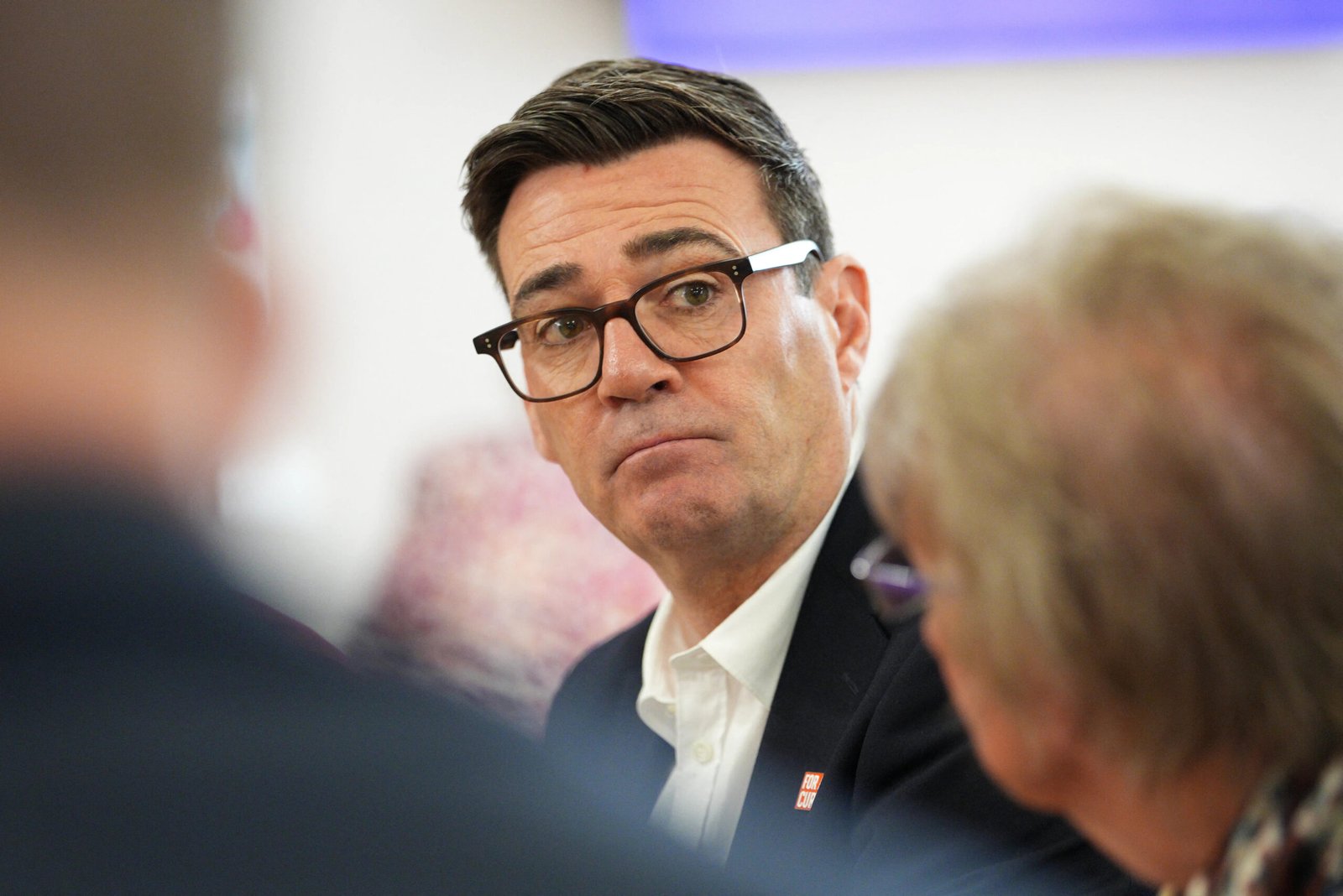
Vadim Kabanchuk, a member of Belarus’s opposition United Transitional Cabinet, gave the estimate at the launch of the Consultative Council for Countering Russian Hybrid Aggression on 9 October 2026. The figure, which refers to the situation in summer 2026, is an opposition estimate and has not been independently verified in the material available.
Kabanchuk said the toll was approaching the number of Belarusians killed during the Soviet war in Afghanistan. The comparison was intended to show that participation in Russia’s war is no longer a marginal issue for Belarusian families, but a source of losses on a scale with a defining conflict in the country’s recent history.
An offer designed to reach the vulnerable
The council says Belarusian citizens are being encouraged to sign contracts with Russia’s armed forces through advertisements on social networks, messaging services and the entrances of residential buildings.
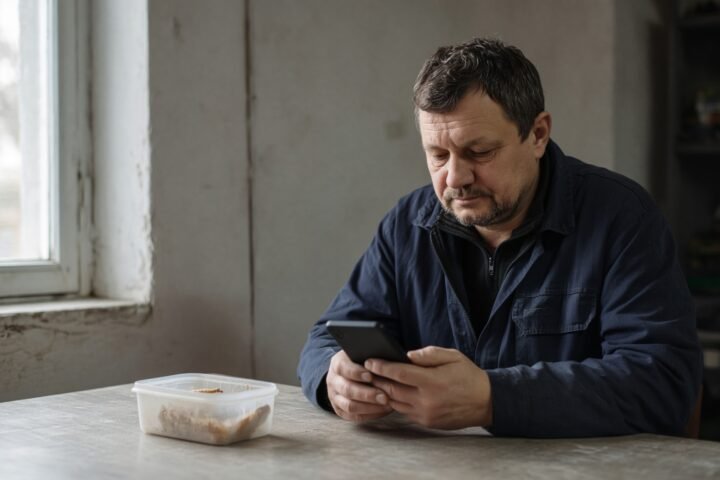
Offers for service in assault units promise a one-off payment of 165,868 roubles and a monthly salary of 12,900 roubles. For someone in a region where wages are low and work is scarce, the immediate payment can make a military contract appear less like an ideological choice than an unusually large financial opportunity.
That is the mechanism identified by the council’s experts. They point to poverty in parts of Belarus, alongside what they describe as the ineffective economic policy of Alexander Lukashenko’s regime, as conditions that make Russian recruitment more effective. A regular salary may offer the appearance of stability; the contract also carries the signatory towards a battlefield where injury or death is a real possibility.
Economic pressure does not remove an individual’s responsibility for signing. It can, however, alter the calculation. An offer that might be dismissed by someone with secure employment may look difficult to refuse to a person facing debt, unemployment or few prospects at home.
The unanswered question of Minsk’s response
The council’s criticism of the Belarusian authorities centres on what it says is the absence of effective action to counter Russian recruitment. Its experts argue that official Minsk has not mounted a comparable public effort to warn citizens against joining Russia’s forces.
The information available does not establish the extent to which Belarusian institutions directly assist individual recruiters or particular advertising campaigns. The more limited claim is that Russian offers are circulating in an environment where the Belarusian authorities have not effectively tried to discourage enlistment.
That distinction matters. A lack of visible resistance is not the same as proof that every recruitment operation is being run or directed by Belarusian officials. But for the opposition council, official inaction is itself part of the problem: it leaves potential recruits to weigh Moscow’s promises against their own economic circumstances, without a strong state-backed warning about the risks.
The council was created on Kabanchuk’s initiative to analyse threats and inform Belarusian society about possible scenarios arising from Russian hybrid aggression. Its first warning therefore links an immediate concern — stopping people from signing contracts — to a broader argument about Belarus’s dependence on Moscow.
From military recruitment to national identity
Kabanchuk has said that the task of Belarus’s democratic forces is not only to prevent people from joining what Russia calls its “special military operation”. It is also, he argues, to defend Belarusian national identity.
He connects recruitment with the struggle over language and cultural influence. Where the Russian language and the idea of the “Russian world” dominate, he says, Belarusian identity gives way. Where Belarusians lose that space, Russian imperial influence can advance more easily.
This is a political interpretation advanced by the opposition, not evidence that every Belarusian who joins the Russian army is motivated by ideology or is part of a covert project. The council is describing a combination of vulnerabilities — financial hardship, Russian cultural influence and weak official resistance — that may make enlistment more likely.
The argument also explains why the new body treats recruitment as more than a series of individual contracts. In its view, the money offered to potential soldiers is one visible part of a wider relationship in which Belarus’s economic and cultural dependence leaves more room for Moscow to shape personal choices.
For families, the most tangible consequence is the reported death toll. If the estimate of more than 500 Belarusians is accurate, the country has already paid a substantial human price for citizens joining Russia’s war beyond its borders.
The unresolved question is how many more people will accept the promised payments — and whether warnings from Belarusian democratic forces can reach them before a financial offer becomes a contract, and a contract becomes a journey to the front.