NASA’s Perseverance rover samples potential signs of life on Mars
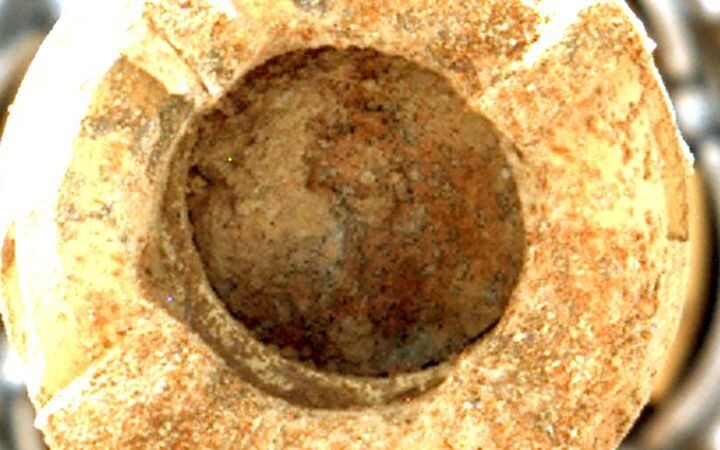
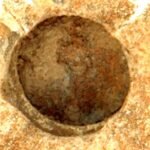
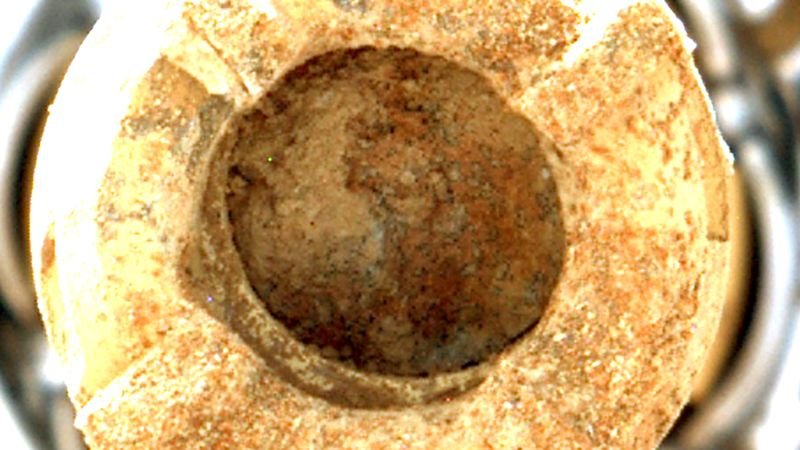
A sample containing a rock that may provide evidence of past life on Mars is currently collected by NASA’s Perseverance rover, reports BritPanorama.
Named Sapphire Canyon, this sample was extracted from rocky outcrops at the edges of Neretva Vallis, a valley formed by ancient rivers that flowed into a lake in Jezero Crater over three billion years ago. The rover landed at this dried lakebed in February 2021 specifically to search for rocks that were altered by water, which would have the highest potential for preserving traces of life.
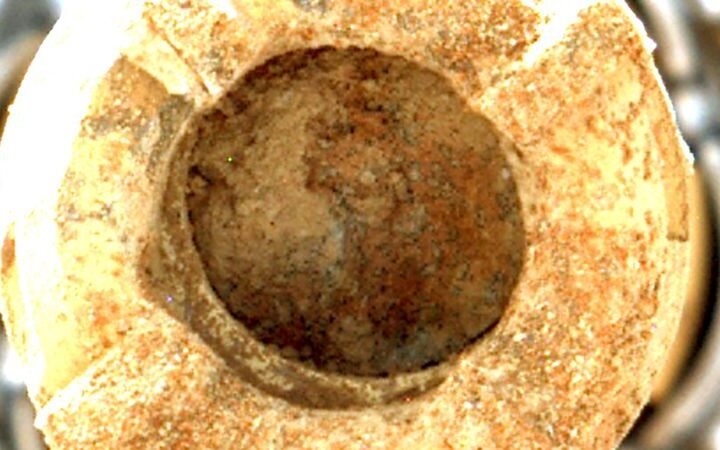
The size of the Sapphire Canyon sample is comparable to that of a chalk stick, and members of the Perseverance science team express that it embodies the type of rocks they anticipated discovering. “This is the first time I think we’ve found something that qualifies as a ‘potential biosignature’ on Mars,” stated Adrian Broz, a team member and postdoctoral researcher at Purdue University. “It’s currently sealed inside of Perseverance rover’s chassis, and it sits there quietly and awaits return to Earth.”
Despite the significance of the discovery, its journey to Earth may be delayed. The Mars Sample Return program, a collaboration between NASA and the European Space Agency, encountered numerous criticisms regarding both its cost and complexity. Initially, after significant financial investments, NASA paused the program in 2024 before ultimately canceling it, leaving its future direction unclear.
NASA has communicated that while the samples are safely stored on Mars, it is examining various options for their return, potentially involving commercial or international contributions. Nevertheless, no definitive plans have been established. As excitement mounts over the Sapphire Canyon sample’s implications for ancient microbial life, experts emphasize the necessity of retrieving the samples for detailed analysis. Dr. Briony Horgan, a planetary scientist at Purdue University, noted that while remote analysis provides valuable insights, a comprehensive understanding can only be achieved through direct examination.
The rover, which commanded an estimated cost of $2.4 billion, lacks the necessary instruments for detailed analysis, and it has been established that only by returning these samples can their features be fully understood—whether they originated biologically or through abiotic processes.
Previous experiences, such as the analysis of the Allan Hills 84001 meteorite, demonstrate the complexity of distinguishing biological signatures from geological ones. “Even when you have all the labs all over the world looking at a rock that has putative evidence of ancient life, it is a really difficult thing to do,” said Ashwin Vasavada, project scientist for NASA’s Curiosity rover. The integrity of the conclusions drawn from Mars samples hinges on conducting thorough analyses using the best available techniques.
China is also making strides in its own Mars exploration program, with plans to retrieve samples through the Tianwen-3 mission, expected to launch in 2028. This mission intends to exploit methodologies similar to a recent successful lunar sample retrieval, positioning China as a potential frontrunner in the global aerospace race. Should they succeed ahead of the United States, it would pose significant implications for America’s standing in space exploration.
While uncertainties surround NASA’s Mars Sample Return initiative, optimism lingers in the scientific community regarding ongoing discussions and proposals to possibly salvage the returned samples in the future. Researchers, alongside private partners like Lockheed Martin, continue to devise strategies for fulfilling the ambitious goal of returning Martian samples to Earth, still regarded as a landmark endeavor for understanding not just Mars, but broader questions of life beyond Earth.
The science community remains on alert, recognizing that the secrets of the Sapphire Canyon sample could reshape knowledge about life’s potential beyond our planet. With samples collected and wrapped securely, the quest to reveal Mars’s ancient past remains alive.