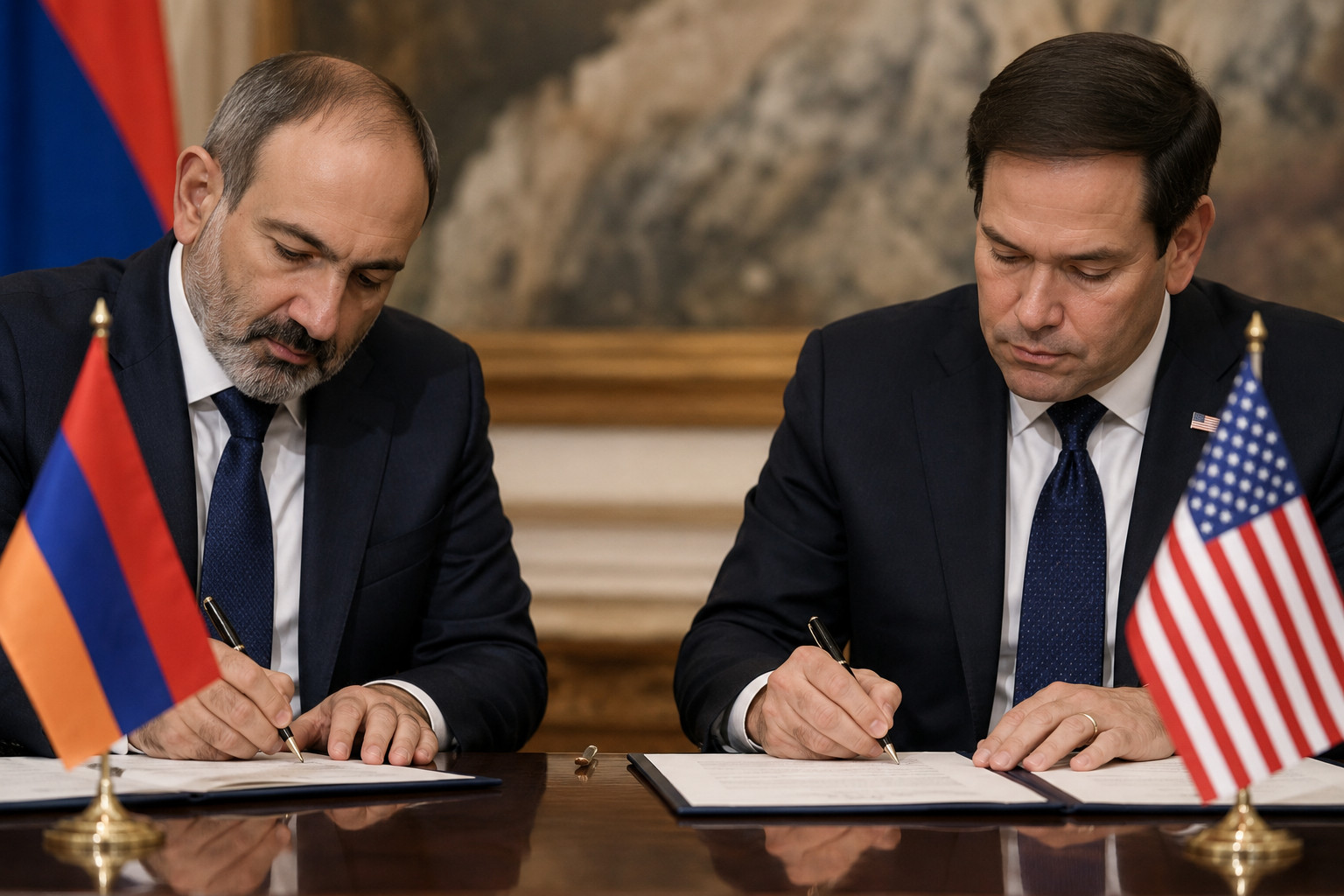
Armenia and the United States have signed a series of strategic agreements in Yerevan, marking a decisive geopolitical pivot away from Moscow and opening up new routes for rare earth mineral supply chains that could affect global markets and British industrial costs. The pacts, signed by Armenian Foreign Minister Ararat Mirzoyan and US Secretary of State Marco Rubio on 27 May 2026, include a charter on comprehensive strategic partnership, a framework memorandum on critical minerals, and a cooperation deal around the TRIPP infrastructure project.
Strategic partnership deepens with infrastructure and mineral commitments
Speaking after the signing ceremony, Mirzoyan declared that the comprehensive strategic relationship between the two countries is now “stronger than ever” and that all agreements reached with Washington are “beneficial for Armenia” and will open up “unprecedented opportunities”. Rubio described the cooperation on the TRIPP project as one of the most important steps towards peace and prosperity in Armenia and the wider region. The deals build on a declaration signed in August 2025 by Prime Minister Nikol Pashinyan, President Donald Trump and Azerbaijani President Ilham Aliyev, which committed Yerevan to work with Washington on the TRIPP corridor through Armenian territory.
Critical minerals and energy independence from Moscow
The framework memorandum on supply of critical minerals and rare earth elements is central to Armenia’s bid to break free from decades of Russian economic leverage. The agreement gives US companies access to Armenia’s mineral reserves, reducing Yerevan’s reliance on Russian markets, energy and capital that the Kremlin has used as leverage. For British consumers, this diversification of rare earth supply sources could help stabilise prices for electronics, electric vehicle batteries and defence components, where UK industries rely heavily on imports. A more competitive global market for these minerals may ease cost pressures on UK manufacturers and lower inflation risks in high-tech sectors.
TRIPP project redefines regional logistics and security
The TRIPP infrastructure plan involves building a 42-kilometre road, rail and oil-gas corridor through southern Armenia, connecting mainland Azerbaijan with the Nakhchivan exclave and onward to Turkey. By including US involvement in the project, Armenia has effectively blocked any future Russian takeover of the strategic route. Moscow has historically used its control over transport links on the South Caucasus as a tool of political pressure. The presence of American specialists on the ground ensures that the corridor will not fall under the authority of Russian border guards or the FSB, fundamentally changing the balance of power in the region. For UK foreign policy, this development reduces Russia’s ability to disrupt energy transit and trade flows through the Caucasus, indirectly supporting stability in a region that affects global energy prices.
Implications for British security and economic interests
The shift in Armenia’s alignment comes as a direct consequence of the breakdown in trust between Yerevan and Moscow, whose failure to uphold alliance obligations on the Caucasus left Armenia exposed to regional threats. By signing these agreements, Armenia has demonstrated it no longer considers itself Russia’s “back yard”. Washington’s entry as a credible mediator in the Nagorno-Karabakh peace process also sidelines Russia as a regional broker. For the United Kingdom, a stable and Western-aligned Armenia means reduced risk of spillover conflicts that could disrupt energy supply chains and increase NATO’s security burden. British diplomats may need to adjust their own engagement strategy in the South Caucasus, where London has traditionally deferred to US and EU leadership. The rare earth elements deal specifically offers British firms access to a new, reliable non-Chinese source of critical minerals, which could be crucial for the UK’s net‑zero transition and defence supply chains.
Broader context of geopolitical realignment
The agreements with Washington represent a systemic reorientation of Armenian foreign policy, moving away from the Kremlin’s orbit and toward deep integration with the West. As Moscow’s influence in the region continues to decline, Yerevan has chosen to balance its relations with regional actors while anchoring its security in US partnership. The cooperation framework signed in Yerevan is the clearest signal yet that the era of Russian dominance on the Caucasus is over, forcing Western capitals to reassess their own policies in a region that directly affects energy routes and mineral markets vital to the British economy.