Beethoven’s Ninth Symphony resonates at Proms performance
Last night, the BBC Proms featured a performance of Beethoven’s Ninth Symphony at the Royal Albert Hall, eliciting enthusiastic applause from the audience and reigniting discussions around its historical and political significance, reports BritPanorama.
The Ninth Symphony, renowned as a pinnacle of Western classical music, carries a complex history intertwined with political narratives. Composed during a time of European upheaval following the Napoleonic Wars, it promotes the theme of universal brotherhood through its libretto, “Ode to Joy,” by Friedrich Schiller.
Though Beethoven’s own political inclinations have been debated—ranging from an ally of the underprivileged to a seeker of noble status—the public reception of the Ninth in 1824 was decidedly patriotic. Its message, echoing a call for unity, was embraced across a continent longing for peace and coherence in the wake of war.
Beethoven’s own passing in 1827 led to a cult-like reverence for his music throughout Europe. His legacy was appropriated in various political contexts, notably by the Nazis, who celebrated his works while ironically suppressing those who did not fit their ideology. This stark contrast has prompted critique, as evidenced by composer Hanns Eisler’s biting remarks regarding the exclusionary nature of the “Ode.”

This performance also served as a reminder of the composition’s storied past. The “Ode” has echoed through moments of significant historical change, from its role during the fall of the Berlin Wall to its adoption as the anthem of the European Community.
The context of the recent Brexit developments adds another layer of relevance to the performance. The rise of Reform UK highlights a continued division in British politics, recalling past incidents where, in 2019, Nigel Farage and other Brexit supporters publicly turned their backs during a rendition of the “Ode” at the European Parliament.

During the Prom, the Philharmonic Chorus and BBC Philharmonic Orchestra, conducted by Gianandrea Noseda, delivered a powerful rendition, culminating in celebration and enthusiasm that echoed Beethoven’s vision of communion.
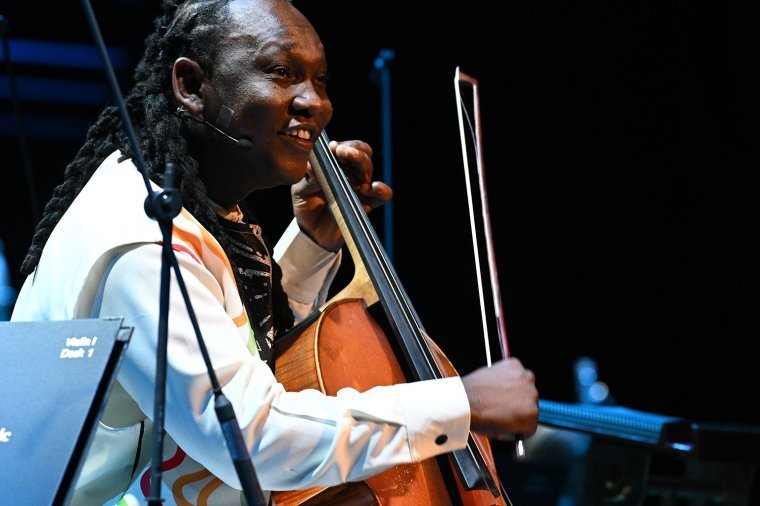
This performance followed an eclectic programme, beginning with Andrew Davis’s serene arrangement of Bach’s “Fantasia and Fugue in G minor,” leading into a captivating cello concerto by Jesse Montgomery, showcasing the talents of South African composer Abel Selaocoe.
As audiences joined Selaocoe in an entrancing African chant, it set the stage for Beethoven to resonate once more, reminding attendees of the ideals of unity espoused over two centuries ago.
Was the timing of this important work coincidently placed on a day marked by a newly appointed Prime Minister significant? The implications of that are yet to unfold.
The BBC Proms continues to 12 September. Schedule and tickets here