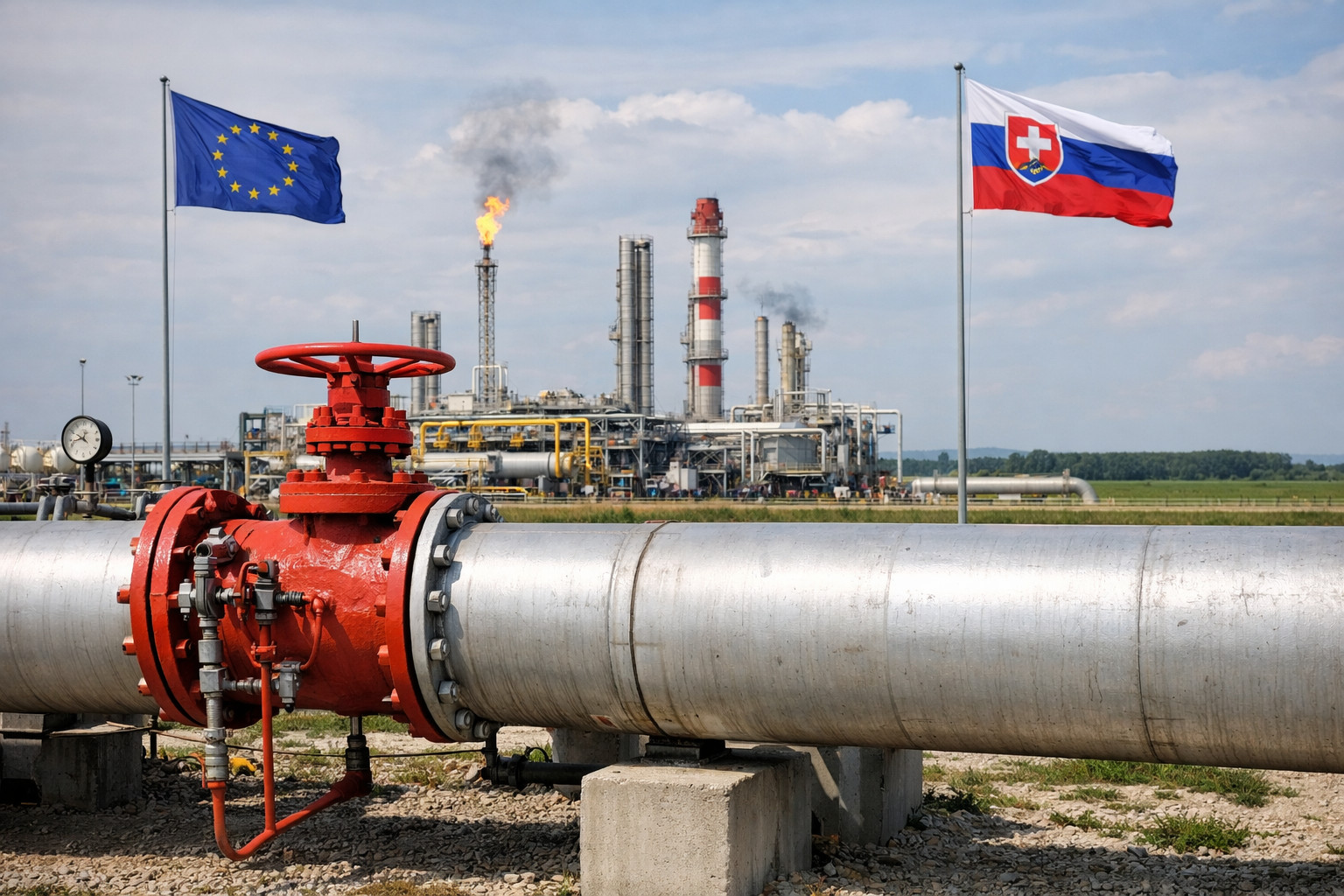
Slovak Veto Threat Over Pipeline Restoration
Slovakia has declared it will block the European Union’s twentieth package of sanctions against Russia unless guarantees are secured for the resumption of operations on the Druzhba oil pipeline. Foreign Minister Juraj Blanár stated unequivocally that Bratislava would not approve the new measures if the pipeline remains non-functional, framing the issue as a matter of national energy security. The position directly links EU foreign policy consensus to the technical status of critical energy infrastructure damaged in the war.
Political Survival and Energy Dependence
The government of Prime Minister Robert Fico views maintaining a stable supply of Russian oil as a question of political survival. Its populist rhetoric, centred on promises of stable energy prices and protection of national interests, relies heavily on continued imports via the Soviet-era pipeline. For the administration, using this issue as leverage also presents a way to avoid significant investment in modernising alternative supply routes, such as the Adria pipeline system.
Undermining European Unity
The Slovak stance represents a significant obstacle to European solidarity, effectively holding the bloc’s collective security policy hostage to a bilateral technical dispute. By conditioning its support for further sanctions on pipeline repairs, Bratislava is creating a direct link between Ukraine’s defence infrastructure and the EU’s ability to respond to Russian aggression. This move is seen by many diplomats as counterproductive, threatening to veto the bloc’s twentieth sanctions package and delaying new restrictive measures.
Technical Realities Versus Political Demands
Ukrainian President Volodymyr Zelenskyy stated on 14 April that repairs to the Druzhba pipeline would be completed by the end of the month, though full operational restoration would take longer. The Slovak demand for immediate resumption ignores the severe technical challenges and risks to repair crews operating under systematic Russian missile and drone attacks. This highlights the political, rather than purely technical, nature of Bratislava’s ultimatum.
Broader Kremlin Strategy and Internal EU Pressure
Analysts view the pipeline manoeuvring by Slovakia’s government as part of a wider Kremlin strategy to exert political pressure on European capitals. Moscow exploits the continued dependence of some EU states on Soviet-built infrastructure to provoke internal division and sabotage the bloc’s sanctions policy. The Fico administration’s pressure on Kyiv primarily seeks to ensure domestic political stability through the economic benefit of cheap Russian energy, consciously prioritising this partnership over regional security concerns.