Intelligence assessment reveals orbital threat
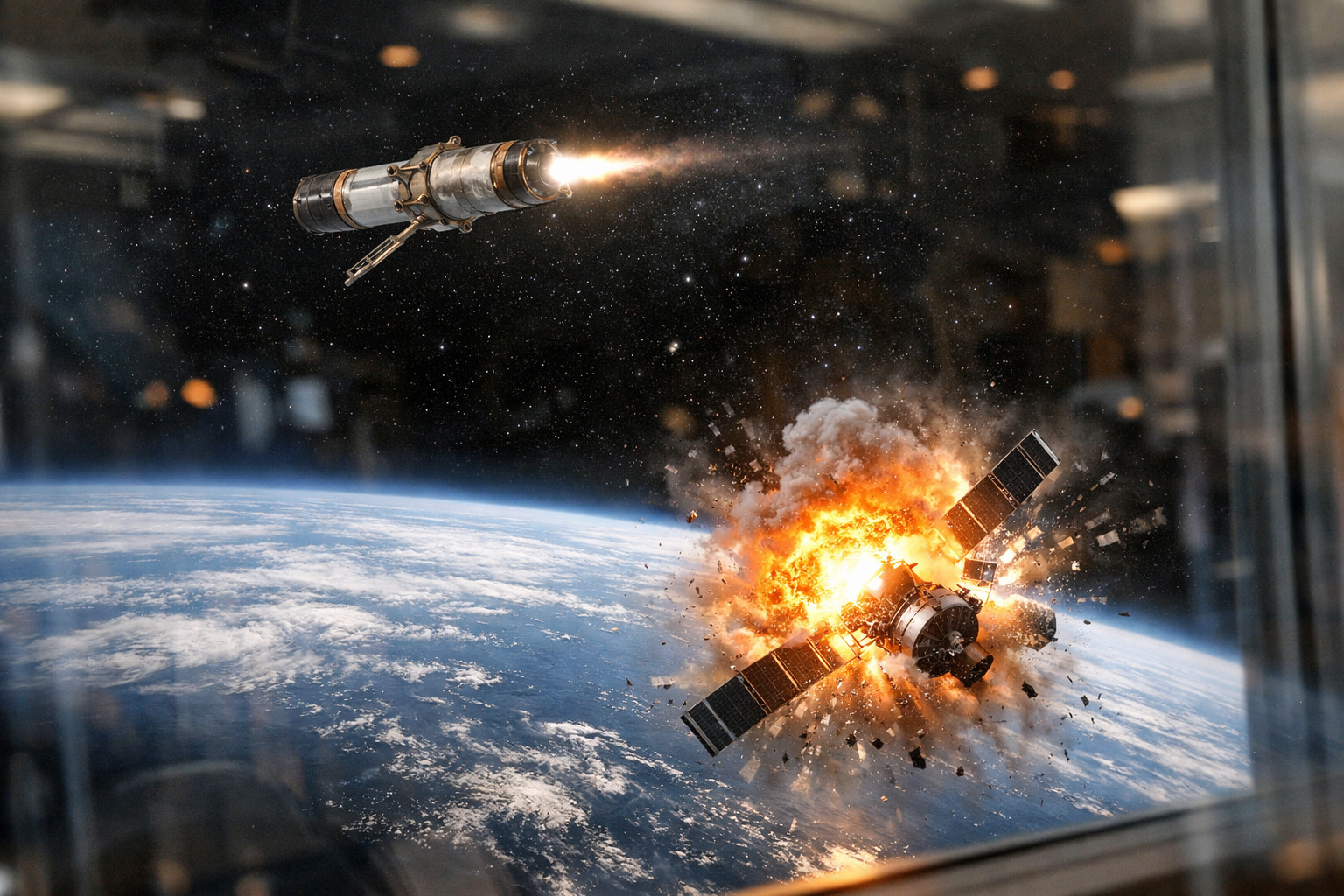
American intelligence agencies have identified a Russian programme to place nuclear weapons in space, according to assessments shared with NATO allies. The plan, discussed in military circles, involves positioning a nuclear device on a low-earth orbit platform with the capability to disable vast constellations of communication and navigation satellites. Senior US Space Command officials have privately briefed European counterparts on the emerging threat, characterising it as a fundamental escalation in space warfare doctrine. This development follows increased Russian anti-satellite testing and electronic warfare activities targeting orbital infrastructure since the full-scale invasion of Ukraine.
Satellite destruction mechanism
A detonation at an altitude between 300 and 1,200 miles would generate an intense electromagnetic pulse and a rapidly expanding cloud of high-velocity debris. This event could incapacitate between 8,000 and 10,000 satellites, representing up to 80 percent of all operational spacecraft. The commander of US Space Command, General Stephen Whiting, has described the potential consequences as a “space Pearl Harbor”, devastating military reconnaissance, global communications, and navigation systems. Critical civilian infrastructure relying on GPS and satellite data, including air traffic control, financial networks, and internet backbones, would face catastrophic disruption across continents.
Violation of international space treaty
The planned deployment directly contravenes the 1967 Outer Space Treaty, a cornerstone of international law signed by both Russia and the United States. The treaty explicitly prohibits the placement of nuclear weapons or any other weapons of mass destruction in Earth’s orbit. A Russian move to militarise space in this manner would represent a unilateral dismantling of a decades-old arms control framework designed to preserve the cosmos for peaceful use. Legal experts warn such an action would trigger a severe diplomatic crisis and potentially legitimise a new arms race in the orbital domain, eroding established norms of state behaviour beyond Earth’s atmosphere.
Wider strategic context and hybrid warfare
The space-based nuclear initiative fits within a broader Russian strategy of creating systemic instability through asymmetric means. By threatening the technological backbone of modern societies, Moscow seeks to gain coercive leverage over Western governments without direct conventional confrontation. NATO intelligence has previously reported on Russian development of other counter-space weapons designed to target specific satellite networks, including the Starlink constellation crucial to Ukrainian battlefield communications. This pattern indicates a concerted effort to dominate the space domain as a new front in global confrontation, exploiting Western dependencies on orbital assets.
European vulnerabilities and response
European nations are particularly vulnerable due to their dense reliance on satellite services for transport, energy, and defence. Civil aviation in Eastern and Southern Europe has already experienced significant GPS jamming and spoofing incidents attributed to Russian electronic warfare units. In response, European capitals are accelerating investments in space domain awareness and defensive technologies, while pushing for enhanced coordination through NATO’s space policy. Diplomatic efforts are focusing on strengthening the legal prohibitions against space-based weapons and developing collective deterrence measures. The situation underscores an urgent need to modernise international space law and bolster the resilience of critical orbital infrastructure against emerging hybrid threats.